
Last reviewed and updated: November 5, 2026
Istanbul in January is quiet, cool and workable for sightseeing if you plan around short daylight and occasional rain. The crowds that fill Sultanahmet in summer thin out, museum queues shrink, and indoor sites like historic cisterns become more appealing than ever.
Questions answered in this guide
- Is January a Good Time to Visit Istanbul?
- What’s the Weather Like in Istanbul in January?
- How Crowded Are Istanbul’s Attractions in January?
- What Should You Pack and Plan For?
- Is Istanbul too cold to visit in January?
- Does the Cistern of Theodosius stay open in winter?
- Are there fewer tourists in Sultanahmet in January?
- What should I wear to visit an underground cistern in January?
- Can I bring luggage into the Cistern of Theodosius?
- Should I book cistern tickets in advance for a January trip?
It is not a beach month, but it is a good one for walking the old city without waiting in line.
- Best for: travelers who prioritize short queues over warm weather
- Daylight: noticeably shorter than spring or summer, plan outdoor time for midday
- Indoor options: cisterns, museums and covered bazaars suit the weather well
- Booking window: less urgent than peak season, but popular evening shows still fill up
Is January a Good Time to Visit Istanbul?
Yes, January suits visitors who want a calmer version of Istanbul rather than the busiest one. The trade-off is weather that can turn wet or windy with little warning, so plans need some flexibility.
Flights and hotel rates tend to soften in the dead of winter, and that alone draws a certain kind of traveler, the one who has already seen the postcard version of Hagia Sophia at sunrise surrounded by tour groups and wants something calmer this time. January delivers that calm.
The trade is daylight. Mornings start late and evenings close in early, so outdoor sightseeing clusters around a shorter window than it would in May or September. Indoor attractions pick up the slack, and this is exactly where the city’s Byzantine cisterns earn their keep.
What’s the Weather Like in Istanbul in January?
Expect cool, often damp conditions with a mix of sun, cloud and rain spread across the month rather than one settled pattern.
Istanbul sits on the edge of the Bosphorus, a strait that separates Europe and Asia and channels wind through the city even on otherwise calm days. That wind, combined with sea-level humidity, makes January feel colder than the thermometer alone would suggest.
Layers work better than one heavy coat, since many sites, including hammams and underground cisterns, are warmer inside than the street outside. For a same-day read on conditions before heading out, Turkey’s state meteorological service at mgm.gov.tr publishes current forecasts for Istanbul and the wider region.
Rain gear matters more than sunglasses this month. A packable umbrella and water-resistant shoes handle cobblestone streets in Sultanahmet far better than an umbrella bought from a street vendor mid-shower.
How Crowded Are Istanbul’s Attractions in January?
Attractions in January run noticeably lighter than the summer peak, with shorter queues at major sites and more room to move through narrow spaces like cisterns and covered passages.
Sultanahmet Square, the plaza that connects Hagia Sophia, the Blue Mosque and the entrance to several underground cisterns, is easiest to navigate on a January weekday morning. Tour buses still arrive, but in smaller numbers and with more gaps between them.
This is the month when it is actually possible to stand inside a cistern chamber without a dozen other visitors crossing the same walkway. For travelers choosing between the city’s two best-known underground water sites, our comparison of Yerebatan Cistern and Şerefiye Cistern is worth reading before booking either.
Museums follow the same pattern. State-run sites post their own hours and seasonal notices on the official culture ministry portal at muze.gov.tr, which is the right place to check before a January trip in case of unplanned closures.
Visiting the Cistern of Theodosius in Winter
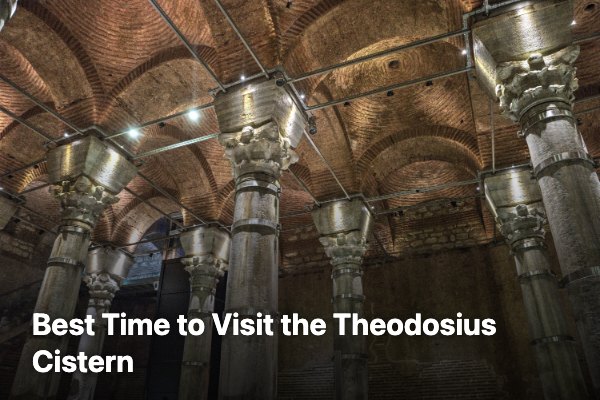
The Cistern of Theodosius (Şerefiye Sarnıcı) works especially well in January because it is underground, climate-stable and far less crowded than in warmer months.
Daytime visits run within a session window of 09:00 to 18:00, and the ticket includes access for the chosen session plus the site’s mapping light show, a 360° projection that uses the cistern’s columns and vaulted ceiling as a screen. Winter light outside has little bearing on this, since the chambers are lit entirely by the installation itself.
There is also an evening option built around a whirling dervish performance. Visitors arrive from 19:45, the mapping show begins at 20:15, and the dervish performance with live Sufi music starts at 20:30, running until the session closes around 21:15. Snacks and drinks are included in that evening ticket.
Two practical rules apply year-round but matter more when people are carrying winter coats and bags: luggage is not allowed inside, and professional photography needs written permission arranged beforehand. Plan to check bags or travel light on cistern days.
Because January evenings get cold and dark early, many visitors find the dervish session a better fit for a winter itinerary than trying to squeeze in a daytime visit between other sights. Either way, it is worth booking ahead rather than arriving on spec, and tickets can be arranged directly through Book Theodosius Cistern tickets.
For context on why this particular cistern survived so well and what it supplied to the ancient city, the piece on how the Cistern of Theodosius supplied ancient Istanbul covers the engineering story in more depth than a ticket page ever will.
Other Winter-Friendly Sights Near Sultanahmet
Several nearby sites pair naturally with a cistern visit in cold or wet weather, since most of them are either indoors or within a short, sheltered walk.
Sultanahmet’s underground sites in particular cluster close together, which matters in January when nobody wants to walk twenty minutes through rain between stops. A rundown of what sits within easy reach is covered in things to do near the Theodosius Cistern in Sultanahmet.
Istanbul’s layered history means the visible monuments are only part of the picture. Roman-era structures survive beneath streets and buildings across the old city, and hidden Roman architecture in Istanbul is a useful starting point for travelers who want to go beyond the obvious stops.
A short list of what tends to work well as a winter day plan:
- Morning: one major mosque or museum, visited early before tour groups arrive
- Midday: an underground cistern, timed to the brightest and least rainy part of the day outside
- Afternoon: a covered bazaar or museum, both sheltered from weather
- Evening: an indoor show or dinner, since outdoor sightseeing loses appeal once it is dark
What Should You Pack and Plan For?
Layered clothing, waterproof shoes, and a flexible schedule handle January in Istanbul better than any single piece of gear.
Cobblestones in Sultanahmet get slick when wet, and several historic sites, cisterns included, have uneven steps and low lighting. Sturdy, grippy footwear matters more here than it would in a modern city center.
Booking ahead is less urgent than in peak season, but the evening dervish performance at the Cistern of Theodosius and similar after-dark shows elsewhere in the city still draw steady interest even in winter, so reserving a day or two in advance avoids disappointment.
The site’s own guide to the best time to visit the Theodosius Cistern breaks down how different seasons and times of day compare if January doesn’t end up being the month you travel.
Transport runs normally through winter, and Istanbul’s public transit map and fares are listed on the city’s own transport authority site, useful for planning routes between the old city and anywhere across the Bosphorus.
Frequently Asked Questions
Is Istanbul too cold to visit in January?
No, Istanbul in January is cool and sometimes wet rather than bitterly cold, and most sightseeing, especially indoor sites, continues normally throughout the month.
Does the Cistern of Theodosius stay open in winter?
Yes, the daytime session runs from 09:00 to 18:00 year-round, with an additional evening dervish performance that begins boarding at 19:45.
Are there fewer tourists in Sultanahmet in January?
Yes, January is one of the quieter months in Sultanahmet, with shorter queues at major sites compared to the summer peak.
What should I wear to visit an underground cistern in January?
Layers work best, since cisterns stay climate-stable inside regardless of the weather outside, and grippy, waterproof shoes help on wet cobblestones and uneven steps.
Can I bring luggage into the Cistern of Theodosius?
No, luggage is not allowed inside the cistern, so visitors carrying bags should plan to check them or travel light on the day of their visit.
Should I book cistern tickets in advance for a January trip?
Yes, booking ahead is wise, particularly for the evening dervish performance, which draws steady interest even outside peak season.
A January trip to Istanbul rewards travelers who trade warm sun for open space and short queues, and the city’s underground cisterns are a natural fit for exactly that kind of visit.
Planning around shorter daylight, checking the weather the morning of, and booking the Cistern of Theodosius a day or two ahead covers most of what the season asks of a visitor.
Planning a visit? Ask AI to summarise this page
Open this article in your preferred assistant to get the key facts for your trip.
Ask ChatGPTAsk ClaudeAsk Perplexity
Comment (0)