
Last reviewed and updated: November 7, 2026
Istanbul in February means short daylight, cool wet weather and some of the lowest prices of the year. Sunset comes before 6pm most of the month, museums and covered sights fill the gap, and hotel and tour rates drop well below the summer peak. It’s a good month for travelers who want the city without the queues.
Questions answered in this guide
- How cold does Istanbul get in February?
- Is February a cheap time to visit Istanbul?
- How to get around on short winter days?
- Does it snow in Istanbul in February?
- Are hotel prices lower in Istanbul in February?
- What time does it get dark in Istanbul in February?
- Is the Theodosius Cistern open in February?
- Do I need to book cisterns and hamams ahead in winter?
- Is the Grand Bazaar a good option on a rainy February day?
- Daylight: roughly 9 to 10 hours, with sunset before 6pm for most of the month
- Weather: cold, often wet, with occasional snow on higher ground
- Crowds: among the thinnest of the year at major sights
- Best for: indoor sightseeing, cisterns, museums, hamams, and budget-conscious trips
How cold does Istanbul get in February?
Cold by Istanbul’s own standards, rarely freezing for long. Daytime temperatures typically sit in the single digits Celsius, with wind off the Bosphorus making it feel colder near the water.
Rain is more likely than snow, though snow does happen in most winters and can close schools or slow traffic for a day. The old city’s cobbled streets around Sultanahmet get slick when wet, so footwear with real grip matters more than style.
Wind is the part visitors underestimate. The straight line of the Bosphorus channels gusts that make a mild-looking forecast feel much sharper on an open deck or an exposed hilltop viewpoint.
What to pack for Istanbul in February
A warm waterproof layer, solid shoes, and something for your head and hands. Istanbul’s winter is damp more often than bitterly cold, so a good coat does more work than heavy layers underneath.
- Waterproof coat or jacket with a hood
- Shoes with grip for wet cobblestones and tram platforms
- A scarf and gloves for wind along the water
- Layers you can remove indoors, since museums and restaurants run warm
- A portable charger, since short days mean more photos taken in low light
Pack light enough to carry everything yourself. Several sights in the historic core, including underground cisterns, do not allow large bags or luggage inside, so travelers arriving straight from the airport should plan where to drop bags first.
Is February a cheap time to visit Istanbul?
Yes, generally. February falls outside the main tourist season, and flights, hotels and many tours price lower than the April to September stretch.
This isn’t guaranteed on every booking, and conference dates or local holidays can push prices up for specific nights. But as a rule, February and the surrounding winter months are when Istanbul’s accommodation and tour market competes hardest on price.
The trade-off is daylight. A traveler comparing a February trip against a May one is really trading lower cost and thinner crowds for shorter sightseeing hours and a higher chance of a rained-out afternoon.
Indoor sights for short winter days
Istanbul has an unusually deep bench of indoor sights, which is exactly what makes February workable. Cisterns, covered bazaars, museums and hamams all work regardless of what the sky is doing.
The city’s Byzantine cisterns are a natural fit for a winter itinerary. Beyond the Theodosius Cistern itself, the Cistern of Aspar and the Cistern of Aetius show how the city stored water long before modern plumbing, and both sit indoors away from the wind.
For context on how these underground reservoirs worked as a system, the piece on water engineering across Istanbul’s cisterns is worth reading before you go.
A hamam visit is another good use of a cold afternoon. A hamam is a traditional Turkish steam bath built around a heated marble platform called a göbek taşı, where an attendant scrubs skin with a coarse mitt called a kese before a foam massage and a cold rinse.
Several historic hamams in the Old City and newer spa-style venues across the city run this same ritual, and February’s quieter booking calendar makes same-week slots easier to find than in summer.
For a slower, drier option, the Grand Bazaar and the covered passages around Sultanahmet work well on a rainy February afternoon, and most major museums keep standard indoor hours through winter. Istanbul’s culture ministry publishes current museum hours and holiday closures on the official national museums portal, which is the most reliable place to check before a visit.
Visiting the Theodosius Cistern in February
February is one of the better months to see the Theodosius Cistern, since it’s fully indoors, unaffected by wind or rain, and quieter than in peak season. The cistern, known locally as Şerefiye Sarnıcı, sits below street level near Sultanahmet.
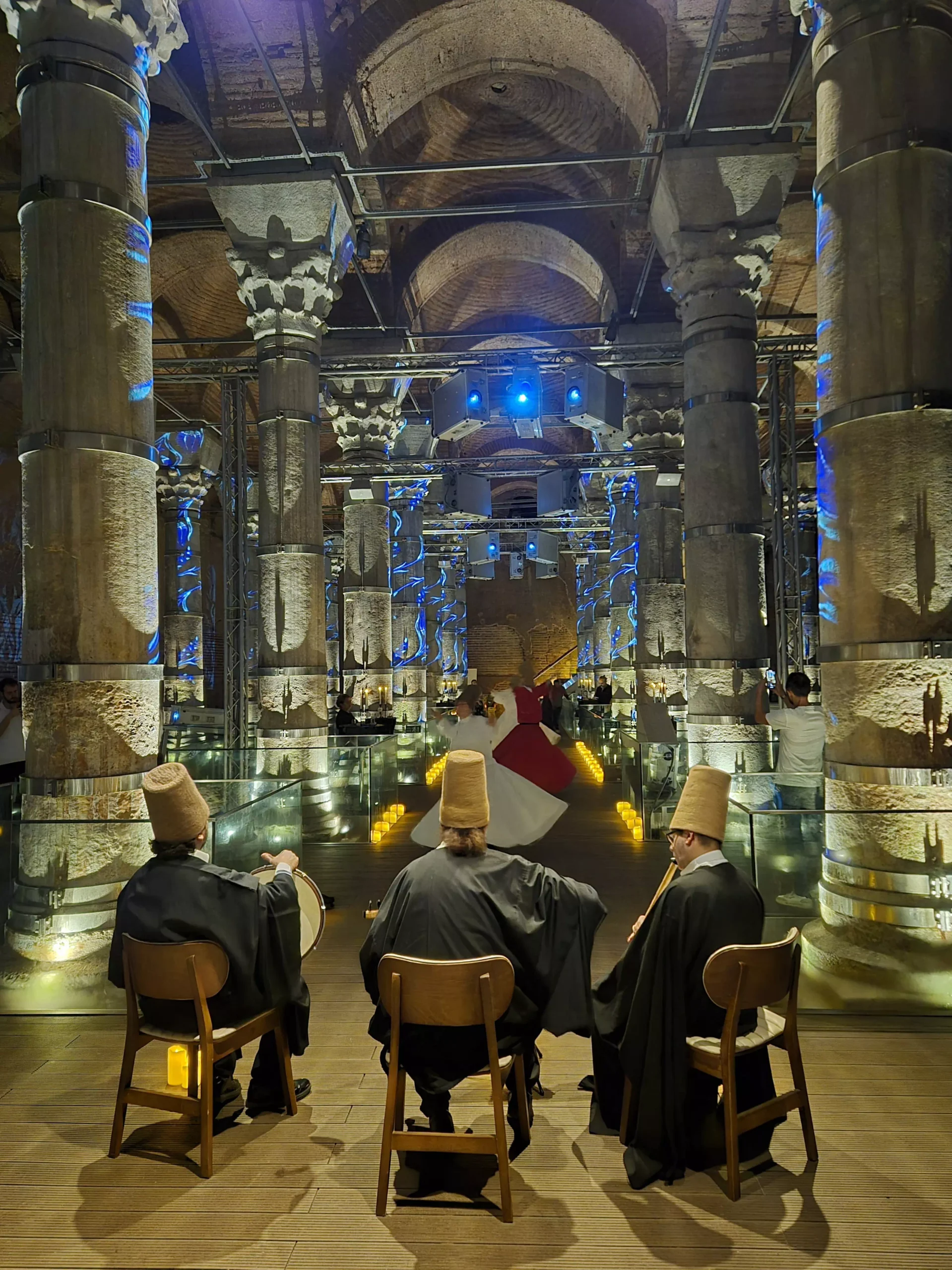
Daytime sessions run from 9am to 6pm, and that window includes access plus a mapping light show projected across the Byzantine columns.
There’s also an evening ticket built around a whirling dervish performance, with entrance at 7:45pm, the mapping show at 8:15pm, the dervish performance at 8:30pm with live Sufi music, and the evening wrapping up by 9:15pm, including snacks and drinks.
Two rules matter regardless of season: large luggage is not allowed inside, and professional photography needs written permission arranged beforehand. In February, with shorter days outside anyway, an evening slot loses nothing compared to summer, since there’s no daylight view to miss.
Travelers can book Theodosius Cistern tickets for either the daytime or evening session ahead of arrival, which is worth doing given how compact the evening show’s schedule is.
For background on the cistern’s original purpose, the article on how the cistern supplied ancient Istanbul explains the engineering behind what looks, at first glance, like just a dim columned hall.
How to get around on short winter days?
Trams, the metro and the funicular lines are the fastest way to cover ground when daylight runs out early. Istanbul’s public transport runs on the Istanbulkart, a rechargeable card used across trams, metro, buses and ferries.
Walking between sights in the old city is pleasant in good weather, but February’s rain and uneven cobbles make the tram line between Sultanahmet and Kabataş the more practical choice, especially once it’s dark by late afternoon.
Ferries across the Bosphorus and Golden Horn still run through winter, though timetables can shift around weather and holidays, so checking current routes on the city’s official ferry operator site before heading to a pier saves a wasted trip.
Planning a short-day itinerary works best in clusters: group the sights within walking distance of each other, then use the tram or metro to move between clusters rather than crossing the city multiple times. The guide to things to do near the Theodosius Cistern in Sultanahmet lays out one such cluster around the historic peninsula.
Travelers short on time, including cruise passengers with a single afternoon ashore, should read the piece on building a fast Istanbul itinerary for limited hours, since the same logic of clustering sights applies just as well to a short February day as to a cruise stop.
Frequently Asked Questions
Does it snow in Istanbul in February?
Sometimes. Snow isn’t guaranteed every winter, but most years see at least one or two days of light snowfall, usually melting within a day.
Are hotel prices lower in Istanbul in February?
Generally, yes. February sits outside peak season, and both flights and hotels tend to price below the summer high, though specific holiday dates can be exceptions.
What time does it get dark in Istanbul in February?
Before 6pm for most of the month. Daylight runs roughly 9 to 10 hours, so plan outdoor sightseeing earlier in the day and keep indoor options for late afternoon.
Is the Theodosius Cistern open in February?
Yes. Daytime sessions run 9am to 6pm year round, and the evening dervish show, starting with entrance at 7:45pm, also runs as scheduled.
Do I need to book cisterns and hamams ahead in winter?
Recommended, not strictly required. Winter is quieter than summer, but evening shows and popular hamams still have limited time slots, so booking a day or two ahead avoids disappointment.
Is the Grand Bazaar a good option on a rainy February day?
Yes. The bazaar and its surrounding covered passages are fully indoors, making them one of the easiest fallback plans when rain cancels an outdoor itinerary.
February rewards a traveler willing to plan around daylight rather than fight it. Build the day around indoor sights like the Theodosius Cistern, a hamam, or one of the smaller Byzantine cisterns, save walking routes for the brighter mid-afternoon hours, and let public transport handle the rest once the light goes.
Planning a visit? Ask AI to summarise this page
Open this article in your preferred assistant to get the key facts for your trip.
Ask ChatGPTAsk ClaudeAsk Perplexity
Comment (0)