
Last reviewed and updated: November 2, 2026
The best Istanbul attractions for a first visit cluster in three areas: the Old City around Sultanahmet, the Bosphorus waterfront, and the Golden Horn neighborhoods further out. Spread across three or four days, fifteen stops is realistic without rushing any of them.
Questions answered in this guide
- What are the essential Old City attractions in Istanbul?
- Why does the Cistern of Theodosius belong on a Sultanahmet itinerary?
- Is Şerefiye Cistern or Yerebatan Cistern the better visit?
- What other Roman and Byzantine sites are worth the detour?
- Should a Bosphorus cruise be on a first-time list?
- Is the Golden Horn worth a separate cruise?
- What should a hamam visit involve on a first trip?
- Are Çamlıca Tower and the Asian side worth crossing for?
- What markets and neighborhoods round out the list?
- How should 15 attractions be sequenced across a short trip?
- Is three days enough for the main Istanbul attractions?
- Do the cisterns need advance booking?
- What is the difference between a cistern and an aqueduct?
- Is the Golden Horn cruise different from the Bosphorus cruise?
- Which neighborhood should a first-time visitor base themselves in?
- Does Çamlıca Tower need ID for entry?
- Best for: first-time visitors with three to four days
- Core area: Sultanahmet, Eminönü, and the Bosphorus shoreline
- Booking tip: reserve timed entries for the Cistern of Theodosius and Topkapı Palace ahead of arrival
- Season note: July and August are the busiest months for most sites, including Çamlıca Tower
What are the essential Old City attractions in Istanbul?
Sultanahmet Square and the buildings around it form the densest cluster of Istanbul attractions anywhere in the city.
Hagia Sophia, the Blue Mosque, and Topkapı Palace all sit within a ten-minute walk of each other. Most first-time visitors spend a full day here and still feel rushed. The square itself was once the hippodrome of Byzantine Constantinople, and traces of that history sit just under the paving stones.
- Hagia Sophia, a former cathedral and mosque now open as a working mosque with visiting hours for non-worshippers
- Blue Mosque, known for its six minarets and blue İznik tile interior
- Topkapı Palace, the Ottoman court’s main residence for roughly four centuries
- Basilica Cistern, the largest surviving Byzantine cistern in the city
For a slower look at what else sits within walking distance, the guide to things to do near the Theodosius Cistern in Sultanahmet covers the smaller stops most itineraries skip.
Why does the Cistern of Theodosius belong on a Sultanahmet itinerary?
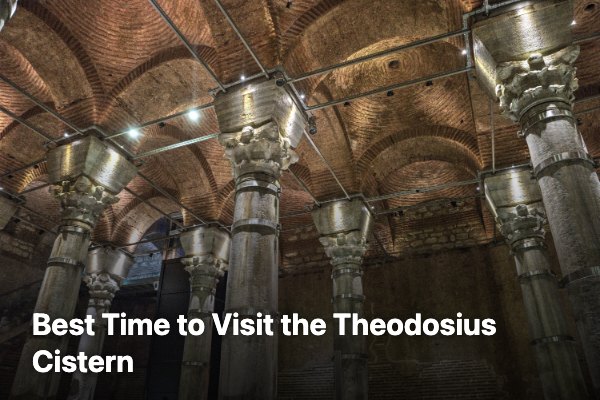
The Cistern of Theodosius, also known as Şerefiye Sarnıcı, adds a quieter underground stop to a day otherwise spent in crowds.
The daytime session runs from 9:00 am to 6:00 pm and includes a mapping light show projected across the cistern’s columns, according to the venue’s own ticket pages.
There is also an evening session built around a whirling dervish performance, with doors from 7:45 pm, the mapping show at 8:15 pm, and the dervish performance at 8:30 pm, running to roughly 9:15 pm.
A cistern, in this context, is an underground reservoir the Byzantines built to store water piped in from forests outside the city walls. Luggage is not allowed inside, and professional photography needs written permission ahead of the visit.
You can Book Theodosius Cistern tickets for either the daytime or evening session before arriving, since both run on fixed entry windows rather than walk-up access.
The piece on the best time to visit the Theodosius Cistern breaks down which session suits a first visit versus a return trip.
Is Şerefiye Cistern or Yerebatan Cistern the better visit?
Both are worth seeing on different trips, but they answer different questions.
Yerebatan, the Basilica Cistern, is larger and more famous, with the carved Medusa heads most visitors have already seen in photos. Şerefiye is smaller, quieter, and built around light projection rather than static display, which changes the pace of the visit entirely.
If a trip only allows time for one, the comparison in Yerebatan Cistern or Şerefiye Cistern, which one should you visit lays out the trade-offs by crowd size, layout, and what each site actually shows.
What other Roman and Byzantine sites are worth the detour?
Istanbul holds more underground Roman architecture than most visitors expect, and two lesser-known cisterns reward the extra walk.
The Cistern of Aspar and the Cistern of Aetius were both open-air water reservoirs rather than covered chambers, built to the same scale as Roman aqueduct engineering elsewhere in the empire. Neither sees the queues that Yerebatan does.
The overview in hidden Roman architecture in Istanbul maps out where each one sits relative to the main Sultanahmet cluster, and the dedicated piece on the Cistern of Aspar covers its current state and how to reach it.
- Cistern of Aspar, an open reservoir in the Fatih district
- Cistern of Aetius, now a public park built into the old reservoir basin
- Valens Aqueduct, still visible crossing the Atatürk Boulevard traffic
Should a Bosphorus cruise be on a first-time list?
Yes. A Bosphorus cruise is the fastest way to see the strait, the bridges, and the waterfront palaces from the water rather than from a tour bus window.
Short sightseeing cruises run roughly two hours and include open-deck viewing and an audio guide, departing around midday and late afternoon. A sunset cruise option runs in the evening with a welcome drink and a live English-speaking guide included, and a dinner cruise with a Turkish show boards from Kabataş Port with menu choices including a vegetarian option.
For visitors with limited hours in port, a fast Istanbul tour for cruise passengers lines up a route that fits a single afternoon.
Is the Golden Horn worth a separate cruise?
Yes, if time allows for a second boat trip beyond the Bosphorus.
The Golden Horn is a natural estuary separating the old city from the districts of Beyoğlu and Eyüp. A round-trip sightseeing cruise along it passes roughly twenty landmarks, turns at Miniatürk, and stops there for about ninety minutes before heading back past Balat, Fener, and Eyüpsultan Mosque. Departures run three times daily from Karaköy and Eminönü piers.
What should a hamam visit involve on a first trip?
A Turkish bath, or hamam, is worth one session, ideally mid-trip rather than on the first or last day.
The ritual usually follows the same order: changing and wrapping in a peştemal, warming on the heated marble platform called the göbek taşı, a kese scrub (a coarse mitt used to remove dead skin), a foam massage, and a final cold rinse. Male attendants are called tellak and female attendants natır.
Historic hamams in the Old City, such as Çağaloğlu and Çemberlitaş, sit within walking distance of the Sultanahmet cluster, which makes them easy to slot into the same day as the cisterns and mosques.
Are Çamlıca Tower and the Asian side worth crossing for?
Yes, mainly for the skyline view across both continents.
Çamlıca Tower sits on the Asian side and opens daily from 10:00 am to 10:00 pm, according to its own prices and hours page. Bookings open up to two months ahead, and same-day tickets close a few hours before visit time, so this is not a walk-up stop during the busiest summer months of July and August.
Arriving fifteen minutes early and carrying ID for everyone in the party, children included, keeps the entry process moving.
What markets and neighborhoods round out the list?
The Grand Bazaar and the Spice Bazaar cover the classic shopping stops, and Balat and Fener add the color most photographs of Istanbul attractions are actually taken in.
- Grand Bazaar, one of the world’s oldest covered markets
- Spice Bazaar, smaller and food-focused, near the Golden Horn piers
- Balat, a steep, colorfully painted former Jewish and Greek quarter
- Fener, home to the Greek Orthodox Patriarchate
Both Balat and Fener appear along the return leg of the Golden Horn cruise route, which makes them easy to see from the water before walking them on foot another day.
How should 15 attractions be sequenced across a short trip?
Group attractions by neighborhood rather than by type, and leave the water-based ones for whichever day has the best weather.
A workable order starts with the Sultanahmet cluster on day one, underground cisterns and a hamam on day two, a Bosphorus or Golden Horn cruise on day three, and Çamlıca Tower or the bazaars on day four.
Checking site hours through Turkey’s official museums portal before travel avoids surprises around closures, and Türkiye’s official tourism site, goturkiye.com, is a reliable source for seasonal event dates that affect opening hours at major sites.
Frequently Asked Questions
Is three days enough for the main Istanbul attractions?
Three days covers the Old City core and one cruise, but adding Çamlıca Tower or a second cistern visit works better with four days.
Do the cisterns need advance booking?
Yes, for the Cistern of Theodosius specifically, since both the daytime and evening sessions run on fixed time windows rather than open walk-up access.
What is the difference between a cistern and an aqueduct?
A cistern stores water; an aqueduct moves it. Byzantine Istanbul used aqueducts like the Valens Aqueduct to carry water from forests outside the walls into storage cisterns such as Şerefiye and Yerebatan.
Is the Golden Horn cruise different from the Bosphorus cruise?
Yes. The Golden Horn cruise is a round trip along the estuary separating the old city from Beyoğlu, while the Bosphorus cruise runs along the strait between Europe and Asia.
Which neighborhood should a first-time visitor base themselves in?
Sultanahmet, because it puts Hagia Sophia, Topkapı Palace, the Basilica Cistern, and the Cistern of Theodosius within walking distance of each other.
Does Çamlıca Tower need ID for entry?
Yes. Tickets are issued per name, and ID may be requested for everyone in the group, including children, according to the venue’s own visit guide.
Fifteen stops sounds like a lot until they’re grouped by neighborhood instead of treated as a checklist. Istanbul attractions reward slower mornings in the Old City, one or two boat trips, and a single underground detour that most visitors skip on their first pass through Sultanahmet.
Planning a visit? Ask AI to summarise this page
Open this article in your preferred assistant to get the key facts for your trip.
Ask ChatGPTAsk ClaudeAsk Perplexity
Comment (0)