
Last reviewed and updated: November 13, 2026
Solo travel in Istanbul works well for most visitors because the historic core is compact, well signposted, and full of short, self-contained sights you can see on your own schedule. The main adjustments are picking the right base neighbourhood, learning the transit card system early, and building a day plan that mixes indoor and outdoor stops.
Questions answered in this guide
- Is Istanbul Safe for Solo Travel?
- Which Neighbourhood Should a Solo Traveller Base In?
- What Else Is Worth Seeing Underground Solo?
- Is Sultanahmet walkable for a solo traveller at night?
- Do I need to book the Cistern of Theodosius in advance?
- What’s the easiest way to pay for transport as a solo visitor?
- Is dining alone unusual in Istanbul?
- Which area suits solo travellers better, Sultanahmet or Beyoğlu?
- What should I bring to the Cistern of Theodosius?
None of this requires a group or a guide.
- Best base: Sultanahmet or Karaköy for first-time solo visitors
- Transit: a single Istanbulkart covers trams, ferries, and metro
- Good solo activity: self-paced cistern and museum visits, since timing is flexible
- Emergency number: 112 for general emergencies anywhere in Turkey
Is Istanbul Safe for Solo Travel?
Yes, for the areas most visitors use. Sultanahmet, Karaköy, Beyoğlu, and the main waterfront districts are walkable at most hours and heavily used by tourists and locals alike.
The usual city advice applies: keep valuables close in crowded trams, agree on taxi fares or use a metered app, and avoid unlicensed “guides” who approach near major sights. Solo travellers, especially women travelling alone, generally report no more friction here than in other large European cities, though the normal caution around late-night backstreets still applies.
If something does go wrong, Turkey’s general emergency line is 112, with separate numbers for police (155) and fire (110). Save these before you land rather than searching for them later.
Which Neighbourhood Should a Solo Traveller Base In?
Sultanahmet for sightseeing density, Karaköy or Beyoğlu for a livelier evening scene. Both put you within walking distance of the tram line.
Sultanahmet sits on the peninsula where the Hagia Sophia, the Blue Mosque, and the city’s major Byzantine-era cisterns are clustered within a ten to fifteen minute walk of each other.
This matters for solo travel because you are not coordinating a group’s pace; you can duck into a cistern, sit in a courtyard, and change plans mid-afternoon without checking with anyone.
Karaköy and Beyoğlu, across the Golden Horn, suit travellers who want café culture, galleries, and a longer evening out. The tram and the historic Tünel funicular connect the two sides in a few minutes, so staying in one area doesn’t cut you off from the other.
For context on what’s within easy reach of the old city’s cistern cluster, the roundup of things to do near the Theodosius Cistern in Sultanahmet is a useful starting point before you book a hotel.
Visiting the Cistern of Theodosius Alone
Easily, and it suits solo travellers better than many group tours. The Cistern of Theodosius, also known as Şerefiye Sarnıcı, runs daytime sessions from 09:00 to 18:00, so you can drop in between other stops rather than booking a fixed time slot elsewhere.
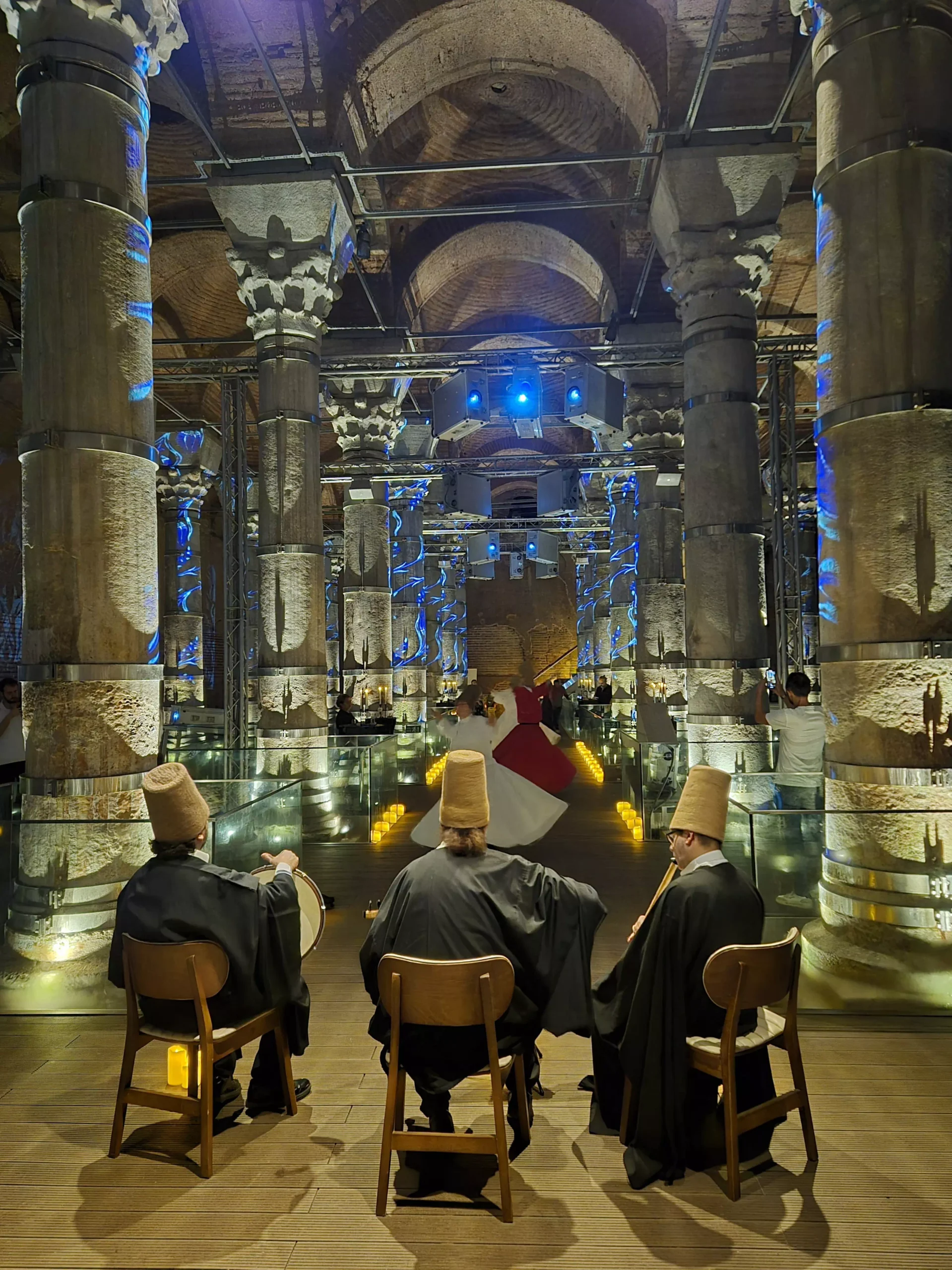
The cistern is a 5th-century underground reservoir built to store water for the Byzantine city above it, one of several such structures hidden under the old peninsula. Walking it alone means you set your own pace through the vaulted chambers and the 360° mapping light show projected onto the walls, without waiting on a group to move along.
There’s also an evening option built around a different kind of solo experience: entrance at 19:45, a mapping show at 20:15, and a whirling dervish performance with live Sufi music at 20:30, finishing around 21:15.
It includes snacks and drinks and runs as a self-contained 1.5-hour session, so a solo traveller can simply turn up for the entrance time rather than organising a dinner reservation elsewhere.
Note that luggage isn’t permitted inside, and professional photography needs written permission arranged in advance. You can book Theodosius Cistern tickets directly for either the daytime or evening session before you arrive.
To understand how the chambers functioned before they became a visitor site, the piece on how the Cistern of Theodosius supplied ancient Istanbul gives the engineering background in plain terms.
A One-Day Solo Plan for Sultanahmet
A realistic solo day covers two or three major sights, one cistern, and a slow lunch, without rushing between stops.
The peninsula rewards a loose, half-day structure rather than a packed itinerary, since solo travellers tend to linger longer in quiet spots than groups do.
- Start at the Hagia Sophia or the Blue Mosque while the morning light and smaller crowds make photography easier.
- Walk to the Cistern of Theodosius for the daytime session, allowing time to read the information panels at your own pace.
- Have a slow lunch nearby; solo dining is entirely normal in Sultanahmet’s small lokanta-style restaurants.
- Spend the afternoon exploring the underground structures further, including the comparisons drawn in this guide to hidden Roman architecture in Istanbul.
- Finish with a walk toward the water as the evening light settles over the Golden Horn.
If your schedule is tight, the write-up on a fast Istanbul tour for cruise passengers sketches a compressed version of the same logic, useful even for non-cruise visitors with limited time.
Eating and Resting Alone Without It Feeling Strange
It doesn’t stand out. Istanbul’s restaurant culture includes plenty of solo diners, especially at lunch, and nobody treats a single table as unusual.
Smaller lokanta (a casual, home-style restaurant serving a daily rotation of stews and grills) are the easiest format for solo meals, since you point at what looks good rather than parsing a long menu. Tea gardens and courtyard cafés near the main mosques also work well for a mid-afternoon break between sights.
For rest beyond food, a Turkish hammam session is a common solo choice, since the ritual, washing, a kese scrub with a coarse mitt, foam massage, and a final rinse, is designed around a single visitor’s own time in the steam room rather than group activity.
Getting Around Istanbul on Your Own
With an Istanbulkart, a reloadable transit card that works across trams, buses, the metro, and ferries. Buy one from any kiosk or machine near a tram or metro stop on arrival.
The T1 tram line is the backbone for solo sightseeing in the old city, connecting Sultanahmet, Eminönü, and Karaköy along a single route with no transfers needed. Ferries across the Bosphorus and the Golden Horn run frequently and cost little in card fare, making them a relaxed way to see the water without booking a tour.
Official timetables and card details are published by Istanbulkart’s official site, and Turkey’s national tourism portal at goturkiye.com carries broader transport and visa guidance worth checking before departure.
Walking is realistic between most Sultanahmet sights, but save the tram or a short ferry hop for crossing to Karaköy, Beyoğlu, or the Asian side, since the bridges and hills make those distances longer than a map suggests.
What Else Is Worth Seeing Underground Solo?
Several smaller cisterns beyond Theodosius reward a solo visitor’s curiosity, since they’re quieter and better explored without a tour script.
The Cistern of Aspar and the Cistern of Aetius sit outside the main tourist cluster and see far fewer visitors, which makes them better suited to unhurried, independent exploration; see the notes on the Cistern of Aspar and the Cistern of Aetius for what to expect.
If you enjoy the engineering side of these spaces, the deeper dive on water engineering secrets of Istanbul’s cisterns explains how the whole system of channels and reservoirs once worked together.
Museum opening arrangements across the city, including state-run sites, are listed by Turkey’s Ministry of Culture and Tourism through muze.gov.tr, which is worth a check before planning a museum-heavy solo day in November 2026 or any other month, since hours can shift seasonally.
Frequently Asked Questions
Is Sultanahmet walkable for a solo traveller at night?
Yes, the main streets around the Hagia Sophia and Blue Mosque stay busy and well lit into the evening, though quieter side streets deserve the same caution you’d use in any city.
Do I need to book the Cistern of Theodosius in advance?
Booking ahead is recommended, particularly for the evening dervish session, since it runs as a fixed-time show rather than a walk-in visit; tickets are available through the site’s own booking page.
What’s the easiest way to pay for transport as a solo visitor?
An Istanbulkart is the easiest option, covering trams, metro, buses, and ferries on one reloadable card bought at any station kiosk.
Is dining alone unusual in Istanbul?
No, solo diners are common, especially at lunch in lokanta-style restaurants where you order by pointing at the day’s dishes rather than reading a long menu.
Which area suits solo travellers better, Sultanahmet or Beyoğlu?
Sultanahmet suits sightseeing-focused days, while Beyoğlu and Karaköy suit travellers who want a livelier evening scene and easy tram or funicular links back to the old city.
What should I bring to the Cistern of Theodosius?
Light layers and a camera are fine, but leave large luggage at the hotel, since bags of that size aren’t permitted inside the cistern.
Solo travel in Istanbul mostly comes down to sequencing: pick a walkable base, get an Istanbulkart on day one, and build each day around two or three unhurried stops rather than a packed list. The cisterns, cafés, and waterfront walks of the old city are, if anything, easier to enjoy without a group pulling you along to the next thing.
Planning a visit? Ask AI to summarise this page
Open this article in your preferred assistant to get the key facts for your trip.
Ask ChatGPTAsk ClaudeAsk Perplexity
Comment (0)