
Beneath the streets of old Istanbul lies a hidden city of water. Byzantine engineers dug hundreds of underground cisterns to store the supply that kept Constantinople alive through sieges and dry summers, and a handful survive today as some of the most atmospheric sights in the city. Three are open to visitors, the Basilica Cistern, the Theodosius Cistern and the Binbirdirek Cistern, each a cool, dim hall of marble columns holding up brick vaults. This guide explains what they are, why they were built and which one to visit.
What Is a Byzantine Cistern?
A cistern is an underground reservoir, a vaulted hall built to hold water. In Constantinople, water arrived from distant forests along aqueducts, and the cisterns stored it beneath the city so the supply held even when the aqueducts were cut. Rows of columns, many of them salvaged from older Roman buildings, carry the brick ceilings, and the result is a space that feels more like a sunken temple than a water tank. Standing among the pillars in the cool, lamplit dark is the closest thing Istanbul offers to time travel.
Why Did Constantinople Need So Many Cisterns?
Water was a matter of survival. The city sat on a peninsula with little fresh water of its own, and enemies could and did cut the aqueducts during a siege. To hold out, the Byzantines built a vast network of covered cisterns, filling them in the wet months so the city could drink through the dry summers and the long blockades. Hundreds were dug over the centuries, most of them now buried or built over, which is why the few you can still walk into feel so remarkable.
The Basilica Cistern, the Famous One
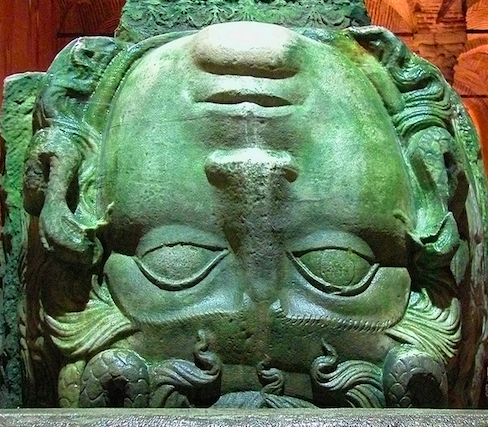
The best known is the Basilica Cistern, built in the sixth century under Emperor Justinian and named for the basilica that once stood above it. It is the largest of the three open to the public, a cavernous hall of 336 columns, and its two carved Medusa heads, set as column bases, draw a steady crowd. It sits right beside Hagia Sophia, which makes it easy to add to a day in Sultanahmet, though it is busy and queues build in peak season.
The Theodosius Cistern, the Quiet Gem
Older and far quieter is the Theodosius Cistern, the Şerefiye Sarnıcı, built in the fifth century under Emperor Theodosius II. It holds 32 tall marble columns in an intimate space near Çemberlitaş, and since its restoration it has doubled as a cultural venue. A mapping light show plays across the stone through the day, and most evenings the cistern hosts a whirling dervish performance among the lit columns. It offers the same ancient atmosphere as the Basilica with a fraction of the crowds and a lower price.
The Binbirdirek Cistern, the Oldest Hall
The third is the Binbirdirek Cistern, whose name means the Cistern of a Thousand and One Columns. Built in the fourth century, it is the oldest of the three and one of the largest, with over 200 columns in a broad, low hall near the Hippodrome. It is quieter than the Basilica and often used for events, so it makes a good third stop for anyone who wants to see how these spaces vary.
The Cisterns at a Glance
| Cistern | Built | Columns | Known for |
| Basilica, Yerebatan | 6th century, Justinian | 336 | The Medusa heads, the famous one |
| Theodosius, Şerefiye | 5th century, Theodosius II | 32 | The light show and dervish evenings |
| Binbirdirek, Philoxenos | 4th century | Over 200 | The oldest and one of the largest |
Which Cistern Should You Visit?
If you want the single most famous sight, go to the Basilica. If you want a calmer, cheaper visit with a light show and dervish evenings, choose the Theodosius. For a third, quieter hall, add the Binbirdirek. All three sit within a short walk on the historic peninsula, so seeing two in one morning is easy, and the contrast between the crowded Basilica and the quiet Theodosius is worth the small extra effort.
What a Visit Is Like
Stepping down into a cistern, the temperature drops and the noise of the street fades. The halls are dim and lamplit, the air is cool and a little damp, and the columns march away into the shadows. Most visits take about 30 minutes to an hour, enough to walk the aisles, take photos and, at the Theodosius, watch the light show. It is a welcome break from the summer heat and one of the calmest experiences in a busy city.
How to Book a Cistern Visit
Booking ahead saves time, above all at the busier sites. For the Theodosius Cistern you can choose a daytime ticket with the mapping light show, or an evening dervish show, and reserve your spot now on cisternoftheodosius.com. Pick your date, show your ticket at the door and walk straight in.
Frequently Asked Questions
How many cisterns are in Istanbul?
Hundreds were built beneath the Byzantine city, though most are buried or built over today. Three main cisterns are open to visitors, the Basilica, the Theodosius and the Binbirdirek.
What is the oldest cistern in Istanbul?
Of the three open to the public, the Binbirdirek Cistern is the oldest, built in the fourth century, ahead of the fifth-century Theodosius and the sixth-century Basilica.
Which Istanbul cistern is best to visit?
The Basilica wins for fame and scale, the Theodosius for quiet, a lower price and its light and dervish shows. Many visitors enjoy both.
What is the Theodosius Cistern?
A fifth-century Byzantine cistern near Çemberlitaş, with 32 marble columns, a mapping light show and evening whirling dervish performances.
Are the cisterns worth visiting?
Yes. They are cool, atmospheric and steeped in history, and a cistern is one of the most memorable and unusual sights in Istanbul.
Can you take photos in the cisterns?
Yes, in general, though tripods and professional shoots often need written permission. The low light makes for striking photos of the columns.

Comment (0)