
Last reviewed and updated: November 16, 2026
Visit Hagia Sophia first, right after it opens, then walk the five minutes to the Blue Mosque once the late morning queue has thinned. Both sites sit on the same square in Sultanahmet, so the order matters more than the exact minute you start.
Questions answered in this guide
- What Time Should You Visit to See Both?
- What Should You Wear Inside Each Site?
- How Do You Get Between the Two Sites?
- Where to Go After Lunch?
- Is Hagia Sophia free to enter?
- Do I need to book Blue Mosque tickets in advance?
- Can I wear shorts inside Hagia Sophia?
- How long should I budget for both sites?
- Is the Theodosius Cistern close enough to add to the same morning?
- What’s the difference between the Theodosius Cistern and the Basilica Cistern?
- Distance between sites: about a five-minute walk across Sultanahmet Square
- Dress code: shoulders and knees covered at both, headscarves for women inside the mosque
- Best order: Hagia Sophia at opening, Blue Mosque mid to late morning
- What’s next door: the Cistern of Theodosius, a short walk from both
What Time Should You Visit to See Both?
Go to Hagia Sophia as close to opening as you can manage, then move to the Blue Mosque once the morning’s tour groups have cleared out, usually by mid to late morning.
Hagia Sophia pulls the heaviest crowds in the first hour after opening because every cruise and group tour schedules it first. Arriving early gets you past the entrance crush and into the nave before the acoustic hum of a packed hall sets in.
The Blue Mosque works differently. It closes to visitors briefly around each of the five daily prayer times, and the queue outside swells right after Hagia Sophia’s groups filter over. Giving it an hour’s gap, rather than walking straight from one to the other, usually means a shorter wait at the shoe racks.
If your morning is tight, treat Hagia Sophia as the fixed point and let the Blue Mosque flex around it. A free walking pace between the two, with a coffee stop in between, is more realistic than back to back entries.
What Should You Wear Inside Each Site?
Cover your shoulders and knees for both buildings, and bring a scarf if you’re a woman planning to enter the Blue Mosque, since headscarves are required there.
Hagia Sophia now operates with a section reserved for worship, which means the same modest dress expectations as an active mosque apply throughout the building, not just in one corner. Sleeveless tops, shorts, and short skirts will get you turned away or handed a wrap at the door.
The Blue Mosque is a working mosque, so the rules are stricter and more consistently enforced. You’ll remove your shoes before entering and carry them in a bag provided at the door. Loose scarves are usually available on loan at the entrance if you forget one, but they run out during busy stretches of the day.
Pack light. Neither site allows large bags or luggage inside, and this same rule applies at the Cistern of Theodosius nearby, so it’s worth leaving suitcases at the hotel rather than carrying them between sights.
What’s Next Door: The Theodosius Cistern
The Cistern of Theodosius, also known as the Şerefiye Sarnıcı, sits a short walk from both Hagia Sophia and the Blue Mosque and makes a natural third stop once the mosque visit wraps up.
A cistern is an underground reservoir built to store water for the city above it, and Istanbul’s old town sits on several of them, built by Byzantine engineers to keep the palace and public fountains supplied.
The Theodosius Cistern is smaller and quieter than its famous neighbor, the Basilica Cistern, and that makes it easier to walk through at your own pace rather than in a shuffling line.
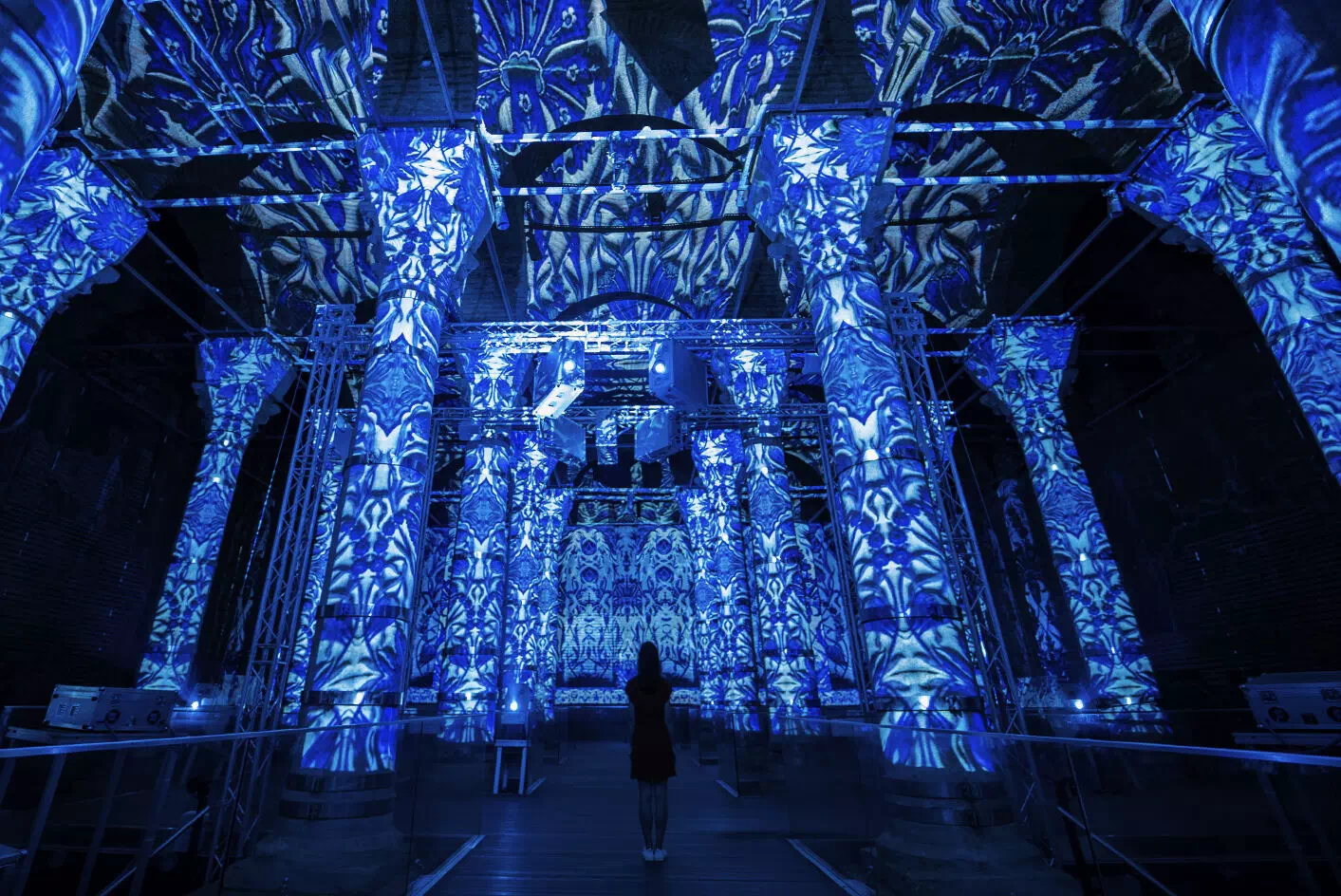
Daytime visits run within the site’s 9:00 am to 6:00 pm session hours and include a mapping light show projected across the vaulted ceiling and columns. If your morning stretches into early afternoon, this is an easy add to the same stroll through Sultanahmet, since it doesn’t require backtracking.
There’s also an evening option with a whirling dervish performance and live Sufi music, running from a 7:45 pm entrance through to about 9:15 pm, though that’s a separate outing from the morning plan here. You can book Theodosius Cistern tickets for either session ahead of your visit, which is worth doing in high season when daytime slots fill early.
If you’re trying to decide which underground cistern deserves your time, a comparison of the two main options, Yerebatan Cistern or Şerefiye Cistern, lays out the practical differences in size, crowds, and atmosphere.
How Do You Get Between the Two Sites?
You walk. Hagia Sophia and the Blue Mosque face each other across Sultanahmet Square, and the walk between them takes about five minutes at an unhurried pace.
There’s no need for a taxi, tram, or shuttle for this leg of the morning. The square itself is paved, flat, and shaded in parts by trees and the old hippodrome markers, so it’s a comfortable stretch to cover even in midsummer heat.
If you’re arriving from elsewhere in the city, the Sultanahmet tram stop on the T1 line drops you within a few minutes’ walk of both sites. Fares and route details are published on Istanbul’s metro and tram network site, which is worth checking the evening before if you’re unfamiliar with the Istanbulkart system.
Cruise passengers working a tight port schedule sometimes pair this square with a quick run through the cisterns and Hagia Sophia in a single guided loop. A route built for exactly that kind of morning is covered in this quick Istanbul circuit for cruise passengers, which groups the cisterns with Hagia Sophia for passengers short on time.
Where to Go After Lunch?
Head toward the Grand Bazaar or down to the cisterns if you still have energy, since both sit within a comfortable walk of Sultanahmet Square.
By early afternoon, Hagia Sophia and the Blue Mosque will both be at their busiest, so this is a natural point to step away from the square rather than linger. The Grand Bazaar is roughly fifteen minutes on foot and offers shade, food stalls, and a change of pace from standing in museum queues.
Travelers managing a short layover between a cruise stop and their next excursion sometimes fold the morning’s mosque visits into a single afternoon loop that also covers the cisterns.
There’s a version of that plan written up for German-speaking visitors in this fast Istanbul tour for cruise passengers, which pairs the ancient cisterns with Hagia Sophia in a single half day.
For opening arrangements and any closures tied to religious holidays, Türkiye’s Ministry of Culture and Tourism site publishes updates that are worth a quick check before you set out, particularly around major Islamic holidays when mosque access changes.
Frequently Asked Questions
Is Hagia Sophia free to enter?
Not covered here with a verified figure. Check the site’s own ticketing page or Türkiye’s Ministry of Culture and Tourism site directly before your visit, since entry arrangements for Hagia Sophia have changed in recent years.
Do I need to book Blue Mosque tickets in advance?
No separate ticket is required to enter the Blue Mosque, since it remains a working place of worship rather than a ticketed museum, though visits pause briefly around the five daily prayer times.
Can I wear shorts inside Hagia Sophia?
No. Shoulders and knees need to be covered at Hagia Sophia, and the same rule applies at the Blue Mosque, so pack a light scarf or wrap even on a hot morning.
How long should I budget for both sites?
Not specified with a verified duration here. Most visitors move through both at a comfortable pace within a single morning, especially if the Blue Mosque visit comes after the first crowd surge clears.
Is the Theodosius Cistern close enough to add to the same morning?
Yes. The Theodosius Cistern sits a short walk from Sultanahmet Square, and its daytime sessions run between 9:00 am and 6:00 pm, which fits easily after a Hagia Sophia and Blue Mosque visit.
What’s the difference between the Theodosius Cistern and the Basilica Cistern?
Size and crowds, mainly. The Theodosius Cistern is smaller and quieter, while the Basilica Cistern draws larger groups; a fuller comparison sits in the site’s own guide to choosing between the two.
A morning built around Hagia Sophia, the Blue Mosque, and a short stop at the cisterns nearby covers the core of old Sultanahmet without much backtracking. Keep the dress code in mind before you leave the hotel, start with Hagia Sophia, and let the rest of the morning unfold on foot from there.
Planning a visit? Ask AI to summarise this page
Open this article in your preferred assistant to get the key facts for your trip.
Ask ChatGPTAsk ClaudeAsk Perplexity
Comment (0)