

- Your Cart
- Your cart is empty
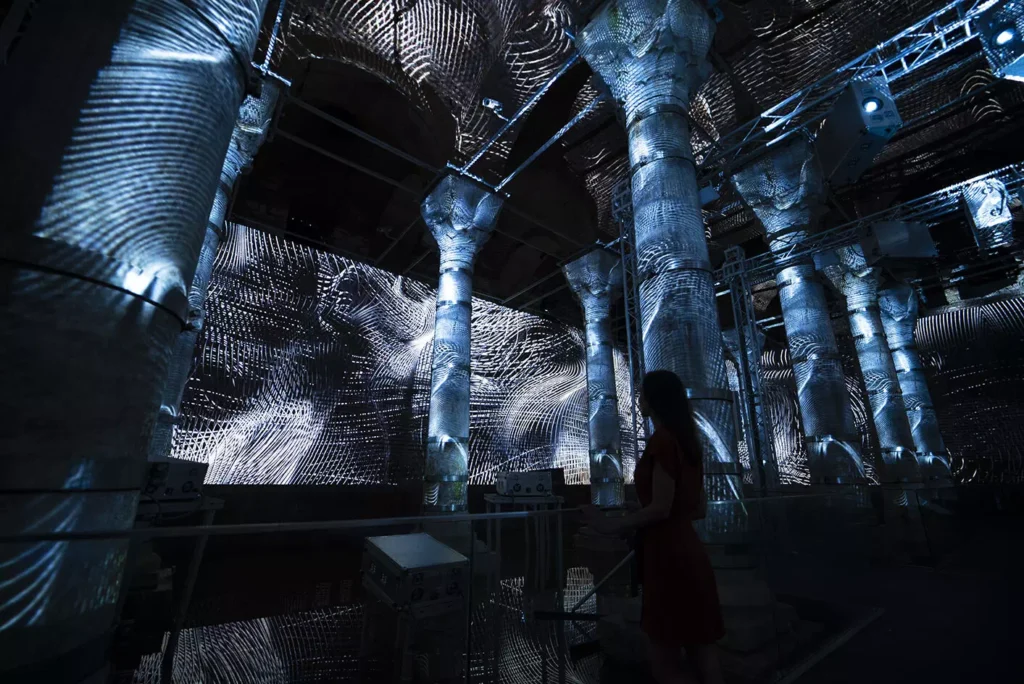
At the Cistern of Theodosius, locally known as Serefiye Sarnici, we take our visitors through a matchless adventure in which 1600 years bringing together history art and technology. Our cistern, located in the heart of Istanbul’s Historical Peninsula, offers a one-of-a-kind experience as ancient Byzantine architecture comes to life with a unique 360° projection mapping, extraordinary in the world for a structure of this age. It allows the visitors to travel through time, enjoying the most captivating shows, each with a blend of cutting-edge technology and timeless beauty from ancient crafts.
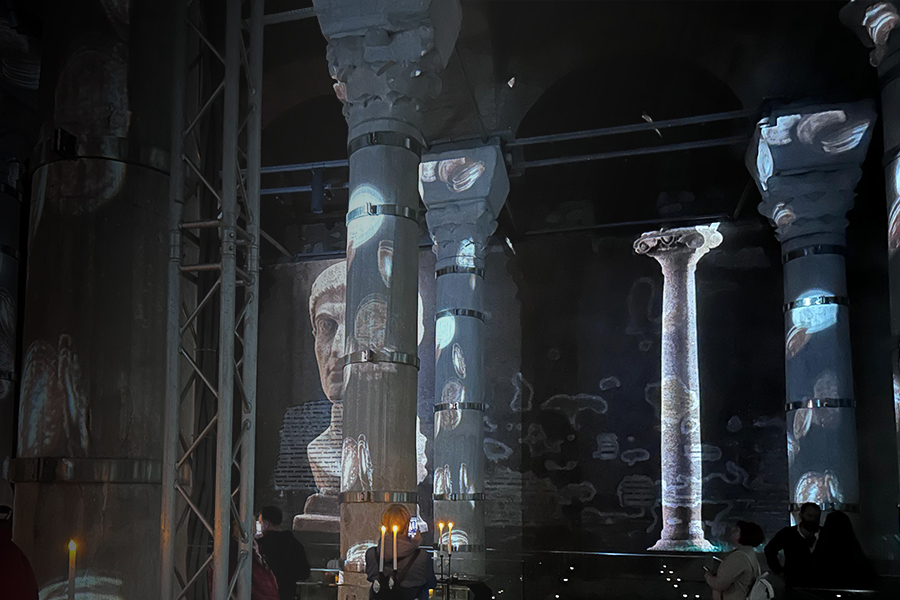
Two iconic projection mapping shows turn the visit to the museum into a many-dimesional experience: The « From Past to Present » show, with 3D effects highlighting the spatial qualities of Serefiye Cistern takes you away on a journey through the water heritage of Istanbul while making you admire to the architectural greatness of the building. From the Byzantine to the Ottoman Empires, this is a show depicting a complex water system that has sustained Istanbul since millennia. It is like history coming alive on the mosaics, icons, and Ottoman ceramic visuals in the cistern.
The second is « Istanbul: City of Water Civilization », which goes into depth with regard to the relationship between Istanbul and its water, therefore shedding light on the evolution of Istanbul as a « city of water » since time began. It develops hosting experiences that disclose their special historical and cultural dimensions for Istanbul’s exceptional status as a city.
Whether you are an art enthusiast, a history lover, or just a curious soul willing to uncover one of the best-kept secrets of Istanbul, Cistern of Theodosius will take you to an unforgettable atmosphere, allowing you to travel eternally in history, culture, and technology. Come and relive the historic charm of Istanbul with a truly modern twist!
Elle a été construite sous le règne de l’empereur romain d’Orient (byzantin) Théodose II, au Ve siècle apr. J.-C., ce qui explique qu’elle porte son nom.
Elle date du Ve siècle apr. J.-C., construite approximativement entre 428 et 443, ce qui lui donne environ 1 600 ans et en fait l’une des plus anciennes citernes conservées d’Istanbul.
Elle servait de réservoir souterrain couvert qui stockait et distribuait l’eau pour Constantinople, la capitale byzantine, alimentée par le système d’aqueducs de la ville.
La citerne repose sur des rangées de colonnes de marbre surmontées de chapiteaux corinthiens qui portent des voûtes en brique, une forme caractéristique de l’ingénierie des citernes byzantines.
En turc, elle est connue sous le nom de Serefiye Sarnici. Les noms Citerne de Théodose et Citerne de Şerefiye désignent le même édifice byzantin.
Après une vaste restauration, elle a rouvert ses portes en tant que lieu culturel et d’exposition en 2018, permettant aux visiteurs d’explorer cet espace souterrain.
Elle se trouve dans le district de Fatih, sur la péninsule historique d’Istanbul, au Piyer Loti Cd. No:2/1, à proximité de Sultanahmet et de Cemberlitas.