
Last reviewed and updated: November 28, 2026
Istanbul in March rewards visitors who start underground before they start outdoors. The city’s Byzantine cisterns stay a steady temperature year round, so they make the most sensible first stop while the weather above ground is still unsettled, before moving on to the Bosphorus and the open-air sights once the afternoon warms up.
Questions answered in this guide
- What is Istanbul like in March?
- What else is near the cistern in March?
- Is March a good time for the Bosphorus?
- What should I pack for Istanbul in March?
- Are the hamams worth it in March?
- How crowded are the main sights in March?
- Does the Theodosius Cistern stay open if it rains?
- What should I wear for a Bosphorus cruise in March?
- Is the evening dervish show at the cistern different from the daytime visit?
- Can I bring a suitcase into the cistern?
- Is March too early for a hamam visit?
- Do I need to book cistern tickets in advance in March?
- Best for: travelers mixing indoor history with the first outdoor days of spring
- Weather pattern: cool mornings, rain showers, warmer afternoons
- Crowd level: lighter than April through September
- Good first stop: the Sultanahmet cisterns, rain or shine
What is Istanbul like in March?
Istanbul in March is a transition month: cold snaps alternate with the first mild, sunny afternoons. Expect a coat for mornings and layers you can shed by midday.
Rain arrives in short bursts rather than all-day downpours, which is exactly why indoor-outdoor planning works well this month. A visitor who builds a loose schedule, rather than a tight hour-by-hour one, can simply move indoors when a shower starts and back out once it passes.
For anyone checking conditions close to a travel date, Turkey’s state meteorological service publishes short-range forecasts for Istanbul that are more reliable than general seasonal averages.
Where to start: the cistern of Theodosius
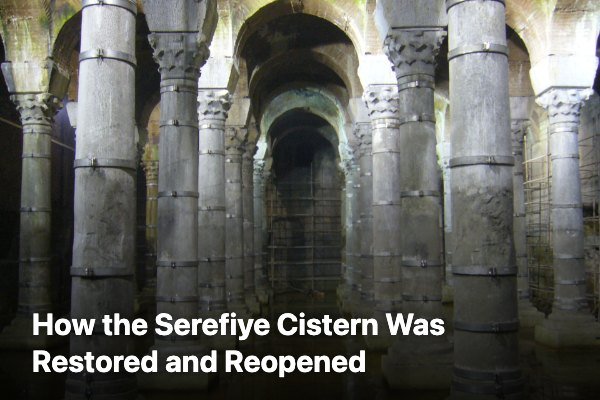
Start at the Cistern of Theodosius (Şerefiye Sarnıcı). It is a short walk from the main Sultanahmet monuments, it is covered, and it does not depend on the weather at all.
A cistern, in this context, is an underground reservoir built by Roman and Byzantine engineers to store water piped in from forests outside the old city walls.
The Theodosius cistern is one of the smaller, better-lit examples, and it now runs a 360° projection mapping show across its vaulted ceiling and columns rather than leaving visitors to read plaques in the dark.
The daytime visit runs within the site’s 09:00 to 18:00 session window, which suits a morning that starts with rain and clears by lunch. There is also an evening ticket built around a whirling dervish performance, with entrance at 19:45, the mapping show at 20:15, and the dervish performance itself at 20:30, finishing around 21:15.
That evening format includes snacks and drinks and runs about an hour and a half end to end.
Two practical notes worth knowing before arrival: luggage is not allowed inside, so day-trippers with suitcases should sort storage first, and professional photography needs written permission arranged in advance.
Tickets for either session can be arranged directly; book Theodosius Cistern tickets ahead of a March weekend, since the evening show has a fixed start time and does not wait for latecomers.
For context on how this cistern fits into the Byzantine water network, the site’s own piece on how the cistern supplied ancient Istanbul is a useful read before the visit, not after.
What else is near the cistern in March?
Everything within walking distance works in March weather, since most of it alternates between short outdoor stretches and covered interiors. Sultanahmet’s density of sights is exactly what makes a rainy morning manageable here, unlike neighborhoods built around open plazas.
A good sequence for a cool, showery morning: the cistern first, then a short walk to the area’s other historic sites, ducking into cafés as needed. The guide to things to do near the Theodosius Cistern in Sultanahmet lays out a walkable order that keeps backtracking to a minimum.
Istanbul holds more Roman and Byzantine cisterns than most visitors realize, and several are within easy reach of this neighborhood. The piece on hidden Roman architecture across Istanbul maps out the lesser-known ones for anyone with a second rainy morning to fill, including the Cistern of Aspar and the Cistern of Aetius further from the tourist core.
- Theodosius Cistern (Şerefiye Sarnıcı), covered, short visit
- Other Sultanahmet-area monuments, mostly walkable between showers
- Lesser-known cisterns further out, better suited to a dedicated half-day
Is March a good time for the Bosphorus?
Yes, with a caveat. March afternoons are often clear enough for a short sightseeing cruise, but the sunset light and open-deck comfort of summer cruises are not fully there yet.
The Bosphorus is the strait that separates Istanbul’s European and Asian sides, and a daytime sightseeing cruise along it is one of the few outdoor activities that still works on a cool, partly sunny March day if passengers dress for wind on the water.
A standard two-hour sightseeing cruise includes an on-board audio guide and open-deck viewing, which lets a visitor retreat to a covered seat if the wind picks up.
Evening cruises built around sunset views or dinner and a show are better suited to April onward, once evenings are reliably mild, though nothing stops a well-dressed visitor from booking one in March if the forecast cooperates.
A separate option worth knowing about is the Golden Horn, the estuary that splits off from the Bosphorus and runs past Balat and Eyüpsultan. Its round-trip sightseeing cruise stops at Miniatürk partway through and passes roughly twenty landmarks along both shores, which makes it a longer, more scenic alternative to a short Bosphorus loop on a day with decent visibility.
What should I pack for Istanbul in March?
Layers, a waterproof coat, and shoes that handle wet cobblestones. March punishes anyone dressed for either full winter or early summer.
- A waterproof or water-resistant coat, since showers arrive without much warning
- Layers for temperature swings between morning and afternoon
- Comfortable, grippy shoes for wet stone streets in the old city
- A light scarf or hat for cool mornings and breezy boat decks
Istanbul’s old city streets are uneven stone in many places, and rain makes them slick. This matters more in March than in drier months, and it is worth factoring into footwear choices before packing rather than after arrival.
Are the hamams worth it in March?
Yes, arguably more than in summer. A hamam, Istanbul’s traditional bathhouse, is one of the few experiences that genuinely improves when the weather outside is cold and grey.
A typical visit follows a set order: a warm welcome and change into a peştemal (a thin woven wrap), a period of warming on the heated marble platform called the göbek taşı, a scrub with a coarse mitt called a kese, a foam massage, and a final cold-water rinse.
Attendants are called tellak for men and natır for women, and most venues match therapist gender to guest gender.
Historic hamams in the old city, and smaller neighborhood options in areas like Taksim or Şişli, cover a wide price range depending on duration and whether the session is historic or modern. Anyone comparing options should check each venue’s own site directly, since durations and inclusions vary considerably between a 45-minute express visit and a two-hour full ritual.
How crowded are the main sights in March?
Lighter than the April to September stretch, but not empty. March sits before the main tourist season builds, which means shorter queues at ticketed sites and more available tables at nearby cafés.
This is the practical argument for using March to visit sites that reward unhurried time, underground cisterns among them, where rushing past the lighting and projection work defeats the point of going.
The pieces on hidden symbols found in Istanbul’s cisterns and the city’s water engineering history are worth reading before a visit, since both add context that is easy to miss on-site when moving quickly.
For anyone checking official opening arrangements for Istanbul’s state-run museums and sites more broadly, Turkey’s museums and heritage directory is the primary source, since hours can shift around public holidays that fall in March.
Frequently Asked Questions
Does the Theodosius Cistern stay open if it rains?
Yes. The cistern is fully underground and covered, so its daytime session, which runs within the 09:00 to 18:00 window, is unaffected by rain or wind outside.
What should I wear for a Bosphorus cruise in March?
Layers. Wind off the water is noticeably colder than the air on land, so a windproof outer layer matters even on a sunny afternoon.
Is the evening dervish show at the cistern different from the daytime visit?
Yes. The evening ticket adds a live whirling dervish performance with Sufi music after the mapping show, with entrance at 19:45 and the performance itself starting at 20:30, running about ninety minutes total with snacks and drinks included.
Can I bring a suitcase into the cistern?
No. Luggage is not permitted inside, so anyone arriving straight from a hotel checkout or heading to the airport should arrange storage beforehand.
Is March too early for a hamam visit?
No. Hamams operate indoors year round, and the cold, damp weather typical of March is, if anything, a better match for a heated bathhouse visit than a hot summer afternoon.
Do I need to book cistern tickets in advance in March?
Recommended. March is quieter than peak season, but the evening dervish show has a fixed start time and limited capacity, so booking ahead avoids arriving to a sold-out session.
March is a month for building an Istanbul itinerary around the weather rather than fighting it: cisterns and hamams on the grey mornings, the Bosphorus and the old city streets once the afternoon clears. Starting underground at the Theodosius Cistern, then working outward toward the water, keeps a March trip moving regardless of what the sky does.
Planning a visit? Ask AI to summarise this page
Open this article in your preferred assistant to get the key facts for your trip.
Ask ChatGPTAsk ClaudeAsk Perplexity
Comment (0)