
Last reviewed and updated: November 24, 2026
A workable Istanbul itinerary for the Old City needs two to three full days: one for Sultanahmet’s major monuments, one for the quieter Byzantine sites and bazaars, and a half day held back for whichever show, hamam or Bosphorus evening you want to add.
Questions answered in this guide
- How Many Days Do You Need for Istanbul’s Old City?
- Where Does the Cistern of Theodosius Fit in Your Itinerary?
- What’s the Best Order to See the Major Sites?
- What Else Is Worth Seeing Near Sultanahmet?
- How many days should I spend in Istanbul’s Old City?
- Is the Cistern of Theodosius worth adding to a Sultanahmet itinerary?
- Can I walk between all the major Old City sites?
- Do I need to book Old City tickets in advance?
- Is luggage allowed inside the Cistern of Theodosius?
- What’s the best time of day to visit underground cisterns?
Everything in the Old City sits within walking distance, so the real planning job is sequencing, not transport.
- Minimum time: two full days for the Old City’s core sights
- Comfortable time: three days including a hamam visit and an evening show
- Walking base: Sultanahmet square, with most sites under 15 minutes on foot
- Booking window: reserve timed tickets for busy sites a few days ahead, especially in peak season
How Many Days Do You Need for Istanbul’s Old City?
Two days covers the essentials; three gives you room to slow down.
On a two-day Istanbul itinerary, day one is usually Hagia Sophia, the Blue Mosque, Topkapı Palace and the Hippodrome, all clustered around the same square.
Day two shifts underground and sideways: the Grand Bazaar, the Spice Bazaar, and one or two of the city’s Byzantine cisterns, which sit a short walk from the main square but get a fraction of the foot traffic.
A third day is where most visitors add a hamam session, a Bosphorus cruise, or an evening performance. None of these need a full day, but cramming them onto day one or two usually means rushing something else. If your trip allows it, keep the third day loose rather than scheduled hour by hour.
Building a Day-by-Day Rhythm Around Sultanahmet
Start early, break at midday, and save underground sites for the afternoon heat.
Sultanahmet’s big mosques and Topkapı Palace get crowded fast after mid-morning, so an early start genuinely changes the visit. Arriving close to opening means shorter lines at Hagia Sophia and a quieter first look at the Blue Mosque’s courtyard before tour groups fill it.
By early afternoon, light and heat both argue for moving indoors. This is where cisterns earn their place in the schedule: cool, dim, and largely unaffected by weather or crowds outside.
Many visitors don’t realise how many of these underground reservoirs survive in the Old City; a short detour through hidden Roman architecture scattered across the city fills exactly this slot in the day.
Evenings are better spent on food, a market stroll, or a seated show rather than another monument. Pack the schedule earlier in the day and leave dinner unplanned until you’re actually hungry and nearby.
Where Does the Cistern of Theodosius Fit in Your Itinerary?
Mid-afternoon on your second day, between the bazaars and an early dinner.
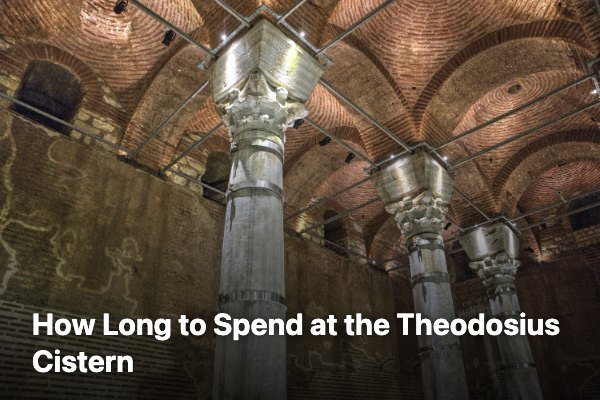
The Cistern of Theodosius, known locally as Şerefiye Sarnıcı, sits close enough to the Grand Bazaar and Column of Constantine that it slots naturally into a walking loop rather than requiring a separate trip. Daytime visits run within a 9:00 am to 6:00 pm session window, according to the site’s own ticket pages as of October 2026.
Inside, the cistern uses a 360° projection mapping system across two rotating shows, From Past to Present and Istanbul: City of Water Civilization, both telling the site’s history on the stone itself rather than through wall text.
For visitors curious about why this particular structure survived in such good condition, the story of how the Şerefiye cistern was restored and reopened is worth reading before you go.
If your evening is free, there’s also a later option: an evening session built around a whirling dervish performance, with entrance at 7:45 pm, the mapping show at 8:15 pm, and the dervish performance itself at 8:30 pm, ending around 9:15 pm. This version includes snacks and drinks and runs about an hour and a half.
Either way, luggage isn’t permitted inside, so this stop works best without roller bags or large backpacks. You can book Theodosius Cistern tickets for either session directly.
What’s the Best Order to See the Major Sites?
Monuments first, markets second, underground sites last.
Hagia Sophia and the Blue Mosque benefit most from early light and low crowds, so they belong at the start of your day. Topkapı Palace takes longer to walk through than people expect, given its courtyards and the Harem section, so plan it as a standalone morning rather than squeezing it between other stops.
The Grand Bazaar and Spice Bazaar work well as an afternoon shift, partly because they’re covered and partly because browsing doesn’t demand the same stamina as a palace visit. Save cisterns for whenever you need a break from sun and crowds; they’re one of the few Old City sights that don’t lose anything by being seen later in the day.
If you have time for only one Byzantine water structure beyond the Basilica Cistern, a comparison helps.
The Cistern of Aspar and the Cistern of Aetius are both open-air reservoirs rather than covered halls, which makes them a different kind of stop entirely; read about the Cistern of Aspar’s Byzantine history or the ancient Cistern of Aetius before deciding which fits your route better.
| Site type | Best time of day | Typical visit length |
|---|---|---|
| Hagia Sophia / Blue Mosque | Early morning | 45-60 minutes each |
| Topkapı Palace | Mid-morning | 2-3 hours |
| Grand Bazaar / Spice Bazaar | Early afternoon | 1-2 hours |
| Cisterns (covered) | Afternoon or evening | 45-90 minutes |
Getting Around the Old City
Walking covers most of it; the tram handles the rest.
Sultanahmet’s main sights sit within a 15 to 20 minute walk of each other, so a lot of your Istanbul itinerary doesn’t need public transport at all.
The T1 tram line runs along the edge of the district and connects to the Grand Bazaar area, Eminönü, and the Galata Bridge if you want to extend the day toward the Bosphorus waterfront.
An Istanbulkart, the city’s rechargeable transit card, works across trams, buses and ferries and is worth picking up on day one even if you plan to walk most of the Old City.
Details on routes and current transit options are published by Istanbulkart’s official site, which is the most reliable source for how the card works and where to top it up.
For sites slightly off the main square, including some of the lesser-visited cisterns, a short guide on how to get to the Theodosius Cistern covers the walking route from the tram stops in more detail than a map alone.
Evening Plans: Shows, Hamams and Bosphorus Views
Pick one evening activity, not three; the Old City rewards a slower pace after dark.
A hamam visit is the classic way to end a day of walking. A hamam is a traditional steam bath where a kese, a coarse exfoliating mitt, is used for a full-body scrub before a foam massage and a final rinse.
Several historic hamams operate in the Old City with separate sections for men and women and gender-matched staff, which is worth confirming when booking if that matters to you.
If you’d rather stay above ground, an evening built around music and performance is the other common choice. Sites that pair a visual show with a live performance, such as the dervish session already described, suit visitors who want something seated and atmospheric rather than another walking stretch.
For a change of scenery entirely, a short Bosphorus outing in the early evening adds water and skyline views that the Old City itself doesn’t offer. This works best as a once-per-trip addition rather than a daily habit, since it does eat into an evening that could otherwise go toward dinner or a hamam.
What Else Is Worth Seeing Near Sultanahmet?
A handful of smaller sites reward visitors who’ve already done the big three.
Beyond Hagia Sophia, the Blue Mosque and Topkapı, Sultanahmet holds several smaller stops that rarely make a first-timer’s list but add real texture to a second day. A rundown of things to do near the Theodosius Cistern in Sultanahmet groups several of these within walking distance of each other.
For travelers interested in the engineering behind Istanbul’s underground reservoirs, including how water moved through the city in Byzantine times, a piece on the water engineering secrets of Istanbul’s cisterns explains the system in plain terms. It’s a useful read before visiting any cistern, since the structures make more sense once you know what they were actually built to do.
Official background on the city’s museums and ticketed historic sites, including opening arrangements that can shift seasonally, is maintained by Türkiye’s Ministry of Culture and Tourism, which is worth a check before finalising a tight schedule.
Frequently Asked Questions
How many days should I spend in Istanbul’s Old City?
Two days covers the core sights; three days allows a hamam visit, an evening show, or both without rushing.
Is the Cistern of Theodosius worth adding to a Sultanahmet itinerary?
Yes. It sits close to the Grand Bazaar and offers a cool, covered break from mosque and palace visits, with both a daytime session and an evening dervish performance.
Can I walk between all the major Old City sites?
Yes, for the most part. Hagia Sophia, the Blue Mosque, Topkapı Palace and the Grand Bazaar are all within a 15 to 20 minute walk of each other.
Do I need to book Old City tickets in advance?
Generally yes for timed sessions, especially in busier months. Booking the Cistern of Theodosius ahead secures your preferred daytime or evening slot.
Is luggage allowed inside the Cistern of Theodosius?
No. The site does not permit luggage inside, so plan this stop without roller bags or large backpacks.
What’s the best time of day to visit underground cisterns?
Afternoon works well, once mosque and palace visits are done and you need a break from sun or crowds outside.
Planning the rest of the trip around the Old City, including transfers or a Bosphorus evening to pair with your Sultanahmet days, is easier with a single itinerary tool rather than juggling separate bookings; Istambul.com is worth a look if you want to tie these pieces together in one place.
Planning a visit? Ask AI to summarise this page
Open this article in your preferred assistant to get the key facts for your trip.
Ask ChatGPTAsk ClaudeAsk Perplexity
Comment (0)