
Last reviewed and updated: November 20, 2026
Istanbul tours generally fall into three groups: Old City walks around Sultanahmet, Bosphorus cruises on the water, and evening shows that start after dinner. Pick Old City for history on foot, Bosphorus for the skyline from a deck, evening for a shorter, lit-up finish to the day.
Questions answered in this guide
- How Do Istanbul Tours Split Into Three Types?
- What Does an Old City Tour Actually Cover?
- What Does a Bosphorus Cruise Add That Old City Tours Don’t?
- Are Evening Tours Worth Booking After a Full Day?
- How Do You Choose Between the Three in One Trip?
- Can you fit all three tour types into one day?
- Do Bosphorus cruises include hotel pickup?
- Is the Serefiye Cistern included in standard Old City tours?
- What should you bring to an evening dervish show?
- Are Golden Horn cruises different from Bosphorus cruises?
- Do you need to book Old City or cistern tickets in advance?
- Best for history: Old City tours around Sultanahmet, the Hippodrome, and the cisterns
- Best for scenery: Bosphorus day or sunset cruises from the water
- Best for a short evening: dervish and mapping shows lasting about 1.5 hours
- Best combined: an Old City morning followed by a Bosphorus or evening slot
How Do Istanbul Tours Split Into Three Types?
| Option | Price | Duration |
|---|---|---|
| Bosphorus day sightseeing cruise | from €12 | 2 hours |
| Bosphorus sunset cruise | from €50 | 2 hours |
| Bosphorus dinner cruise with Turkish show | from €30 | 3 hours |
| Private yacht charter | from €115/hour | – |
| Event boat charter | from €300/hour | – |
Istanbul tours divide by what they show you: dry land monuments, open water views, or after-dark performance. Each type runs on its own clock and suits a different kind of tired traveler.
Old City tours move you through dense, walkable sites: the cisterns, the mosques, the palace grounds. Bosphorus tours put you on a boat for a fixed window, usually under three hours, so you see Istanbul from outside rather than inside its streets. Evening tours are shorter again, built around one performance rather than a route.
None of the three replaces the others. A first-time visitor with two or three days usually needs at least one from each category to get a full picture of the city rather than just its postcard view.
What Does an Old City Tour Actually Cover?
An Old City tour covers the walkable cluster around Sultanahmet: Hagia Sophia, the Blue Mosque, the Hippodrome, and the underground cisterns beneath them. Most operators run these as half-day walks with a guide moving between sites on foot.
The cisterns are the part first-time visitors underestimate. A cistern is an underground reservoir built to store water for the city above it, and Istanbul has several that survive from the Byzantine period.
For background on how these structures worked before they became visitor sites, our piece on water engineering secrets of Istanbul cisterns covers the plumbing logic most tour guides skip.
Beyond the Theodosius Cistern itself, the Old City holds smaller, lesser-known examples. The Cistern of Aspar and the Cistern of Aetius sit outside the main tourist loop and rarely appear on a standard guided itinerary, which is exactly why independent travelers add them.
If you are arriving from a cruise ship with a tight window, a stripped-down version of this walk is possible. Our guide to a fast Istanbul tour for cruise passengers lays out what fits into a half-day and what to skip.
What Does a Bosphorus Cruise Add That Old City Tours Don’t?
A Bosphorus cruise adds the water view: the straits, the bridges, and the waterfront palaces that only make sense seen from a boat. It is the part of Istanbul that walking tours cannot reach.
A short sightseeing cruise typically runs about two hours with open-deck viewing and an audio guide, starting from €12 per person as of November 2026, according to the operator’s own booking page.
A sunset version runs later in the day, closer to €50 per person for the same length with a live guide and a welcome drink included, per the same source.
For travelers who want the water experience further from the main strait, a separate option runs the Golden Horn instead.
The Golden Horn is a narrow inlet off the Bosphorus lined with museums, mosques, and the Fener and Balat waterfront districts; a round trip there starts from €9 per person as of November 2026, according to the operator’s own product page.
Neither cruise includes a meal by default. Travelers planning to eat on board should check the dinner cruise format separately rather than assuming a sightseeing ticket covers food.
Are Evening Tours Worth Booking After a Full Day?
Yes, if the evening slot is short and seated rather than another walking route. A 90-minute performance fits easily after a day tour without requiring a second full outing.
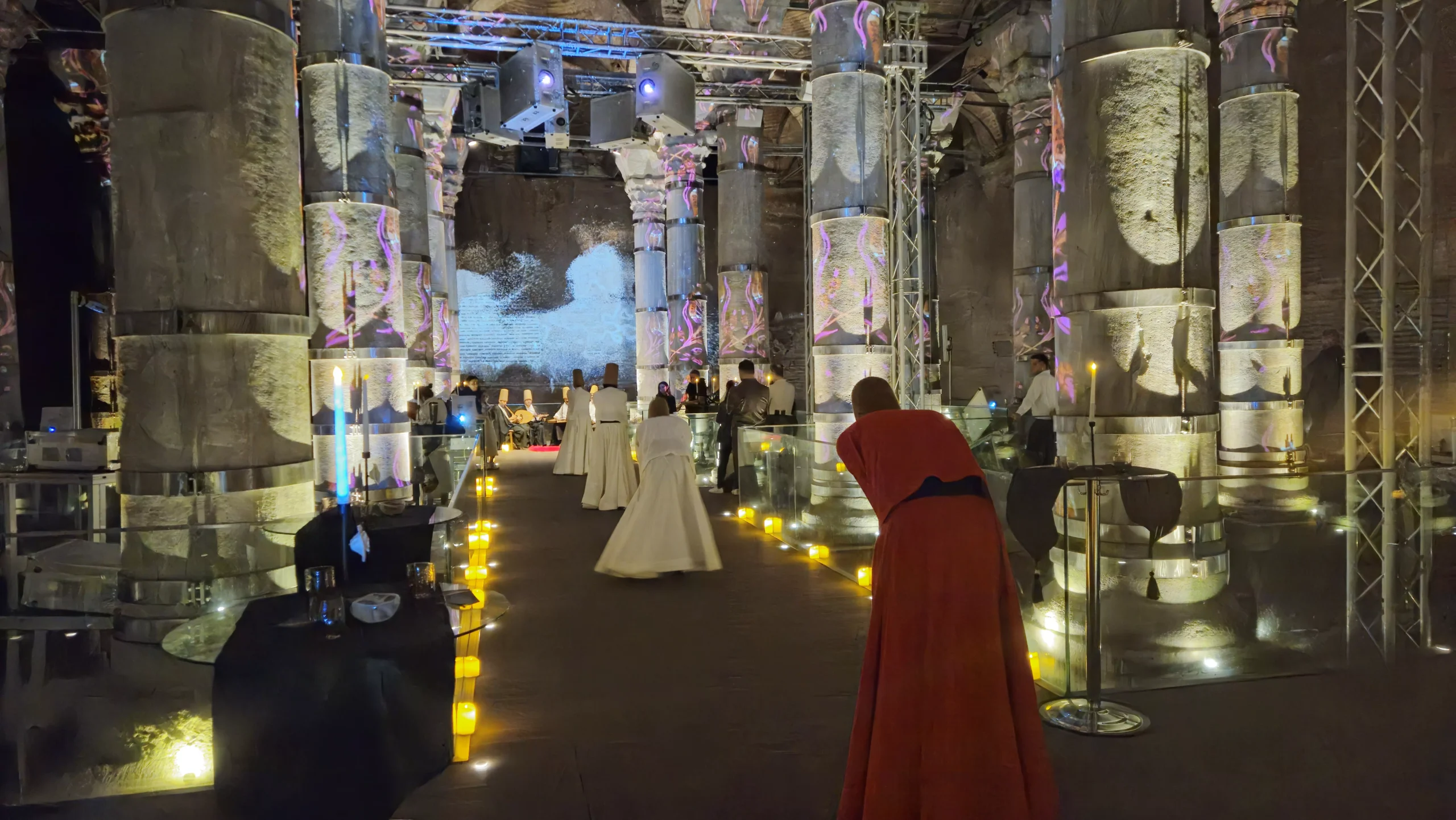
One common evening format pairs a mapping light show with a whirling dervish performance and live Sufi music. Entrance typically runs from 7:45 pm, the mapping show starts around 8:15 pm, the dervish performance follows at 8:30 pm, and the session wraps by 9:15 pm, based on the venue’s own published schedule.
Snacks and drinks are usually included in this format, though alcoholic drinks are often sold separately.
A dervish, in this context, is a performer trained in the whirling ritual associated with Sufi devotional practice; the spinning motion is a meditative technique rather than a staged dance routine built for tourists. Seeing it indoors, lit, and accompanied by live music is a different experience from reading about it beforehand.
Evening tours work best as a closing event, not an opener. Booking one on the first night, before you have any context for the city, tends to waste the atmosphere.
Visiting the Serefiye Cistern as Part of an Old City Tour
The Serefiye Cistern, also known as the Cistern of Theodosius, sits inside the standard Old City walking route and works as a daytime stop or an evening show on its own ticket. It is one of the few cisterns in Sultanahmet set up for both formats.
The daytime session runs during opening hours of 9:00 am to 6:00 pm and includes access plus a mapping light show projected across the vaulted ceiling. The evening format, covered in the section above, swaps the solo visit for a dervish performance and live music.
Two details matter before arrival: luggage is not permitted inside, and professional photography needs written permission arranged in advance. Neither restriction is unusual for an underground Byzantine structure, but they catch first-time visitors who assume a camera pass is automatic.
Travelers curious about the restoration that made these visits possible can read how the Serefiye Cistern was restored and reopened, which covers the gap between its Byzantine construction and its current use as a venue. Book ahead for either session; tickets can be arranged directly through Book Theodosius Cistern tickets.
How Do You Choose Between the Three in One Trip?
Choose by matching the tour type to your remaining energy and the time of day you have free. Mornings suit walking, afternoons suit the water, and evenings suit a seated show.
The table below is a rough planning guide rather than a fixed rule.
| Tour type | Typical length | Best time slot | Energy needed |
|---|---|---|---|
| Old City walk | Half day | Morning | High, lots of standing and steps |
| Bosphorus cruise | About 2 hours | Afternoon or sunset | Low, mostly seated |
| Evening show | About 1.5 hours | Night | Low, seated performance |
Transport between sites is straightforward if you plan the order correctly. For the walk between the main Sultanahmet sites and the cistern entrance, see how to get to the Theodosius Cistern, and for what else sits within easy reach afterward, our list of things to do near the Theodosius Cistern in Sultanahmet covers the immediate neighborhood.
For official opening arrangements and museum policy across Turkey’s state sites, the Ministry of Culture’s museum portal publishes the current rules, and general trip planning is covered by Türkiye’s official tourism portal.
Frequently Asked Questions
Can you fit all three tour types into one day?
Technically yes, but it is tight. A morning Old City walk, an afternoon Bosphorus cruise, and an evening show are each short enough to stack, though most travelers find two per day more comfortable than three.
Do Bosphorus cruises include hotel pickup?
Usually not on the base sightseeing ticket. Hotel transfer is typically an add-on or bundled only into higher-priced packages, so check the specific product before assuming it is included.
Is the Serefiye Cistern included in standard Old City tours?
Sometimes. Many guided Old City walks stop at the Basilica Cistern instead, so travelers wanting the Serefiye Cistern specifically should book its ticket separately rather than assume a group tour covers it.
What should you bring to an evening dervish show?
Nothing bulky. Luggage is not allowed inside the venue, so arrive with just what fits comfortably on your lap or a small bag.
Are Golden Horn cruises different from Bosphorus cruises?
Yes. The Golden Horn route runs along a narrower inlet with stops like Fener and Balat, while Bosphorus cruises follow the main strait between the European and Asian sides of the city.
Do you need to book Old City or cistern tickets in advance?
Advisable, especially for evening slots with fixed performance times. Daytime cistern visits have more flexibility within opening hours, but arriving without a reservation risks a wait or a sold-out session.
Whichever mix you settle on, build the day around whichever tour needs the earliest start and let the rest follow. If the Bosphorus is the piece you don’t want to miss, Bosporus Cruise runs the day, sunset, and dinner formats mentioned above directly from its own booking pages.
Planning a visit? Ask AI to summarise this page
Open this article in your preferred assistant to get the key facts for your trip.
Ask ChatGPTAsk ClaudeAsk Perplexity
Comment (0)