
Last reviewed and updated: November 9, 2026
The best Byzantine Istanbul walk runs from the Hippodrome through Sultanahmet to the Theodosius Cistern, covering under a kilometre on foot. It takes most visitors two to three hours with stops, longer if you linger in the cistern itself.
Questions answered in this guide
- Where does this walk start?
- What’s the next stop after the Hippodrome?
- How do you get from Sultanahmet to the Theodosius Cistern?
- What makes the Şerefiye (Theodosius) Cistern worth the detour?
- Is the cistern connected to Istanbul’s old water system?
- Are there other Byzantine cisterns worth seeing on the same trip?
- Where can the walk continue after the cistern?
- What should you know about tickets, transport and timing?
- How long does the full Hippodrome to cistern walk take?
- Can you visit the Theodosius Cistern in the evening?
- Is the Theodosius Cistern the same as the Basilica Cistern?
- Do you need to book Theodosius Cistern tickets in advance?
- Is luggage allowed inside the cistern?
- What’s the best starting point for this walk?
- Distance: roughly 800 metres between the Hippodrome and the cistern entrance
- Walking time: about 15 minutes without stops
- Best for: first-time visitors mixing Roman, Byzantine and Ottoman layers in one morning
- Cistern hours: daytime sessions run 9:00 am to 6:00 pm, per the venue’s own ticket page
Where does this walk start?
The walk starts at the Hippodrome of Constantinople, the long open square in Sultanahmet once used for chariot races. The Egyptian Obelisk, the Serpent Column and the Walled Obelisk still stand along its old central spine.
Standing at the obelisk end gives you a sense of the original track’s scale, since the Hippodrome once held tens of thousands of spectators. None of the surrounding grandstands survive above ground, but the shape of the square still traces the old racetrack almost exactly.
What’s the next stop after the Hippodrome?
The next stop is the Basilica Cistern, a five minute walk northeast, followed by a short stretch toward Sultanahmet’s back streets. Most people treat the two cisterns as a pair rather than a single destination.
The Basilica Cistern is the larger and better known of Istanbul’s underground reservoirs, with its forest of columns and the famous Medusa heads at the base of two of them. If you’re deciding which to prioritise on a short trip, our comparison of the Theodosius Cistern and the Basilica Cistern breaks down the practical differences in size, crowds and atmosphere.
Some visitors ask which one to see if they only have time for one. A separate guide on choosing between Yerebatan and Şerefiye cisterns walks through that exact decision.
How do you get from Sultanahmet to the Theodosius Cistern?
On foot, it is a walk of about ten minutes from the Basilica Cistern through the Divanyolu area toward the Nuruosmaniye side. The route passes several smaller Byzantine and Ottoman traces along the way.
Divanyolu was the old Byzantine Mese, the main ceremonial avenue that ran through Constantinople from the Hippodrome toward the land walls. Walking it today, under modern paving and tram lines, still follows roughly the same east to west line the Byzantines used for imperial processions.
Along this stretch, a list of things to do near the Theodosius Cistern in Sultanahmet covers smaller stops worth a short detour, including cafes and viewpoints that don’t need a separate trip.
What makes the Şerefiye (Theodosius) Cistern worth the detour?
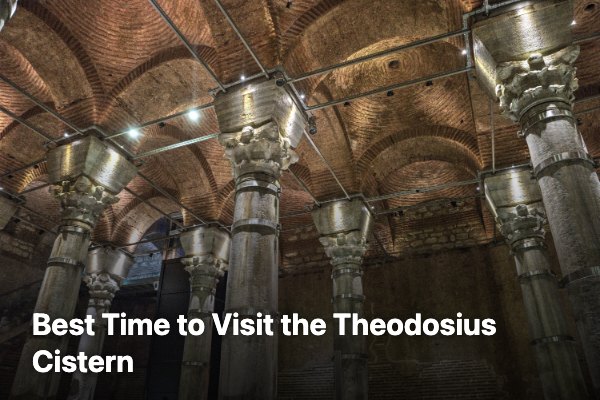
The Şerefiye Cistern, also called the Cistern of Theodosius, is a fifth century Byzantine reservoir reopened to the public after restoration. It’s smaller than the Basilica Cistern but less crowded, and it runs a 360° projection mapping show inside the chamber itself.
The cistern offers a daytime visit ticket for sessions between 9:00 am and 6:00 pm, which includes access for the chosen session and the mapping light show, according to the venue’s own ticket page as of November 2026.
There’s also an evening ticket built around a whirling dervish performance, with entrance at 7:45 pm, the mapping show starting at 8:15 pm, and the dervish performance at 8:30 pm, finishing around 9:15 pm; this version runs about an hour and a half and includes snacks and drinks alongside the show.
A kese isn’t relevant here, but one local term worth knowing is “sarnıç”, the Turkish word for cistern, which appears on most signage around Sultanahmet’s underground sites. Luggage isn’t allowed inside, and professional photography needs written permission in advance, so plan accordingly if you’re carrying bags from the airport or a hotel checkout.
If you want the full walkthrough of what the visit covers room by room, our guide to visiting the Cistern of Theodosius goes through the layout and the shows in more detail. You can book Theodosius Cistern tickets for either session directly through the site.
Is the cistern connected to Istanbul’s old water system?
Yes. The Theodosius Cistern was part of a network of reservoirs and aqueducts that supplied Byzantine Constantinople with fresh water, much of it carried in from forests well outside the city walls.
An aqueduct is simply an engineered channel, often elevated on arches, built to move water across distance using gravity rather than pumps. Constantinople relied on several of these, feeding open reservoirs and covered cisterns like this one across the city.
For the engineering side of the story, a longer piece on how the Cistern of Theodosius supplied ancient Istanbul traces the route water took from the forests to the taps of the old city.
Are there other Byzantine cisterns worth seeing on the same trip?
Two others worth knowing about are the Cistern of Aspar and the Cistern of Aetius, both open-air rather than covered, and both further from the Sultanahmet core.
These were built as uncovered reservoirs, essentially large sunken basins, rather than the columned underground halls tourists usually picture. They’re quieter sites, more about the scale of Byzantine water engineering than atmosphere.
- A guide to the Cistern of Aspar, in the Fatih district
- A look at the ancient Cistern of Aetius, now partly used as a park and sports ground
Neither needs a ticket in the way the Basilica or Theodosius cisterns do, since both sit in the open, so they work well as an add on rather than a dedicated half day.
Where can the walk continue after the cistern?
From the Theodosius Cistern, the walk continues naturally toward Çemberlitaş and the Grand Bazaar area, following more of the old Mese.
This stretch takes you past Çemberlitaş itself, the Column of Constantine, a weathered porphyry column erected in the fourth century to mark the new capital’s forum. A route guide from the Şerefiye Cistern to Çemberlitaş lays out this next leg stop by stop, including where to pause for tea.
If you’re keen on photographing the cistern’s light and columns before moving on, a practical guide to photography inside the Theodosius Cistern covers lighting conditions and the rules on tripods and flash.
What should you know about tickets, transport and timing?
Book the cistern ticket ahead of time for the session you want, since the daytime slots and the evening dervish show run on fixed entry and performance times rather than open browsing.
Getting around Sultanahmet on foot needs no ticket at all, but if you’re combining this walk with tram or ferry connections elsewhere in the city, Istanbul’s metro and tram network site has current route maps and an Istanbulkart page explaining the city’s transit card.
For checking museum opening arrangements across the wider old city, Turkey’s Ministry of Culture and Tourism keeps an official museums and sites portal that’s worth bookmarking if your itinerary includes Hagia Sophia or Topkapı Palace on the same day.
Frequently Asked Questions
How long does the full Hippodrome to cistern walk take?
About two to three hours including stops at the Basilica Cistern and a visit inside the Theodosius Cistern itself; the walking portion alone is closer to 15 to 20 minutes.
Can you visit the Theodosius Cistern in the evening?
Yes. There’s an evening ticket built around a whirling dervish performance with live Sufi music, starting with entrance at 7:45 pm and running through to around 9:15 pm, according to the venue’s own ticket page.
Is the Theodosius Cistern the same as the Basilica Cistern?
No. They are two separate underground reservoirs in Sultanahmet; the Basilica Cistern is larger and more visited, while the Theodosius Cistern (Şerefiye) is smaller, less crowded, and runs its own projection mapping show.
Do you need to book Theodosius Cistern tickets in advance?
Advisable, since sessions run on set times rather than walk-up entry; you can book Theodosius Cistern tickets directly through the venue’s own booking page.
Is luggage allowed inside the cistern?
No. Large bags and luggage aren’t permitted inside the Theodosius Cistern, so plan to drop them at your hotel before visiting, particularly on arrival or departure days.
What’s the best starting point for this walk?
The Hippodrome of Constantinople, in Sultanahmet, since it sits closest to the main tram stop and gives the clearest sense of the old city’s Byzantine layout before heading toward the cisterns.
Walking this route in order, from the open sky of the Hippodrome down into the quiet of a fifth century reservoir, is still the clearest way to feel how Byzantine Constantinople was built in layers. For the Theodosius Cistern leg of the trip, you can book your visit here and pick the daytime or evening session that fits your day.
Planning a visit? Ask AI to summarise this page
Open this article in your preferred assistant to get the key facts for your trip.
Ask ChatGPTAsk ClaudeAsk Perplexity
Comment (0)