
Last reviewed and updated: November 4, 2026
Istanbul in November means mild, wet days, average highs around the mid teens Celsius, and most major sights operating on normal hours with thinner crowds. Rain gear matters more than a heavy coat. Museums, cisterns, and the Bosphorus boats all run, though some outdoor experiences get shortened by early sunsets.
Questions answered in this guide
- What’s the Weather Like in Istanbul in November?
- Are Museums and Historic Sites Open in November?
- How Should You Plan a November Itinerary Around Shorter Days?
- What Should You Pack for Istanbul in November?
- Is November a Good Time for Boat Trips on the Bosphorus?
- Does it rain a lot in Istanbul in November?
- Are outdoor attractions worth visiting in November?
- Can you visit the Cistern of Theodosius in the evening?
- Is the Cistern of Theodosius open every day in November?
- Do I need to book cistern tickets in advance in November?
- What should I wear to visit an underground cistern in November?
- Typical weather: cool, frequently rainy, with occasional sunny stretches
- Daylight: sunset moves earlier through the month, affecting evening plans
- Crowds: noticeably thinner than summer at most indoor sites
- Best for: travelers who prefer walking the city without queues
What’s the Weather Like in Istanbul in November?
Expect cool temperatures, regular rain showers, and a damp wind off the Bosphorus for much of November 2026.
Mornings often start grey and can clear by afternoon, so a light waterproof layer works better than an umbrella on windier days near the water. Istanbul’s weather in November swings between calm, overcast days and sudden downpours that pass within the hour.
The official Turkish State Meteorological Service publishes short-range forecasts that are more reliable than general seasonal averages, and checking Türkiye’s meteorological service the morning of an outdoor plan is worth the minute it takes.
Layering matters more than one heavy coat. A waterproof shell over a sweater handles both the drizzle and the periods when the sun breaks through.
Are Museums and Historic Sites Open in November?
Yes. Istanbul’s major museums, palaces, and underground cisterns keep their regular-season hours through November, with no citywide winter closures.
Indoor sites benefit most from the month. Rain that would spoil a walking tour has no effect on a visit to an underground cistern, a covered bazaar, or a palace interior.
Some open-air sites, like certain palace gardens or outdoor archaeological areas, close earlier as daylight shortens, so checking individual hours before arrival avoids a wasted trip. The Ministry of Culture and Tourism’s museum portal lists current hours for state-run sites and is the most dependable source if a schedule looks uncertain.
Istanbul’s Byzantine-era cisterns, underground chambers built to store water for the ancient city, are a reliable November choice precisely because weather never factors into the visit.
Visiting the Cistern of Theodosius (Şerefiye Sarnıcı) in November
The Cistern of Theodosius runs its normal daytime sessions from 9:00 am to 6:00 pm in November, unaffected by rain or shorter daylight.
Daytime tickets cover the chosen session and the mapping light show, a 360 degree projection display across the restored chamber walls.
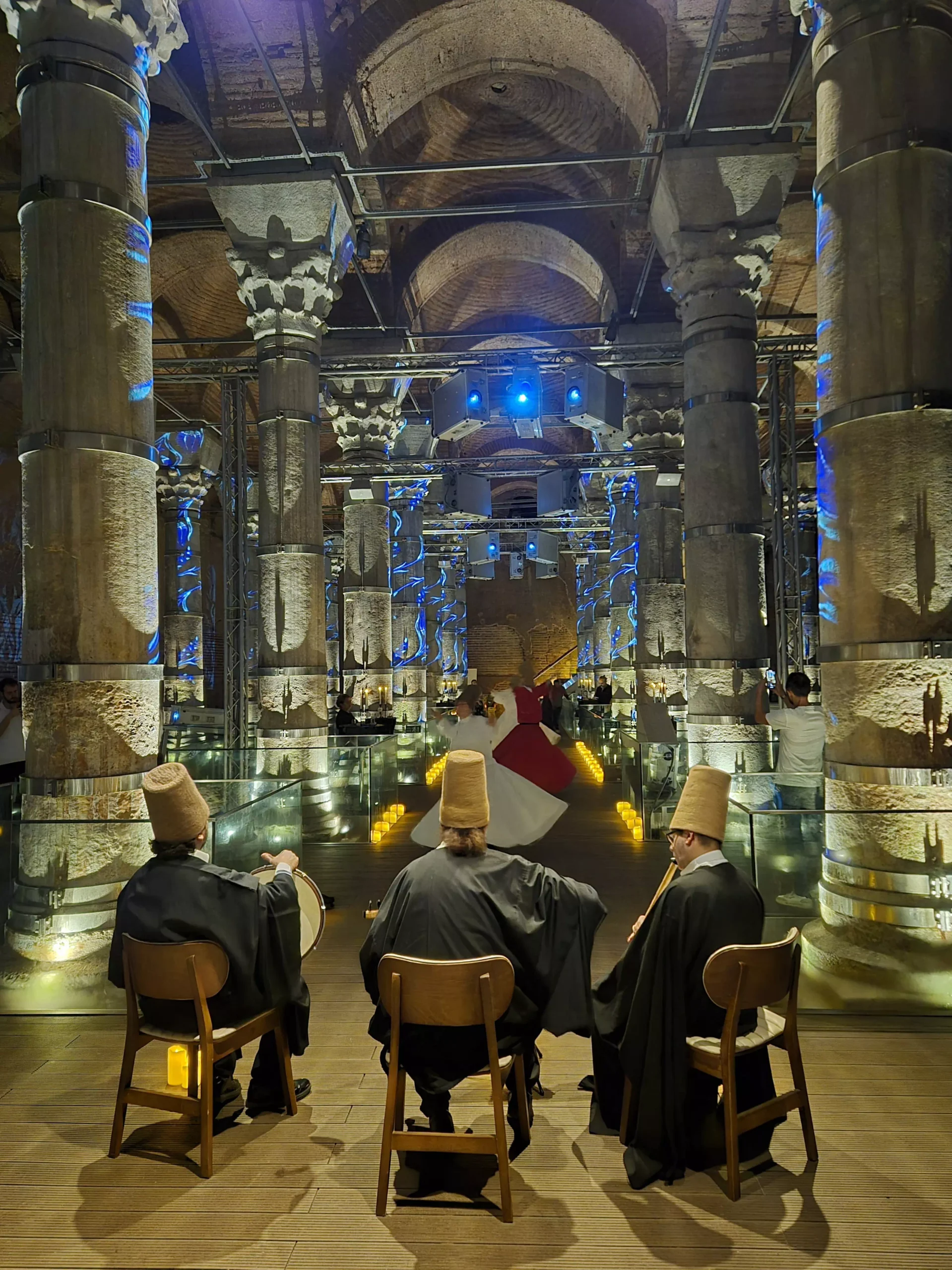
The evening version adds more: entrance at 7:45 pm, the mapping show at 8:15 pm, a whirling dervish performance with live Sufi music at 8:30 pm, and a close at 9:15 pm, running about an hour and a half with snacks and drinks included.
November’s cooler, wetter weather makes an underground visit like this an easy fit between outdoor plans. There is no weather dependency once inside, and the cool, constant temperature of the cistern chamber feels comfortable regardless of what the sky is doing above ground.
Luggage is not permitted inside, and professional photography needs written permission arranged in advance. Travelers who want to understand the structure’s history before arriving can read how the Şerefiye cistern was restored and reopened or how the cistern once supplied ancient Istanbul.
For the evening dervish show especially, booking ahead is worth doing, since the performance slot is fixed and does not repeat later the same night. Book Theodosius Cistern tickets directly through the site to lock in a session before arrival.
How Should You Plan a November Itinerary Around Shorter Days?
Put outdoor, daylight-dependent activities first in the day and move indoor sites, like museums and cisterns, to the afternoon or evening.
Sunset arrives noticeably earlier than in summer, which shortens the window for photographing skylines or walking waterfront routes in natural light. Scheduling a Bosphorus walk or a visit to Sultanahmet’s outdoor squares for the late morning avoids the rush of racing daylight.
Evening plans work well in November precisely because the city’s indoor attractions, restaurants, and performance venues don’t depend on weather or light. An evening dervish show or a covered bazaar stop fits naturally once the sky has already gone dark by late afternoon.
A short, realistic daily shape for November looks like this:
- Morning: outdoor walking routes or open squares while light is strongest
- Midday: a sit-down lunch indoors if rain starts
- Afternoon: museums, cisterns, or covered markets
- Evening: performances, dinner, or an evening cistern session
What Should You Pack for Istanbul in November?
Pack layers, a waterproof outer shell, and comfortable waterproof shoes, since cobblestone streets get slick after rain.
A compact umbrella helps on calm days, but wind off the water can make it useless during a real squall, which is where a hood and waterproof jacket earn their place. Istanbul’s old city streets around Sultanahmet are stone and can pool water quickly during a heavy shower.
For anyone combining a cistern visit with other nearby stops, a light day bag works better than anything bulky, since large luggage is not allowed inside the Cistern of Theodosius and similar underground sites.
Travelers staying near the historic peninsula can pair the visit with other things to do near the cistern in Sultanahmet without needing to carry much between stops.
Is November a Good Time for Boat Trips on the Bosphorus?
Yes, with caveats. Boats run their regular schedules, but rain and wind can make open-deck sections less comfortable than in warmer months.
Covered seating areas handle the weather fine, and the views across the strait, the natural channel separating Europe and Asia through the city, are often sharper on a clear November day than through summer haze. Checking the forecast the morning of departure helps decide between an open-deck or covered seat.
Those extending a cruise with a walk along the water, or combining it with a cistern visit on the same day, may also enjoy pairing it with a broader look at the city’s underground water history, including the smaller Cistern of Aspar and the lesser-known Cistern of Aetius, both reachable within the same part of the city.
Getting Around Istanbul in November
Public transport runs its normal timetable through November, and an Istanbulkart remains the easiest way to pay across trams, metro, ferries, and buses.
Wet pavements and shorter daylight make walking between distant sights slower than it feels on a map, so building in extra time between stops avoids rushing the last one of the day. The city’s transit authority publishes live route and fare information through Istanbul’s metro operator, useful for checking a line before heading out in the rain.
First-time visitors unsure how to reach specific historic sites can check a dedicated route guide such as how to get to the Theodosius Cistern before setting out, since tram stops and walking entrances around Sultanahmet aren’t always obvious from a map alone.
Frequently Asked Questions
Does it rain a lot in Istanbul in November?
Often, yes. November typically brings frequent showers mixed with drier spells, so packing waterproof layers matters more than a heavy winter coat.
Are outdoor attractions worth visiting in November?
Yes, in the mornings. Shorter daylight and rain make afternoons less reliable, so scheduling outdoor walks and open squares earlier in the day works best.
Can you visit the Cistern of Theodosius in the evening?
Yes. The evening session includes a mapping light show and a whirling dervish performance with live Sufi music, running from entrance at 7:45 pm to a close around 9:15 pm.
Is the Cistern of Theodosius open every day in November?
Daytime sessions run from 9:00 am to 6:00 pm, following the site’s standard schedule without seasonal closures.
Do I need to book cistern tickets in advance in November?
Recommended, especially for the evening show. The dervish performance happens at a fixed time once per evening, so booking ahead avoids missing the slot.
What should I wear to visit an underground cistern in November?
Layers work best. The chamber stays cool and constant regardless of the weather outside, so a light sweater under a waterproof jacket covers both environments.
Istanbul in November rewards travelers who plan around the weather rather than against it: mornings outside, afternoons and evenings indoors, and a little flexibility for the days rain wins. The city’s cisterns, museums, and covered markets make that shift easy, keeping a November trip just as full as one booked in peak summer.
Planning a visit? Ask AI to summarise this page
Open this article in your preferred assistant to get the key facts for your trip.
Ask ChatGPTAsk ClaudeAsk Perplexity
Comment (0)