
Last reviewed and updated: October 27, 2026
An Istanbul walking tour through the old city works best as a loop starting at Sultanahmet Square, covering Hagia Sophia, the Blue Mosque, the Hippodrome, the Cistern of Theodosius and the Grand Bazaar on foot in roughly half a day. No transport is needed between stops; everything sits within a 20 to 30 minute walking radius.
Questions answered in this guide
- Where Should an Istanbul Walking Tour Start?
- Why Add the Cistern of Theodosius to the Route?
- Is the Grand Bazaar Worth the Detour?
- How Long Does the Full Route Take?
- What Should You Bring on an Istanbul Walking Tour?
- How long is the full old city walking route?
- Do you need tickets booked in advance?
- Is the route suitable for children?
- Can the walking tour be done in winter?
- What happens if it rains during the tour?
- Is the Grand Bazaar part of the core route or optional?
- Starting point: Sultanahmet Square, reachable by tram
- Walking distance: under 3 km for the full loop
- Best for: first-time visitors with one free morning or afternoon
- Indoor option: the route includes at least one underground stop for hot or wet weather
Where Should an Istanbul Walking Tour Start?
Sultanahmet Square is the natural starting point for any Istanbul walking tour. It sits between Hagia Sophia and the Blue Mosque, and the tram stop of the same name drops visitors directly into the square.
From here almost every major old city sight is a short walk away. This matters on a first visit because it removes the need to plan transfers between landmarks, which is the part most self-guided itineraries get wrong.
Arriving early, before the square fills with tour groups, gives better photos and shorter lines at the first ticketed stop. Istanbul’s official tourism portal lists current visiting arrangements for the main monuments, which is worth a quick check the night before, at goturkiye.com.
Hagia Sophia and the Blue Mosque
These two buildings face each other across a small park and form the obvious first two stops. Hagia Sophia was built as a Byzantine cathedral and later converted into a mosque, which explains the mix of Christian mosaics and Islamic calligraphy inside.
The Blue Mosque, named for the blue İznik tiles that line its interior, is a working mosque, so visiting hours pause around prayer times. Modest dress is required for both, and women should carry a scarf for their head.
Museum and monument access across Türkiye is coordinated through the national culture ministry’s museum authority, whose site lists which sites require advance booking at muze.gov.tr.
Between the two buildings, the Hippodrome, once a Roman chariot racing track, is worth a slow five minute pass. Its obelisks and the Serpent Column still stand roughly where the ancient spectators would have seen them.
Why Add the Cistern of Theodosius to the Route?
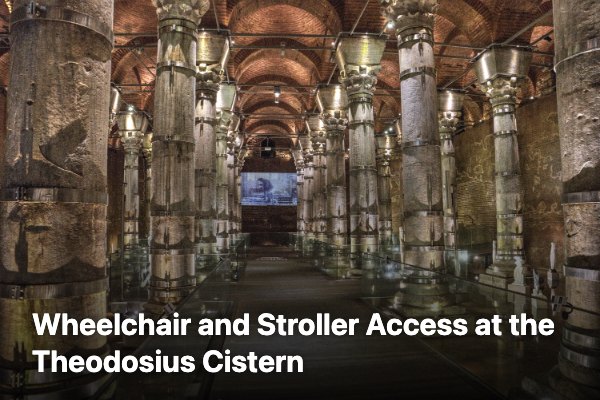
The Cistern of Theodosius breaks up the walking tour with an underground stop that is cool in summer and dry in rain, and it sits only a few minutes from the Hippodrome. It was built as a Byzantine water storage chamber and later rediscovered beneath the modern street level.
Unlike the open squares above ground, the cistern is a controlled indoor environment with a mapping light show projected across its columns and vaulted ceiling. Daytime visits run within a fixed session window, and there is also an evening ticket that pairs the light show with a whirling dervish performance and live Sufi music later in the night.
Large bags are not permitted inside, so anyone carrying luggage should plan to store it at a hotel first.
Readers comparing the cistern against other indoor stops nearby can see the fuller list in things to do near the cistern in Sultanahmet, and those building a wet weather plan may want the broader roundup at indoor things to do in Istanbul.
The old city sits above several Byzantine cisterns beyond this one, and visitors with extra time sometimes continue to the smaller, lesser known chambers covered in the Cistern of Aspar and the ancient Cistern of Aetius.
Is the Grand Bazaar Worth the Detour?
Yes, if there is time left after the morning stops. The Grand Bazaar is a 15 to 20 minute walk from the cistern and makes a natural end point for the loop before heading back toward the tram.
The bazaar is a covered market with thousands of shops selling carpets, lamps, leather and jewellery, and it rewards wandering without a fixed plan. Haggling is expected on most non-food items, and prices move depending on how the conversation goes.
From the bazaar, the Sultanahmet tram line runs back toward the square or onward toward Eminönü and the Galata Bridge, which makes a simple return route without doubling back on foot.
How Long Does the Full Route Take?
A relaxed pace through all five main stops takes a full morning or afternoon, longer if the cistern’s evening show is added separately. The walking itself is short; the time goes into queueing and looking around inside each site.
Visitors on a tighter schedule, such as those arriving by ship for a single day, generally need to cut one stop rather than rush all of them. A route built specifically for that situation is laid out in a fast Istanbul tour for cruise passengers.
Those who prefer the engineering and history side of the old city over shopping and mosques can swap the bazaar stop for a deeper look at the city’s underground water system, covered in water engineering secrets of Istanbul’s cisterns.
What Should You Bring on an Istanbul Walking Tour?
Comfortable shoes, a scarf for mosque visits, water and a portable charger cover most of what the route demands. The old city’s stone paving and uneven courtyards are harder on feet than they look from photos.
- Comfortable, closed walking shoes rather than sandals
- A light scarf or shawl for mosque entry
- Cash in small denominations for the bazaar
- A phone charger, since the loop runs several hours without a break
- No large luggage, since sites such as the cistern do not permit it
Weather matters more than most itineraries admit. July and August bring the heaviest crowds and heat across Istanbul’s major sights, so an early start or a late afternoon start avoids the worst of both.
Frequently Asked Questions
How long is the full old city walking route?
Half a day covers it at a comfortable pace, including time inside each stop rather than just walking between them.
Do you need tickets booked in advance?
Some sites, particularly the Cistern of Theodosius and Hagia Sophia, benefit from advance booking during busy months, though same day entry is often possible outside peak season.
Is the route suitable for children?
Mostly, yes, though the uneven stone streets and the crowded bazaar aisles are worth factoring in for strollers or very young children.
Can the walking tour be done in winter?
Yes, and winter often means shorter queues at the main sights, though mosque courtyards and the Hippodrome are exposed to wind and rain.
What happens if it rains during the tour?
The Cistern of Theodosius and the Grand Bazaar both work as covered fallback stops, letting the route continue indoors without losing the day.
Is the Grand Bazaar part of the core route or optional?
Optional, since it sits furthest from Sultanahmet Square, but most visitors with a half day free choose to include it as the closing stop.
Walking the old city on foot, rather than relying on taxis between sights, is what makes this version of an Istanbul walking tour work: everything from Hagia Sophia to the Grand Bazaar sits close enough together that the city’s layers, Byzantine, Ottoman and modern, show up within a single afternoon’s walk, in October 2026 and in any season after it.
Planning a visit? Ask AI to summarise this page
Open this article in your preferred assistant to get the key facts for your trip.
Ask ChatGPTAsk ClaudeAsk Perplexity
Comment (0)