
Water Engineering Secrets of Istanbul Cisterns
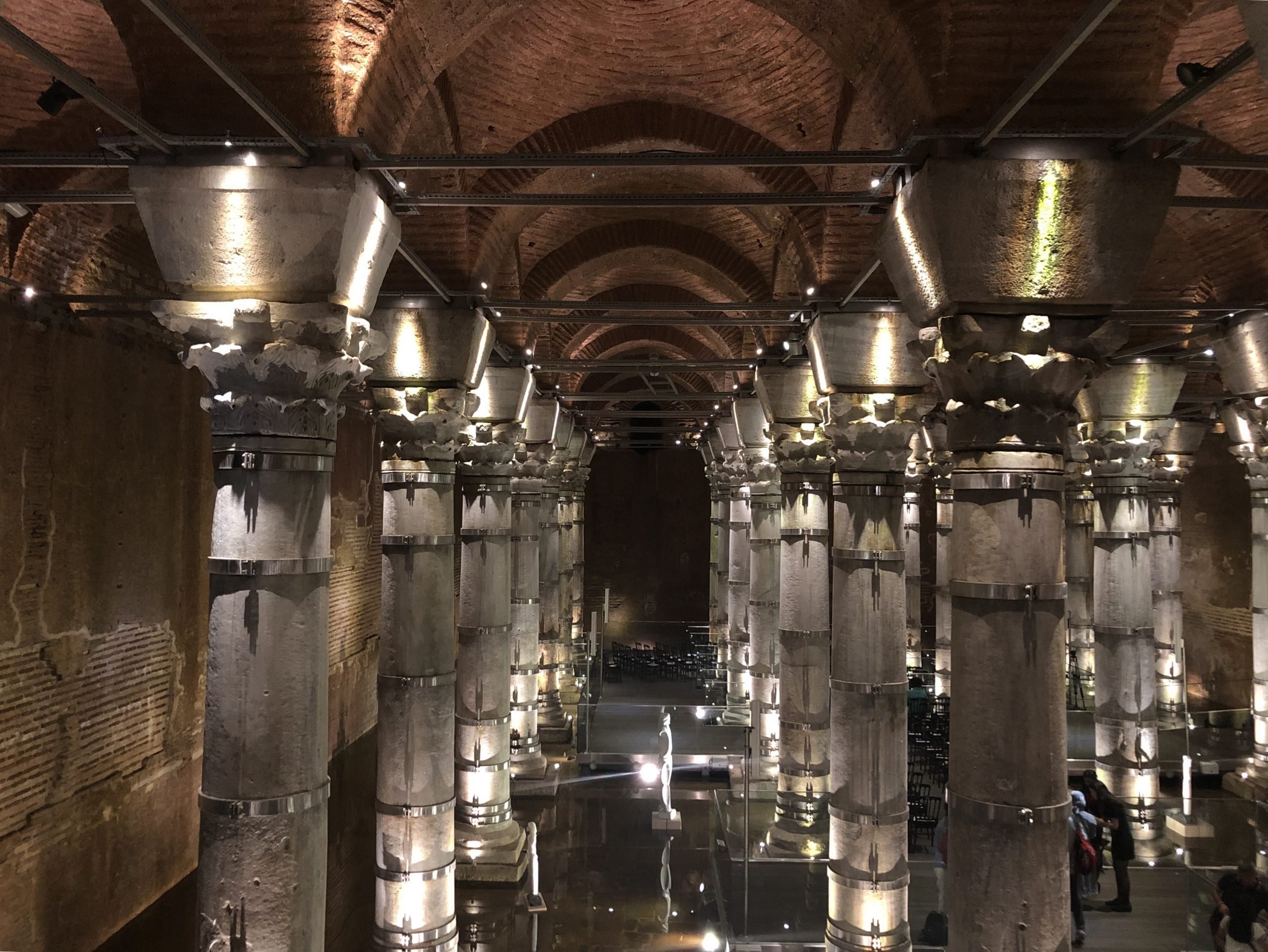
Hidden beneath the bustling streets of Istanbul lies a vast subterranean world of architectural brilliance, silent corridors, and ancient hydraulic mastery. The city’s cisterns—some monumental, some modest—represent the pinnacle of historical water engineering. Designed to sustain the great empires that once ruled the city, these structures reveal water engineering secrets of Istanbul cisterns that continue to astonish modern researchers, engineers, and historians.
This detailed guide explores the hydraulic intelligence, architectural systems, underground networks, filtration methods, and sophisticated design strategies that powered the city for centuries. From the massive Basilica Cistern to smaller neighborhood reservoirs, each underground chamber reveals another layer of scientific ingenuity.
Whether you are a traveler, engineer, history enthusiast, or architecture lover, this article will open the doors to Istanbul’s hidden world of hydro-engineering excellence.
Why Istanbul Needed Advanced Water Engineering
Istanbul—formerly Constantinople—occupied a unique but challenging geographic position. Despite being surrounded by water, the city lacked natural freshwater resources. This forced engineers of the Byzantine and Ottoman eras to design complex systems that could collect, transport, store, and protect water.
Key Challenges They Faced
- Long dry seasons
- Limited freshwater springs within city walls
- Large and growing urban population
- Needs of palaces, baths, households, and military sites
- Seasonal variability of rivers and rainfall
The solution was a network of aqueducts, channels, and cisterns that distributed water with incredible efficiency. These innovations formed the backbone of imperial life, and many of them continue to inspire modern engineers.
The Hidden Network Beneath the City
The water engineering secrets of Istanbul cisterns begin with their sheer number. Archaeologists believe that more than 200 cisterns lie under modern Istanbul, though only a handful are open to visitors.
Why So Many Cisterns Were Built
- To store water from distant aqueducts
- To provide backup supply during sieges
- To supply hammams and palaces
- To ensure water access during droughts
- To maintain urban hygiene
Some cisterns are huge architectural wonders. Others are small, simple structures hidden beneath shops, houses, or streets. Yet each played a role in the larger hydraulic network.
The Basilica Cistern: A Masterpiece of Underground Engineering
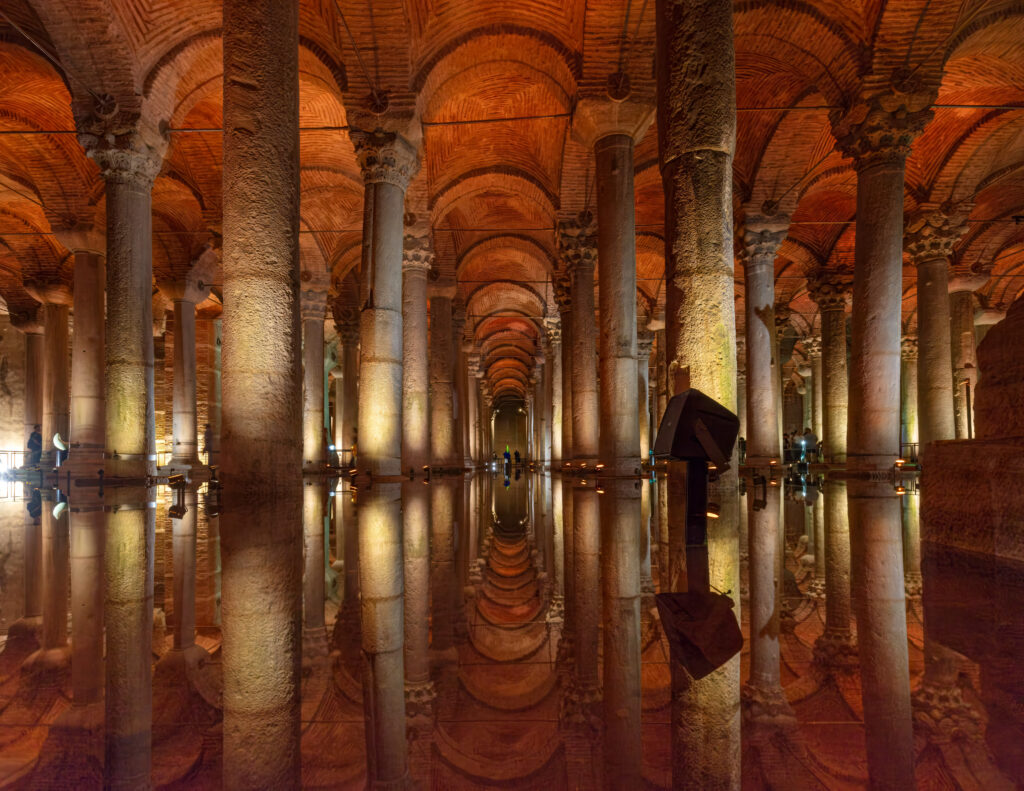
The Basilica Cistern—Yerebatan Sarnici—is the most famous cistern in Istanbul and an iconic symbol of Byzantine engineering.
Key Engineering Features
- Supported by 336 marble columns
- Spans approximately 9,800 square meters
- Holds up to 80,000 cubic meters of water
- Waterproofed with advanced materials
- Fed by aqueducts from distant forests
Structural Innovations
- Brick vaulting designed to bear massive pressure
- Earthquake-resistant column distribution
- Waterproof plaster using volcanic ash
- Floating debris filters at water inlets
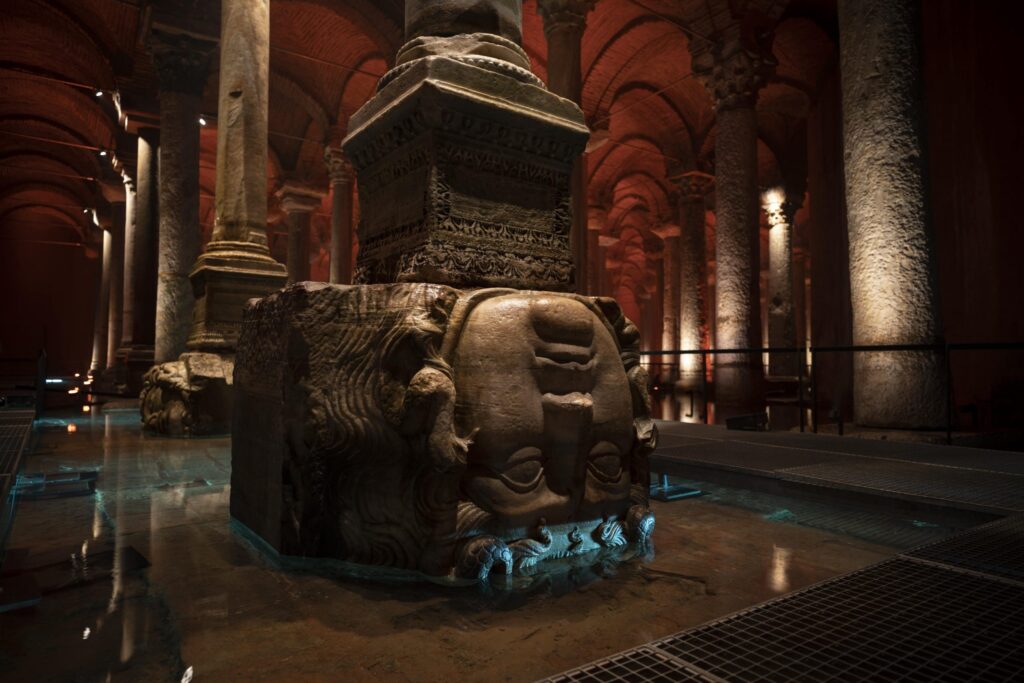
The Medusa heads in the column bases may be decorative, but the engineering behind this cistern is entirely practical, powerful, and forward-thinking.
How the Aqueduct System Powered the Cisterns
Water did not flow naturally into Istanbul. Instead, it traveled across kilometers of landscape through carefully built aqueducts.
Famous Aqueducts
- Valens Aqueduct
- Maglova Aqueduct
- Uzun Aqueduct
These structures relied on precise measurements to use gravity as the primary force.
Engineering Secrets of the Aqueducts
- Perfect slope calculation ensuring continuous flow
- Stone channels sealed with waterproof mortar
- Pressure regulation chambers
- Sediment basins to filter water
Without these aqueducts, the cisterns would never have functioned.
Explore Other Cisterns in Istanbul
Underground Water Channels: Hidden Arteries of the City
Many visitors assume cisterns filled from above. In reality, most received water through underground channels carefully carved into soil and bedrock.
Features of These Hidden Channels
- Narrow tunnels that reduced waste and evaporation
- Covered stone lids to protect against contamination
- Sand and gravel layers acting as natural filters
- Pressure release vents to prevent channel collapse
The precision of these underground channels showcases the advanced hydraulic knowledge of ancient engineers.
Waterproofing: The Secret Behind Long-Lasting Cisterns
Many cisterns in Istanbul have survived more than 1,500 years, thanks to extraordinary waterproofing methods.
Materials Used
- Khorasan mortar (made from lime and brick dust)
- Volcanic ash for sealing cracks
- Resin-based coatings
- Multi-layered plaster systems
Why These Materials Worked
- Resistant to mold, bacteria, and water pressure
- Flexibility to withstand ground movement
- Long-lasting without toxic additives
These waterproofing methods are considered among the greatest water engineering secrets of Istanbul cisterns.
The Role of Columns and Vaults in Cistern Architecture
Columns and vaulted ceilings are not only visually stunning—they are essential for structural integrity.
Engineering Benefits of Vaulted Ceilings
- Even distribution of weight
- Resistance to soil pressure
- Prevention of collapse during earthquakes
- Minimal material usage with maximum strength
Column Placement Strategy
- Distance optimized for stability
- Capitals reused from older temples for efficiency
- Columns supporting horizontal beams and arches
Engineers used what we now call “modular design,” centuries before the concept existed.
Filtration Systems Hidden in Cisterns
Water collected from aqueducts was not always clean. Engineers created filtering solutions that kept cisterns clear and safe.
Filtration Methods
- Sedimentation pools
Allowed dirt and debris to settle before entering cisterns. - Stone and sand filtering channels
Cleaned water naturally as it passed through layers. - Slow inflow pipes
Prevented turbulence and reduced contamination. - Separate chambers
Used for pre-cleaning and overflow management.
The surprising sophistication of these systems reflects deep scientific understanding.
Learn more details about Cisterns
The Science of Water Pressure and Flow
The design of cisterns reflects advanced knowledge of water physics.
Key Pressure Control Techniques
- Gradual-sloped inflow channels
- Air shafts to release pressure
- Overflow tunnels to prevent flooding
- Distribution basins controlling water speed
Engineers knew that managing pressure was essential for preserving the structural integrity of walls and ceilings.
Earthquake-Resistant Features of Istanbul Cisterns
Istanbul lies in a seismically active region. Because of this, cistern architects used special engineering methods to protect their structures.
Earthquake-Proofing Techniques
- Flexible mortar that moves with seismic waves
- Column spacing that absorbs vibration
- Arch and vault shapes that distribute shock
- Thick, reinforced walls built to withstand lateral forces
This is a major reason why Istanbul’s ancient cisterns remain standing while many other old buildings collapsed.
Disguised Surface Structures and Hidden Entrances
One of the most interesting water engineering secrets of Istanbul cisterns is how they were hidden for protection.
Reasons for Concealment
- To protect water supply during invasions
- To prevent contamination
- To ensure security for the city’s elite
Types of Hidden Surface Structures
- Small stone openings under houses
- Disguised ventilation shafts
- Underground staircases masked by plants
- Secret doors in palace courtyards
Some entrances remained hidden for centuries until rediscovered by archaeologists.
Water Distribution from Cisterns to the City
Once stored, the water needed to reach homes, baths, and palaces.
Distribution Features
- Clay and terracotta pipes
- Gravity-fed systems
- Pressure-equalizing valves
- Stone channels leading to neighborhood fountains
This allowed water to flow efficiently across districts, even without pumps.
Smaller Neighborhood Cisterns: The Unsung Heroes
Beyond the monumental cisterns, countless small cisterns supported everyday life.
Their Roles
- Provided water to households
- Fed local fountains
- Supported hammams
- Offered backup supplies during emergencies
Though modest in appearance, these cisterns show how deeply integrated water engineering was in urban planning.
How Cisterns Maintained Water Quality
Ancient engineers designed cisterns not just to store water, but to protect its purity.
Water Quality Preservation Methods
- Limited sunlight exposure
- Stable temperature preventing bacterial growth
- Slow circulation reducing sediment
- Natural cooling properties of stone
This created ideal conditions for long-term water storage.
The Legacy of Istanbul’s Water Engineering Systems
The engineering achievements of Istanbul’s cisterns influenced water management across Europe and the Middle East for centuries.
Lasting Impacts
- Set standards for urban water storage
- Inspired later aqueduct and reservoir designs
- Preserved hydraulic knowledge still studied today
- Contributed to the city’s survival during wars and droughts
These innovations remain a testament to ancient world ingenuity.
Conclusion: The Timeless Genius of Istanbul’s Cistern Engineers
The water engineering secrets of Istanbul cisterns reveal a world of technical brilliance hidden beneath the city. These underground marvels represent centuries of experimentation, craftsmanship, and scientific problem-solving. From waterproofing and filtration to hydraulic flow and structural design, every detail speaks to the ingenuity of Byzantine and Ottoman engineers.
Visiting these cisterns today offers not just a glimpse into history, but a journey into the minds of ancient engineers who transformed a geographically challenging city into a thriving imperial capital powered by water.

Comment (0)