
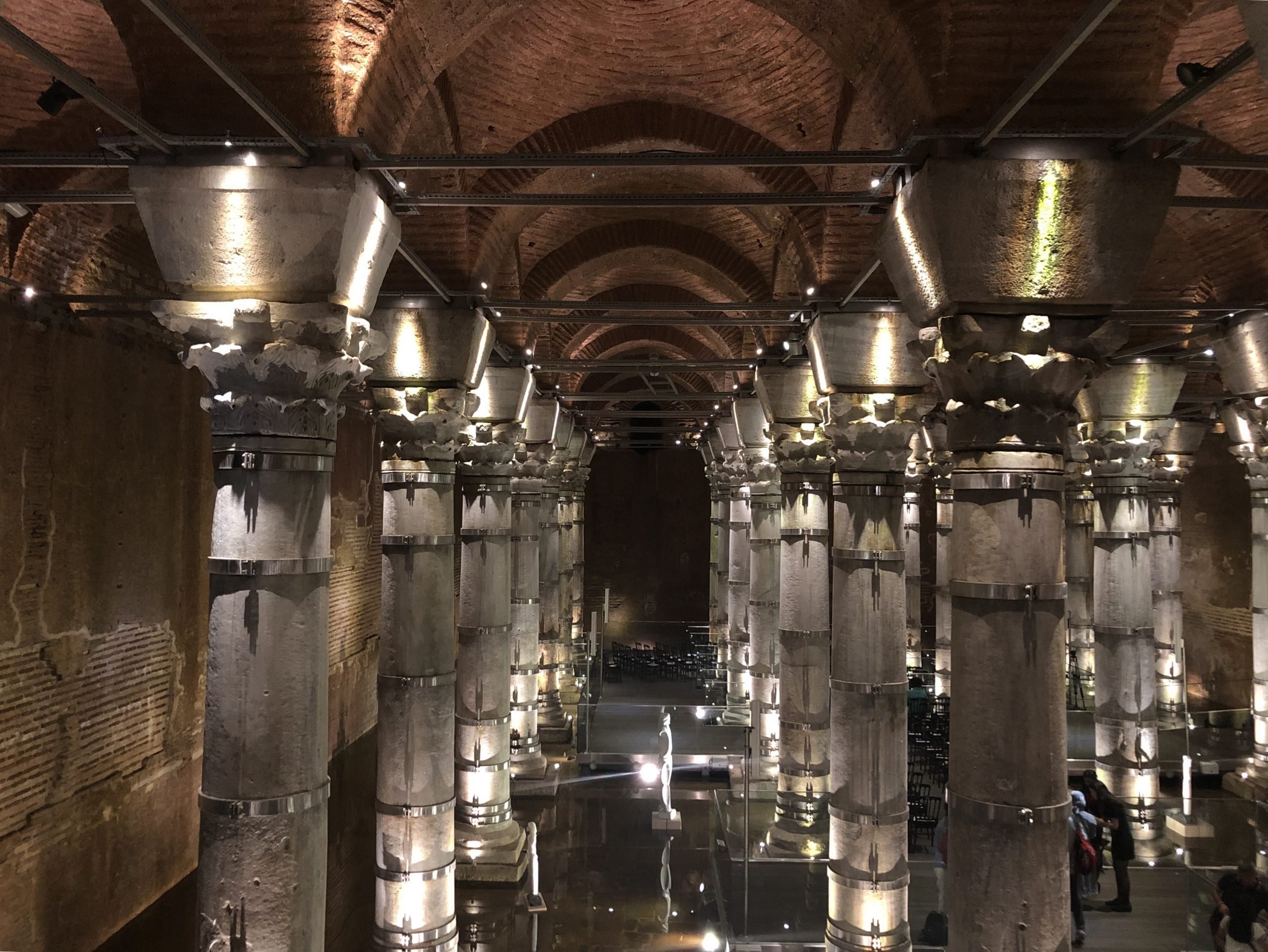
Famous cisterns have long fascinated filmmakers, offering rare environments where history, architecture, and atmosphere converge beneath modern cities.
These underground spaces, shaped by ancient architecture, provide visual depth, natural acoustics, and a sense of timelessness that modern film sets rarely achieve.
When cinema enters a cistern, stone columns, vaulted ceilings, and reflections on water become active elements of storytelling.
Among global cities, Istanbul stands out as a place where these spaces remain accessible, preserved, and continuously reinterpreted.
Ancient Architecture as a Natural Film Set
Ancient architecture offers filmmakers an authenticity that cannot be digitally replicated.
Cisterns, built for utility rather than spectacle, carry an unintentional drama that modern audiences immediately sense.
The symmetry of columns, the controlled darkness, and the presence of water allow directors to build tension, mystery, and scale.
As a result, cisterns often appear in scenes involving secrecy, power, or hidden knowledge.
The Basilica Cistern and Global Cinema
The Basilica Cistern remains the most internationally recognized among Byzantine cisterns featured in film.
Constructed in the sixth century, its monumental interior has appeared in several iconic films, reaching audiences far beyond Turkey.
Its most famous appearance in a James Bond film introduced millions of viewers to the cinematic potential of underground Constantinople.
The space transformed into a dramatic stage where history amplified suspense.
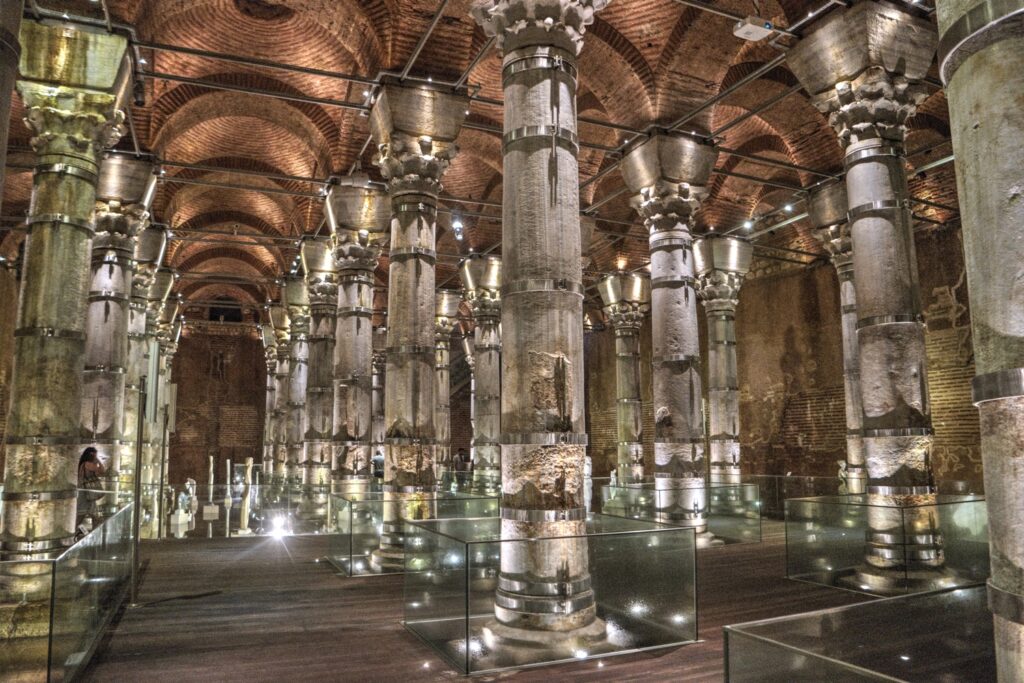
Beyond the Basilica: Rediscovering the Cistern of Theodosius
While the Basilica Cistern dominates popular imagination, other underground structures contribute equally to the visual language of film locations in Istanbul.
One of the most compelling examples is the Cistern of Theodosius, also known as the Şerefiye Cistern.
Dating back to the late fourth century, this cistern reflects a more restrained yet highly refined form of Byzantine engineering.
Its proportions and column layout create a quieter, more intimate atmosphere suitable for reflective or symbolic scenes.
Today, the cistern has been carefully restored and opened to visitors as a cultural space.
For detailed historical background, architectural context, and current visitor information, travelers can explore the official resource at Cistern of Theodosius.
Iconic Films and the Value of Real Film Locations
Using authentic film locations allows filmmakers to anchor fictional narratives in physical reality.
Actors respond differently when surrounded by ancient stone rather than constructed scenery.
Iconic films often rely on such environments to enhance credibility and emotional weight.
Cisterns provide a controlled environment where light, sound, and movement can be precisely shaped.
Why Famous Cisterns Continue to Inspire Directors
The appeal of famous cisterns lies in their ambiguity.
On screen, they resist clear historical placement, allowing stories to exist outside a single era.
This flexibility makes cisterns suitable for historical dramas, modern thrillers, and even speculative narratives.
Cinema thrives in spaces that feel both ancient and timeless.
Experiencing These Film Locations Today
Many cisterns that appeared in iconic films remain open to the public.
Visitors can walk through the same spaces once framed by cameras and lighting rigs.
Experiencing these environments firsthand reveals how architecture shapes perception.
What once supported the daily life of an ancient city now supports global storytelling.
Famous cisterns demonstrate how ancient architecture continues to influence modern visual culture.
Through cinema, these underground spaces transcend geography and time.
Where film meets history, cisterns remain silent yet powerful stages.
They remind us that the past still shapes how stories are told today.
Wikipedia: Cistern

Comment (0)