
Last reviewed and updated: November 22, 2026
Istanbul Old City is the peninsula bounded by the Sea of Marmara, the Bosphorus and the Golden Horn, home to the Hagia Sophia, the Blue Mosque, Topkapı Palace and a network of Byzantine cisterns beneath the streets. Most first-time visitors base a full day or two here before moving on to the rest of the city.
Questions answered in this guide
- What exactly is Istanbul’s Old City?
- How should a first-time visitor plan a day here?
- Why are there so many cisterns under the Old City?
- Where does the Cistern of Theodosius (Şerefiye) fit into a visit?
- What else is within walking distance of the cistern?
- What underground details do most visitors miss?
- How do you get around the Old City without a car?
- Is one day enough to see the Old City properly?
- What is the best starting point for an Old City walk?
- Is the Cistern of Theodosius the same as the Basilica Cistern?
- Do I need to book cistern tickets in advance?
- Can I bring a suitcase into the cistern?
- What is a mapping light show?
- Are the Golden Horn and the Bosphorus the same waterway?
- Best for: first-time visitors wanting the major historic sights within walking distance
- Core area: Sultanahmet, Fatih, Eminönü and the Golden Horn shoreline
- Getting around: almost entirely on foot, with tram connections for longer stretches
- Underground highlight: the Byzantine cisterns, including the Cistern of Theodosius
What exactly is Istanbul’s Old City?
The Old City is the historic peninsula of Istanbul, enclosed on three sides by water and still partly ringed by the old Byzantine land walls. It was Constantinople’s core for over a thousand years, and it remains the densest concentration of historic sites in the country.
The neighbourhood most visitors mean when they say “Old City” is Sultanahmet, but the peninsula stretches further: Fatih to the west, Eminönü and the Golden Horn docks to the north, and the sea walls along the Marmara shore to the south.
Each stretch has a different character, and a short walk takes you from imperial mosques to working markets to quiet residential lanes.
How should a first-time visitor plan a day here?
Group sights by cluster rather than by list, since the big names sit close together but the connecting streets are easy to wander off for hours.
Start at the Hagia Sophia and Blue Mosque cluster in the morning, when the squares are calmer. Move on to Topkapı Palace or the underground cisterns around midday, since both offer shade and a break from walking.
Save the Grand Bazaar and Spice Bazaar for the afternoon, when the crowds thin slightly and the shops stay open later into the evening.
A practical half-day route works well for passengers with limited time, and the site’s own fast Istanbul tour for cruise passengers lays out a version built around exactly that constraint.
Why are there so many cisterns under the Old City?
A cistern is an underground reservoir, and Constantinople needed dozens of them because its water came from aqueducts far outside the city walls and had to be stored against drought or siege.
The Byzantine engineers who built the city’s water system left a genuinely dense underground network, not a single famous tank. The Basilica Cistern gets the tour buses, but smaller and quieter examples survive across the peninsula, each with its own layout and history.
A broad overview of this network, including scale and dates, sits in the site’s guide to Istanbul’s ancient cisterns.
Two of the lesser-known ones worth knowing about by name are covered separately: the Cistern of Aspar and the Cistern of Aetius, both open-air reservoirs rather than the enclosed, columned halls most visitors picture.
Where does the Cistern of Theodosius (Şerefiye) fit into a visit?
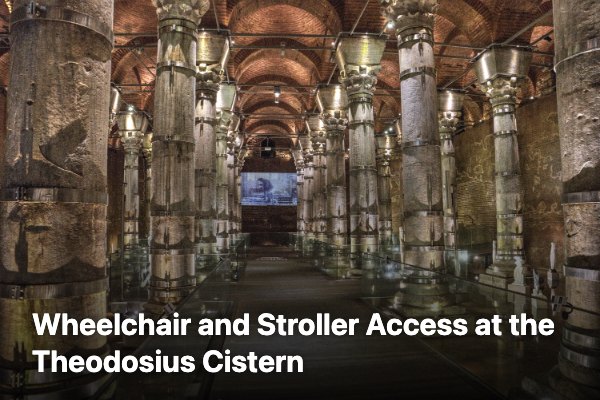
The Cistern of Theodosius, also called Şerefiye Sarnıcı, sits within walking distance of Hagia Sophia and works as a quieter, shorter underground stop between the major sights.
The venue runs a daytime visit from 09:00 to 18:00, which includes access for the chosen session and a mapping light show projected across the cistern’s columns, drawing on themes such as “From Past to Present” and “Istanbul: City of Water Civilization.” Visitors who prefer an evening out can instead book the dervish show ticket: entrance at 7:45 pm, the mapping show at 8:15 pm, and a whirling dervish performance with live Sufi music at 8:30 pm, finishing around 9:15 pm and including snacks and drinks.
Luggage is not permitted inside, and professional photography needs written permission arranged in advance, so day-trippers with suitcases should plan a stop elsewhere first. You can book Theodosius Cistern tickets for either session directly through the site.
For background on how this particular reservoir supplied the city and what it looked like in use, see how the Cistern of Theodosius supplied ancient Istanbul.
What else is within walking distance of the cistern?
A short radius around the cistern covers several more sights, a market street, and quieter courtyards away from the main squares.
Rather than listing every option here, the fuller local breakdown lives in the site’s own guide to things to do near the Theodosius Cistern in Sultanahmet, which groups nearby sights by walking time. It’s a good second tab to open once you’ve booked a session, so the gaps in your day fill in naturally.
What underground details do most visitors miss?
Most visitors miss the carved marks, reused column capitals and acoustic quirks that separate one Byzantine cistern from another, details that only show up once you stop rushing through.
Column capitals in several cisterns were reused from older, demolished buildings, which is why styles mix within the same hall. Some surfaces carry symbols cut by the original builders, not later graffiti, and the site’s piece on hidden symbols found in Istanbul’s cisterns walks through the main examples.
The enclosed stone chambers also behave strangely with sound, a phenomenon covered in the sound mysteries of Istanbul’s cisterns.
If engineering interests you more than atmosphere, the water channels, overflow systems and construction methods get a dedicated explanation in the water engineering secrets of Istanbul’s cisterns, and recovered objects from past excavations are catalogued in the piece on rare artifacts discovered in Istanbul’s cisterns.
How do you get around the Old City without a car?
On foot for most of it, with the T1 tram covering the longer stretches between Sultanahmet, Eminönü and the city walls.
The peninsula’s streets are old, narrow and in places cobbled, so comfortable shoes matter more than any transport pass. Istanbulkart, the city’s contactless transit card, covers trams, buses and ferries across greater Istanbul, and details on buying and loading one are kept current on the official Istanbulkart site.
For museum hours, closure days and any site-specific rules at state-run monuments on the peninsula, the Ministry of Culture and Tourism’s museum portal is the source to check before you go, since hours can shift around public holidays.
Is one day enough to see the Old City properly?
Barely. One day covers the headline sights, but a second day lets you slow down, enter fewer buildings, and actually look at the detail in each one.
A single day forces hard choices: Hagia Sophia or Topkapı Palace, the Grand Bazaar or the Spice Bazaar, one cistern or two. A second day removes that pressure and leaves room for the quieter streets of Fener and Balat, the land walls at the city’s edge, or a longer underground visit.
As of November 2026, the Cistern of Theodosius still runs both its daytime and evening sessions on the schedule listed above, so it’s easy to fold into either a one-day sprint or a slower two-day plan.
Frequently Asked Questions
What is the best starting point for an Old City walk?
Sultanahmet Square is the best starting point, since Hagia Sophia, the Blue Mosque and Topkapı Palace all sit within a few minutes of it on foot.
Is the Cistern of Theodosius the same as the Basilica Cistern?
No. The Cistern of Theodosius, also called Şerefiye Sarnıcı, is a separate, smaller Byzantine reservoir near Hagia Sophia, distinct from the larger Basilica Cistern nearby.
Do I need to book cistern tickets in advance?
Advisable, particularly for the evening dervish show, since that session has a fixed entrance and performance time rather than a flexible visiting window.
Can I bring a suitcase into the cistern?
No. Luggage is not permitted inside the Cistern of Theodosius, so visitors arriving straight from a hotel checkout or the airport should store bags elsewhere first.
What is a mapping light show?
A mapping light show is a projection of moving images and light directly onto a building’s existing surfaces, used at the cistern to tell its history across the columns and walls.
Are the Golden Horn and the Bosphorus the same waterway?
No. The Golden Horn is a narrow natural estuary on the city’s north side, while the Bosphorus is the strait separating Europe from Asia; the Old City peninsula sits between them.
The Old City rewards a plan that mixes the famous squares with the quieter underground sites, since the two kinds of visit balance each other out across a day or two on the peninsula.
Planning a visit? Ask AI to summarise this page
Open this article in your preferred assistant to get the key facts for your trip.
Ask ChatGPTAsk ClaudeAsk Perplexity
Comment (0)