
Last reviewed and updated: November 10, 2026
Twenty four hours in Istanbul works best if you anchor the day around three fixed points: a morning in the old city, a midday crossing of the Bosphorus, and an evening slot booked in advance. Everything else fills the gaps between those three.
Questions answered in this guide
- How Should You Structure 24 Hours in Istanbul?
- Where Do You Start the Morning?
- Why Visit the Cistern of Theodosius on a One Day Trip?
- What’s the Best Way to Spend Midday on the Bosphorus?
- Should You Fit in a Hamam Break?
- Where Should You Watch the Sunset?
- How Do You End the Night?
- How Do You Move Between All These Stops?
- Is 24 hours enough to see Istanbul properly?
- What time should the day start to fit everything in?
- Do you need to book the evening activity in advance?
- Can you fit in both a hamam visit and a sunset viewpoint?
- Is luggage allowed inside the Cistern of Theodosius?
- Which side of the Bosphorus should the sunset stop be on?
- Best for: first-time visitors with one full day and a hotel in or near Sultanahmet
- Fixed anchors: Sultanahmet sights in the morning, a Bosphorus crossing at midday, a booked evening slot
- Getting around: Istanbulkart for trams, ferries and buses
- Watch for: midday crowds at the major monuments, so start early
How Should You Structure 24 Hours in Istanbul?
Start underground and end underground. Sultanahmet’s historic cisterns open early, the Bosphorus is calmest mid-morning to early afternoon, and the evening belongs to a single booked experience rather than a rushed list.
The old city clusters the Hagia Sophia, the Blue Mosque, the Basilica Cistern and smaller Byzantine cisterns within a ten minute walk of each other. That density is the reason most 24 hour plans start here rather than across the water in Beyoğlu.
If you want the deeper context for why the district is built on underground water chambers, our piece on how Byzantine engineers moved water under the city is worth ten minutes before you go.
Where Do You Start the Morning?
Sultanahmet Square, by 9am. Arriving before the tour buses means you see the Hagia Sophia’s exterior and queue for the Blue Mosque without the midday crush.
From the square, the cisterns are a short walk and make a natural first indoor stop, especially if the morning is hot or wet. Several lesser known sites sit within easy reach; our guide to what else is worth seeing near Sultanahmet covers the ones most itineraries skip.
If Roman era structures interest you beyond the obvious stops, a longer look at Roman architecture scattered across the city gives useful context for the rest of the day.
Budget roughly two hours for the square and its immediate surroundings before moving on. Rushing this part tends to backfire, since the afternoon crossing has its own fixed rhythm.
Why Visit the Cistern of Theodosius on a One Day Trip?
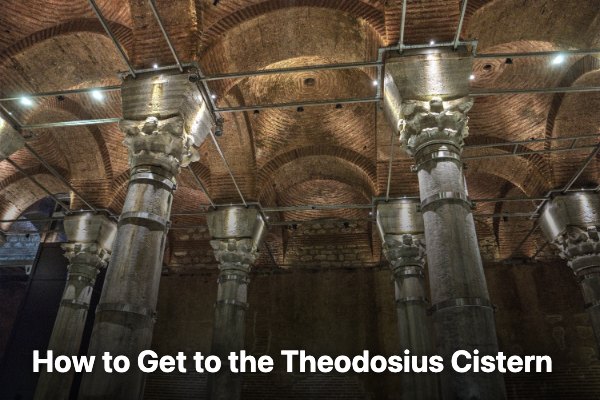
Because it fits a tight schedule without competing with the Basilica Cistern for time. The Cistern of Theodosius, known locally as Şerefiye Sarnıcı, runs daytime sessions between 09:00 and 18:00 and a separate evening slot built around a performance.
During the day, a ticket covers entry for the chosen session plus a mapping light show projected across the vaulted ceiling. The shows rotate between two themes, From Past to Present and Istanbul: City of Water Civilization, both using 360° projection across the stone.
The evening option is different in kind, not just in hours. Entrance is at 19:45, the mapping show runs from 20:15, a whirling dervish performance with live Sufi music follows at 20:30, and the session ends around 21:15, a run time of about an hour and a half. Snacks and drinks are included in that evening ticket.
Two practical notes carry real weight here. Luggage is not allowed inside, so plan your bag accordingly if you’re arriving straight from a hotel checkout.
Professional photography needs written permission arranged beforehand, so a phone is fine but a tripod setup is not a spontaneous option.
You can check current sessions and reserve directly through Book Theodosius Cistern tickets before you fix the rest of the day around it.
For the history behind why this particular cistern was built at this scale, the piece on how the cistern once supplied the ancient city fills in what the ticket page leaves out.
What’s the Best Way to Spend Midday on the Bosphorus?
A short sightseeing cruise. A two hour Bosphorus day cruise departs at set times and covers the strait’s main landmarks without eating into your whole afternoon.
As of November 2026, operators list a Bosphorus day sightseeing cruise from €12 per person according to their own booking pages, departing at 12:30 and again at 16:00, each lasting about two hours with an on board audio guide.
That price and schedule come from the operator’s own product page, not a third party listing, so treat it as a starting figure rather than a fixed total once add ons like a hotel transfer are included.
If you’d rather skip the open water and stay closer to the historic peninsula, a Golden Horn cruise is the quieter alternative.
The Golden Horn is a long natural estuary separating the old city from districts like Beyoğlu, and a round trip sightseeing cruise along it runs from €9 per person as of the same operator check in September 2026, covering about 20 landmarks over roughly two and a half hours with stops near Eminönü and Karaköy.
- Bosphorus day cruise: shorter, open water, departs midday and late afternoon
- Golden Horn cruise: calmer water, more stops, runs three times daily including a 09:00 departure
Either option gets you back on land with enough afternoon left for a break before the evening booking.
Should You Fit in a Hamam Break?
Yes, if your schedule has a free two to three hour window in the afternoon. A hamam visit works as a reset point between the morning’s walking and the evening’s seated show.
A hamam is a traditional Turkish bathhouse built around a heated marble platform, a kese (a coarse exfoliating mitt) and a cold water rinse at the end.
Several historic hamams sit inside or near Sultanahmet, and as of September 2026 prices start from around €90 per person at Çağaloğlu Hamamı according to the venue’s own booking page, with sessions typically running between 45 minutes and just over two hours depending on the package chosen.
Lower priced options exist closer to Taksim and Şişli for travellers staying outside the old city, generally starting lower than the historic Sultanahmet hamams but with female only therapist teams rather than gender matched staff. Check which arrangement applies before booking if that distinction matters to you.
Where Should You Watch the Sunset?
Çamlıca Tower, on the Asian side, gives the widest single view over both the Bosphorus and the historic peninsula at once. The tower is open daily from 10:00 to 22:00 according to its own operator pages.
A skip the line entry ticket with a complimentary Turkish tea starts from €25 as of September 2026 per that same source, covering roughly two hours inside.
Booking can be made up to two months ahead, and same day bookings close four hours before the slot, so this is not a stop to decide on while you’re already on the ferry across.
Arrive about fifteen minutes before your slot, since a photo ID is required for entry and tickets are issued to the named visitor. July and August run busiest, so an off peak afternoon slot is the more comfortable choice if your 24 hours happens to fall in high season.
How Do You End the Night?
With the evening booked ahead, not decided on the spot. Whether that is the dervish performance at the cistern, a dinner cruise, or a simple dinner near Sultanahmet depends on how the rest of the day went.
Travellers who prioritise the water tend to pair an afternoon Bosphorus cruise with a separate evening dinner cruise departing Kabataş Port, which runs about three hours with a live show and standard, vegetarian or VIP menu options.
Travellers who prioritise history tend to close the loop back at Sultanahmet with the cistern’s evening show instead, since it sits a short walk from most old city hotels.
Either closing choice works inside a single 24 hour window. What doesn’t work is leaving both undecided until 7pm, since both require a booked slot rather than a walk in ticket.
How Do You Move Between All These Stops?
Mostly on foot in Sultanahmet, then by tram, ferry or taxi for the longer hops. An Istanbulkart covers trams, buses and public ferries across the city on a single reloadable card.
The official Istanbulkart transport card site explains where to buy and top up the card, and the city’s ferry operator publishes current routes on its own Şehir Hatları ferry schedules page. Neither site lists tour pricing, only transport, so use them for getting around rather than for booking the sights themselves.
Cruise ship passengers working with an even tighter window than 24 hours should look at the condensed version of this route in a faster Istanbul itinerary built for short port stops, which drops the hamam break entirely to protect time at the major sights.
Frequently Asked Questions
Is 24 hours enough to see Istanbul properly?
Enough for the Sultanahmet core, one Bosphorus crossing and one evening booking, not for the Asian side’s neighbourhoods or a second museum day. Treat it as a strong introduction rather than a complete visit.
What time should the day start to fit everything in?
By 9am. Starting at Sultanahmet Square before the main crowds arrive is what makes the rest of the fixed schedule (midday cruise, afternoon break, evening booking) actually fit.
Do you need to book the evening activity in advance?
Yes. Evening slots at the cistern, dinner cruises and sunset tower entries all run on fixed timing with limited capacity, so same day availability is not guaranteed.
Can you fit in both a hamam visit and a sunset viewpoint?
Only if the hamam session is kept short. A 45 minute to one hour session leaves enough time to reach Çamlıca Tower before its evening slots fill.
Is luggage allowed inside the Cistern of Theodosius?
No. Luggage is not permitted inside, so arrange storage at your hotel or a nearby facility before visiting, particularly on a departure day.
Which side of the Bosphorus should the sunset stop be on?
Asian side, specifically Çamlıca Tower, if the goal is a single wide view over both continents. The European side offers closer street level views but not the same panorama.
A tight 24 hours in Istanbul rewards fixed anchors over a long wish list. Book the evening slot first, build the morning and midday around it, and leave the rest of the city for the next visit.
Planning a visit? Ask AI to summarise this page
Open this article in your preferred assistant to get the key facts for your trip.
Ask ChatGPTAsk ClaudeAsk Perplexity
Comment (0)