

Across history, civilizations that mastered water management gained stability, power, and longevity, and among the most sophisticated solutions developed for this purpose were cisterns, which allowed cities to store, protect, and distribute water in environments where natural sources were unreliable or insufficient.
Today, many of these underground structures remain preserved beneath modern cities, offering visitors a rare opportunity to explore the hidden architectural systems that once sustained empires, palaces, and dense urban populations.
This guide focuses on the most impressive cisterns in the world, examining how their scale, engineering, and cultural significance transformed simple water reservoirs into enduring monuments of ancient urban planning.
What Makes a Cistern Truly Impressive?
A cistern becomes remarkable not only through size, but through the combination of architectural ambition, engineering precision, and historical impact that defines its role within the city it once served.
The world’s most impressive cisterns typically demonstrate advanced construction techniques for their era, careful integration into urban infrastructure, and a lasting visual or symbolic presence that continues to shape how modern visitors understand ancient cities.
When these elements align, cisterns move beyond functionality and become expressions of power, foresight, and resilience.
1. Basilica Cistern – Istanbul, Turkey
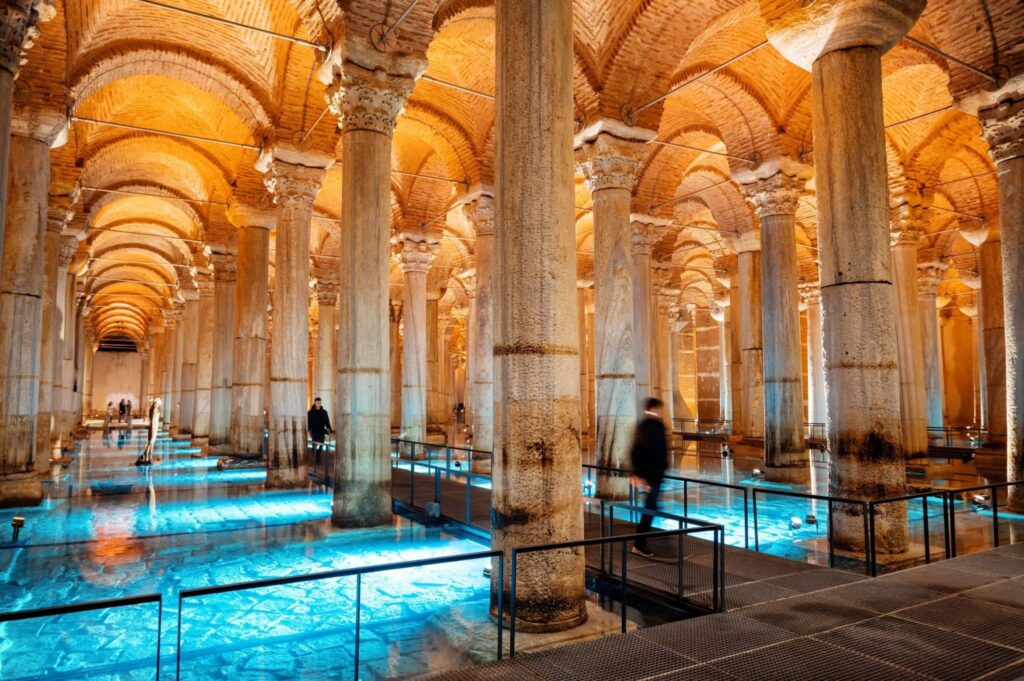
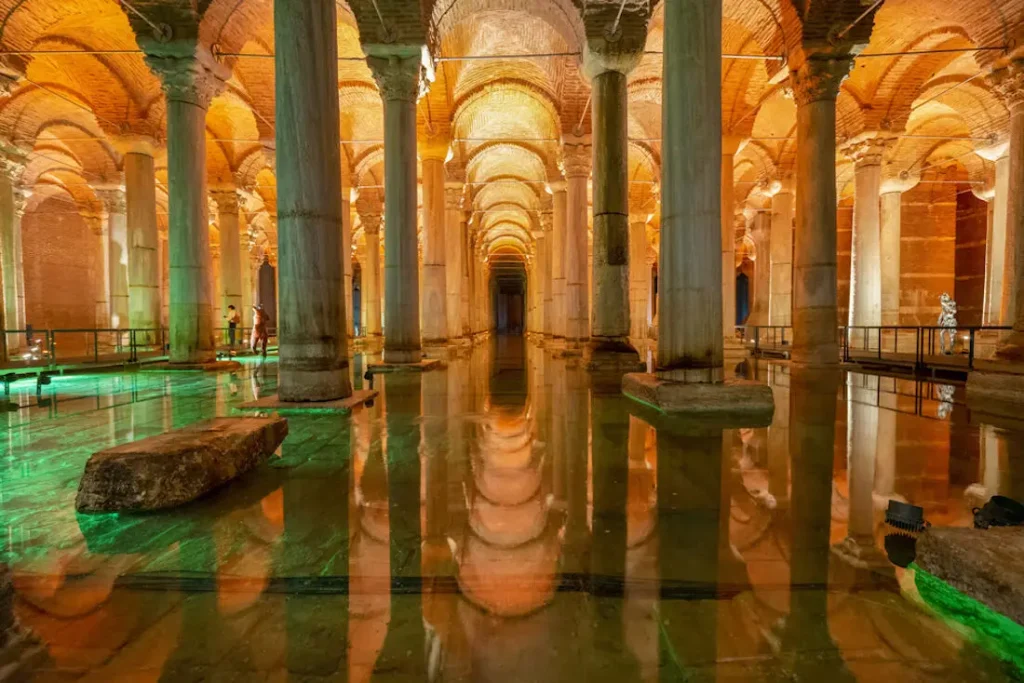
The Basilica Cistern stands as the most iconic underground structure in Istanbul, representing the height of Byzantine hydraulic engineering during the reign of Emperor Justinian I in the sixth century.
Designed to supply water to the Great Palace and surrounding districts, the cistern’s vast interior, supported by hundreds of marble columns arranged in precise rows, creates an atmosphere that blends utility with monumental grandeur.
Its Medusa head column bases and carefully controlled lighting have transformed the space into one of the most recognizable examples of ancient water architecture in the world.
2. Cistern of Theodosius – Istanbul, Turkey
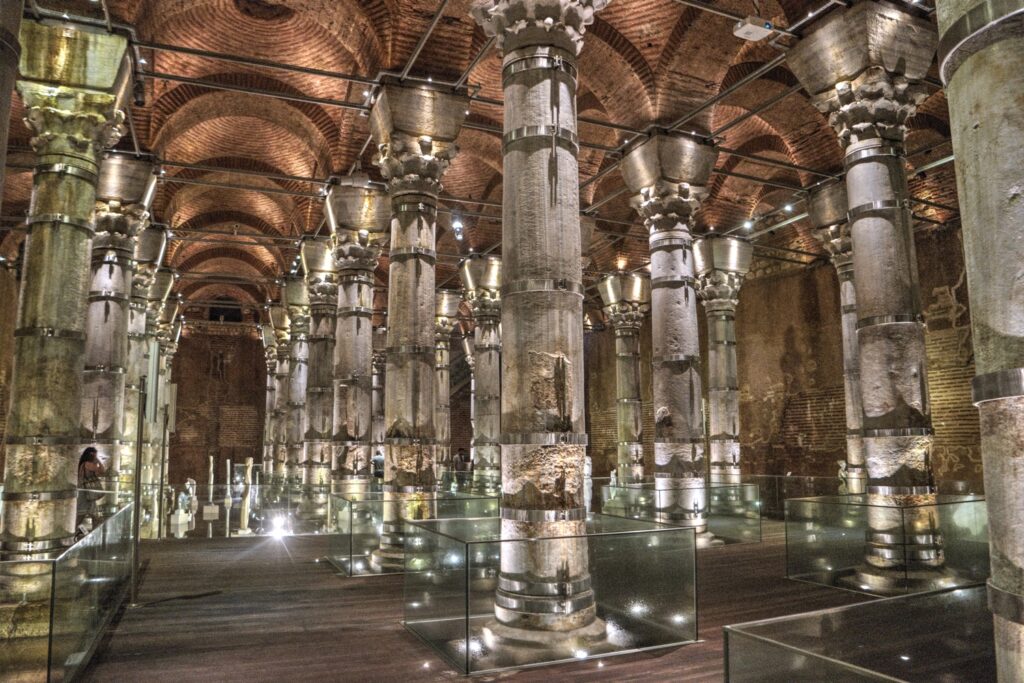
The Cistern of Theodosius, constructed in the late fourth century, reflects a more refined and proportionally balanced approach to underground water storage within Constantinople’s expanding urban system. Today the site is open to the public—you can book a daytime visit to the Cistern of Theodosius to explore its columns and exhibitions in person.
Rather than overwhelming scale, this cistern emphasizes rhythm, symmetry, and spatial harmony, offering insight into how water infrastructure could also reflect imperial aesthetics.
Today, the structure has been carefully restored and adapted for public access, allowing visitors to experience its historical layers through modern exhibition techniques, which can be explored further via the official site of the Cistern of Theodosius
3. Binbirdirek Cistern – Istanbul, Turkey
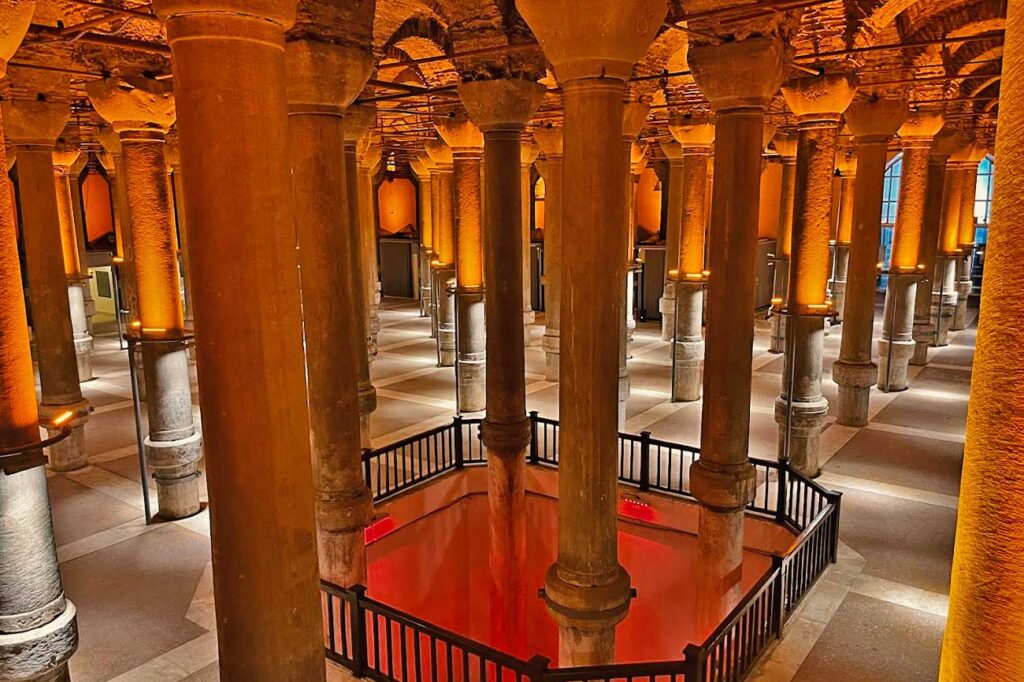
Often overshadowed by larger counterparts, the Binbirdirek Cistern, also known as the Cistern of a Thousand and One Columns, reveals the disciplined engineering mindset inherited from Roman construction traditions.
Its tall columns and tightly organized layout reflect a clear focus on structural stability and long-term durability, qualities essential for sustaining Constantinople’s dense population.
Despite limited preservation, the cistern remains an important example of how function and scale were balanced within Byzantine infrastructure planning.
4. Cisterna di Napoli – Naples, Italy
Beneath the streets of Naples lies the Cisterna di Napoli, part of an extensive underground network developed during Greek and Roman periods to secure water access for a growing urban population.
Over centuries, this system evolved beyond its original function, serving as shelter during wartime and adapting to changing social needs, which adds layers of historical complexity to its architectural form.
This continuous reuse distinguishes it as one of Europe’s most historically dynamic cistern systems.
5. Ancient Roman Cisterns of Rome – Italy
Throughout Rome, numerous Roman cisterns remain hidden beneath bath complexes, villas, and public structures, demonstrating the empire’s advanced understanding of concrete construction, vaulting techniques, and hydraulic pressure management.
These cisterns formed the backbone of Rome’s public water supply, ensuring that fountains, baths, and households could function efficiently across the city.
Their influence extended far beyond Italy, shaping water architecture throughout the Roman world.
6. Aljibe of Caceres – Spain
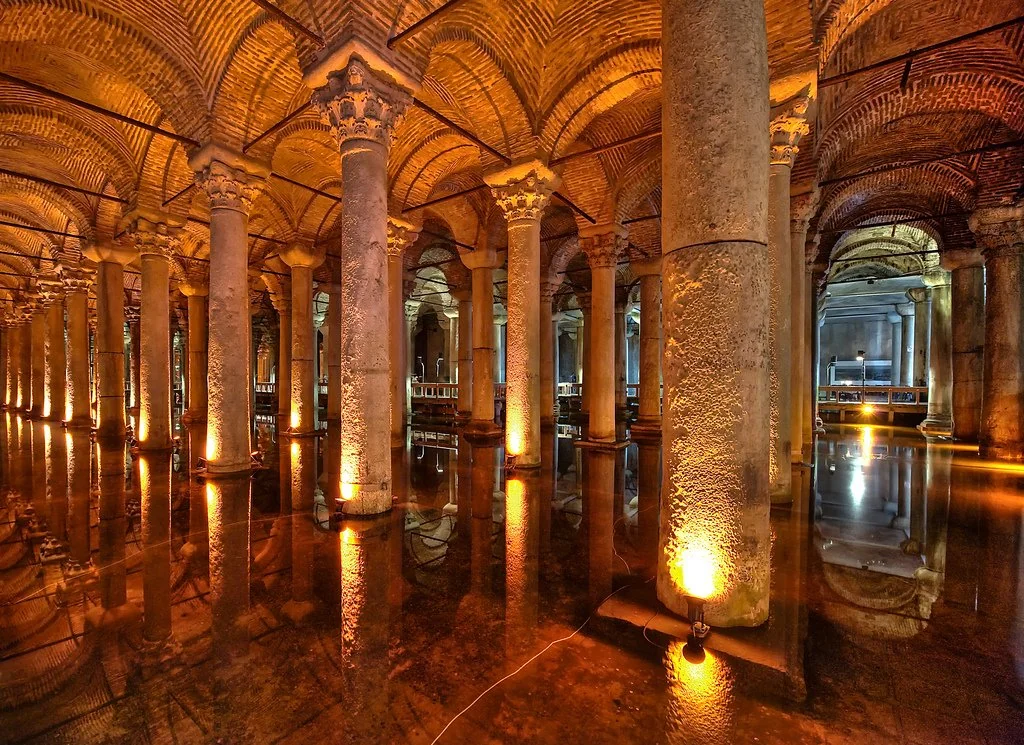
The Aljibe of Caceres represents one of the finest surviving examples of Islamic water engineering in medieval Spain, reflecting the sophisticated hydraulic knowledge developed during the Almohad period.
Its horseshoe arches, stone vaults, and controlled interior climate demonstrate how utility and aesthetic refinement could coexist within underground architecture.
Preserved beneath a public building, the cistern remains a key symbol of Andalusian engineering heritage.
7. Ancient Cisterns of Jerusalem – Israel
Beneath the Old City of Jerusalem, an extensive network of rock-cut cisterns supported daily life through periods of siege, drought, and political instability.
Many of these systems date back thousands of years, illustrating how water storage was inseparable from urban survival in sacred and contested spaces.
Their continued presence reinforces the importance of infrastructure in sustaining long-term settlement.
8. Roman Cisterns of Merida – Spain
In Roman Merida, underground cisterns played a vital role in supplying water to baths, fountains, and residential districts, reflecting the city’s importance within the western provinces of the empire.
Archaeological remains reveal careful planning and durable construction, emphasizing how water management shaped everyday life in Roman urban centers.
These cisterns connect engineering achievement with social organization.
9. Hidden Byzantine Cisterns of Istanbul – Turkey
Beyond well-known landmarks, dozens of Byzantine cisterns remain scattered beneath Istanbul’s Historic Peninsula, often concealed beneath modern buildings, streets, and mosques.
Together, they formed one of the most comprehensive urban water systems of the ancient world, designed to sustain the city during both peace and prolonged siege.
Their distribution reflects imperial priorities, population density, and defensive strategy.
10. Moorish Cisterns of North Africa – Morocco and Tunisia
Cities such as Fes and Kairouan preserve impressive Moorish cisterns that supported religious complexes, residential quarters, and public institutions in arid climates.
These structures demonstrate a refined understanding of water conservation, architectural harmony, and environmental adaptation.
Their influence continues to shape regional construction traditions today.
Why Ancient Cisterns Still Matter
Cisterns provide direct insight into how civilizations anticipated risk, managed resources, and planned for long-term urban survival under challenging environmental conditions.
Exploring the most impressive cisterns in the world reveals how water infrastructure functioned as a foundation of political power, social stability, and architectural innovation.
These underground spaces remain essential to understanding how cities evolved.
From Istanbul to Rome, from Jerusalem to North Africa, cisterns played a decisive role in shaping the cities we continue to inhabit and admire today.
Their enduring presence beneath modern streets reminds us that successful urban planning depends on foresight, engineering intelligence, and respect for natural resources.
By studying these structures, we uncover the hidden systems that allowed civilizations to flourish long before modern technology.
Wikipedia: Cistern
What are the most impressive ancient cisterns in the world?
Famous examples include Istanbul’s Basilica Cistern and Theodosius Cistern, the cisterns of Carthage, and Istanbul’s many other Byzantine reservoirs, admired for their scale and engineering.
Where does the Theodosius Cistern rank among them?
The Theodosius (Serefiye) Cistern is one of Istanbul’s finest surviving Byzantine cisterns, dating to the 5th century AD.
What made ancient cisterns so impressive?
They combined large-scale water storage with elegant architecture, using rows of columns and vaults to support huge underground chambers.
Can I visit these cisterns today?
Several, including the Theodosius and Basilica Cisterns in Istanbul, are open to visitors as cultural sites.
Why visit the Theodosius Cistern?
It offers an authentic Byzantine setting that is quieter than the Basilica Cistern, with an immersive light and projection experience.
Planning your trip to Istanbul? Read our Theodosius Cistern visit guide for directions and practical tips, or book your tickets for a daytime visit or the evening whirling dervish ceremony.

Comment (0)