
For many foreign visitors, Istanbul feels like a city that demands time, energy, and constant movement to understand its history.
Yet some of the most meaningful experiences happen not during long tours, but while walking short distances where the past quietly blends into everyday life.
The five-minute walk from Serefiye Cistern to Cemberlitas offers exactly this kind of experience, allowing you to move through centuries of Roman, Byzantine, and Ottoman history without effort or planning.
Rather than treating history as something distant or enclosed, this route lets you encounter it naturally, step by step.
Beginning Underground: Serefiye Cistern
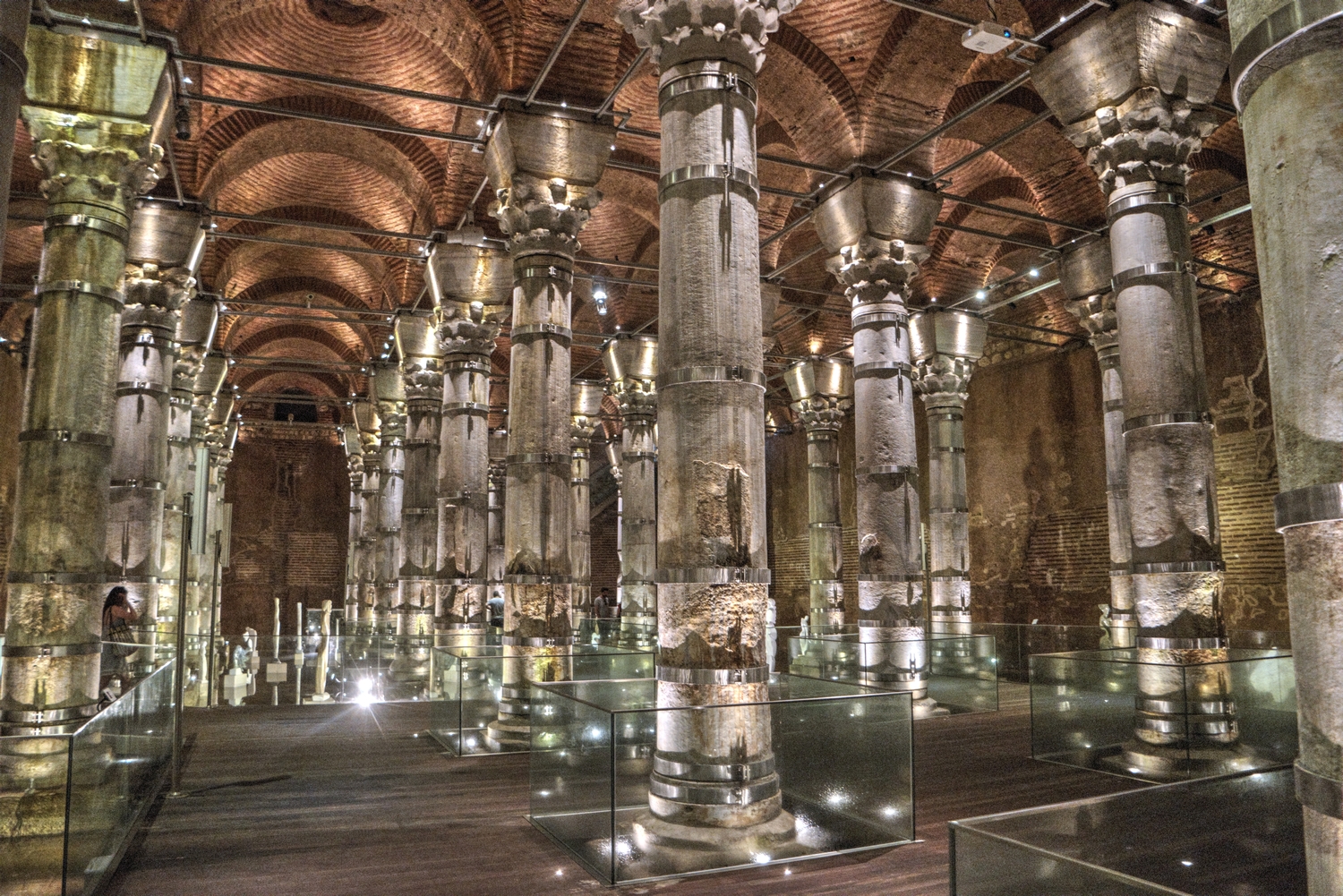
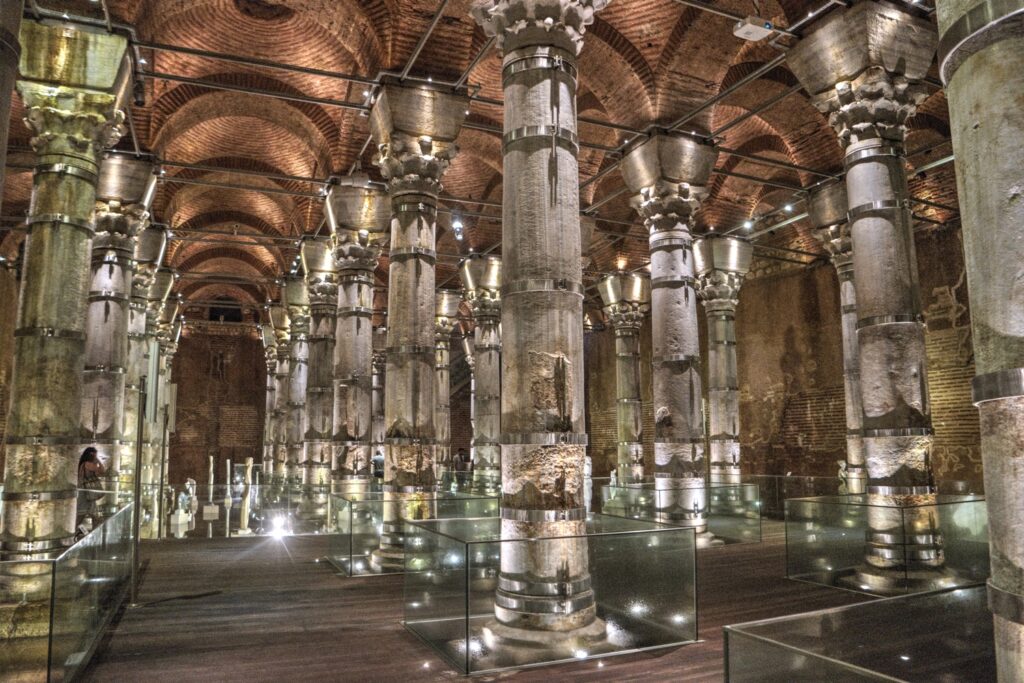
The walk begins below street level at Serefiye Cistern, where the atmosphere immediately separates you from the noise of the modern city.
Built in the fifth century, this Byzantine water reservoir once played a crucial role in sustaining Constantinople, an imperial city that depended on carefully designed infrastructure to survive.
As you move through the cistern today, surrounded by stone columns and brick arches, it becomes clear that history here was shaped by practical needs rather than spectacle.
Starting your walk in this quiet space creates a sense of contrast that stays with you as you return to the surface.
Stepping Back Into the City
Leaving the cistern and re-entering the street feels less like an exit and more like a continuation of the same story.
The modern city resumes around you, yet the knowledge of what lies beneath the pavement subtly changes how you perceive the surroundings.
As you walk toward Divanyolu Street, you follow a route that once formed part of the ceremonial heart of Constantinople.
Emperors, officials, and citizens passed through these same spaces, not as tourists, but as participants in daily urban life.
A Street Shaped by Empires
Divanyolu Street does not announce its historical importance loudly, which makes it especially interesting for travelers who enjoy discovering context rather than attractions.
Ottoman-era buildings, small shops, and everyday movement coexist along a road that reflects centuries of transformation instead of a single frozen moment.
This part of the walk encourages observation rather than photography, inviting you to notice how the city adapted to each new empire without abandoning its core structure.
In just a few minutes, the idea of Istanbul as a layered city becomes easy to understand.
Reaching Cemberlitas
As you approach Cemberlitas, the atmosphere subtly shifts from movement to pause, as the area has long served as a place of gathering rather than passage.
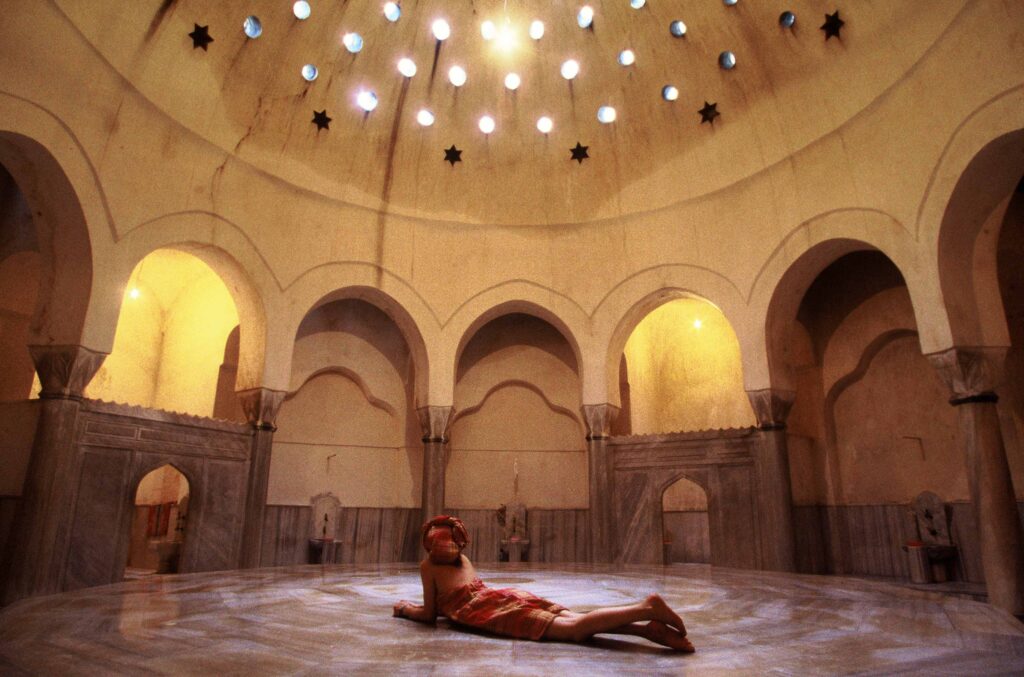
Before reaching the column itself, you encounter Cemberlitas Hamam, a sixteenth-century bathhouse designed by the great Ottoman architect Mimar Sinan for Nurbanu Sultan.
The presence of the hamam adds an important layer to the experience, reminding visitors that this area did not only symbolize imperial power, but also daily life, ritual, and social interaction during the Ottoman period.
Unlike the column, which represents authority and permanence, the bath reflects continuity through use, as it still functions today much as it did centuries ago.
Just beyond the hamam stands Cemberlitas Column, one of the oldest monuments in Istanbul and a lasting symbol of Roman ambition.
Erected in the fourth century by Emperor Constantine the Great, the column once marked the ceremonial and symbolic center of Constantinople.
Together, the hamam and the column illustrate how different empires shaped the same space with different priorities, yet allowed earlier structures to remain part of the city’s identity.
Why This Walk Resonates With Travelers
What makes this five-minute walk memorable for foreign visitors is not the scale of the monuments, but the clarity of the story they tell together.
You move from hidden infrastructure to open streets and finally to imperial symbolism, experiencing the city as a continuous narrative rather than a collection of stops.
This route suits travelers who prefer understanding over checklist sightseeing and who value moments that feel authentic rather than staged.
It also works well as a pause between larger attractions, offering reflection without fatigue.
The walk from Serefiye Cistern to Cemberlitas shows that Istanbul does not always reveal its history through grand gestures.
Sometimes, the city tells its story quietly, through short walks that connect function, power, and daily life.
If you want to experience Istanbul at a slower pace, this route offers a meaningful introduction to the city’s layered identity in just five minutes.
Wikipedia: Cemberlitas
How do I walk from the Theodosius Cistern to Cemberlitas?
It is a short walk of a few minutes along the historic peninsula from the Serefiye Cistern to Cemberlitas and its tram stop.
What is Cemberlitas?
Cemberlitas is the Column of Constantine, a Roman monument raised in the 4th century to mark the founding of Constantinople, close to the Theodosius Cistern.
What can I see between the cistern and Cemberlitas?
The route passes through the lively old city near the Grand Bazaar, with shops, historic mosques and the tram line.
Is the area easy to explore on foot?
Yes, the whole historic peninsula is compact and very walkable.
Planning your trip to Istanbul? Read our Theodosius Cistern visit guide for directions and practical tips, or book your tickets for a daytime visit or the evening whirling dervish ceremony.

Comment (0)