
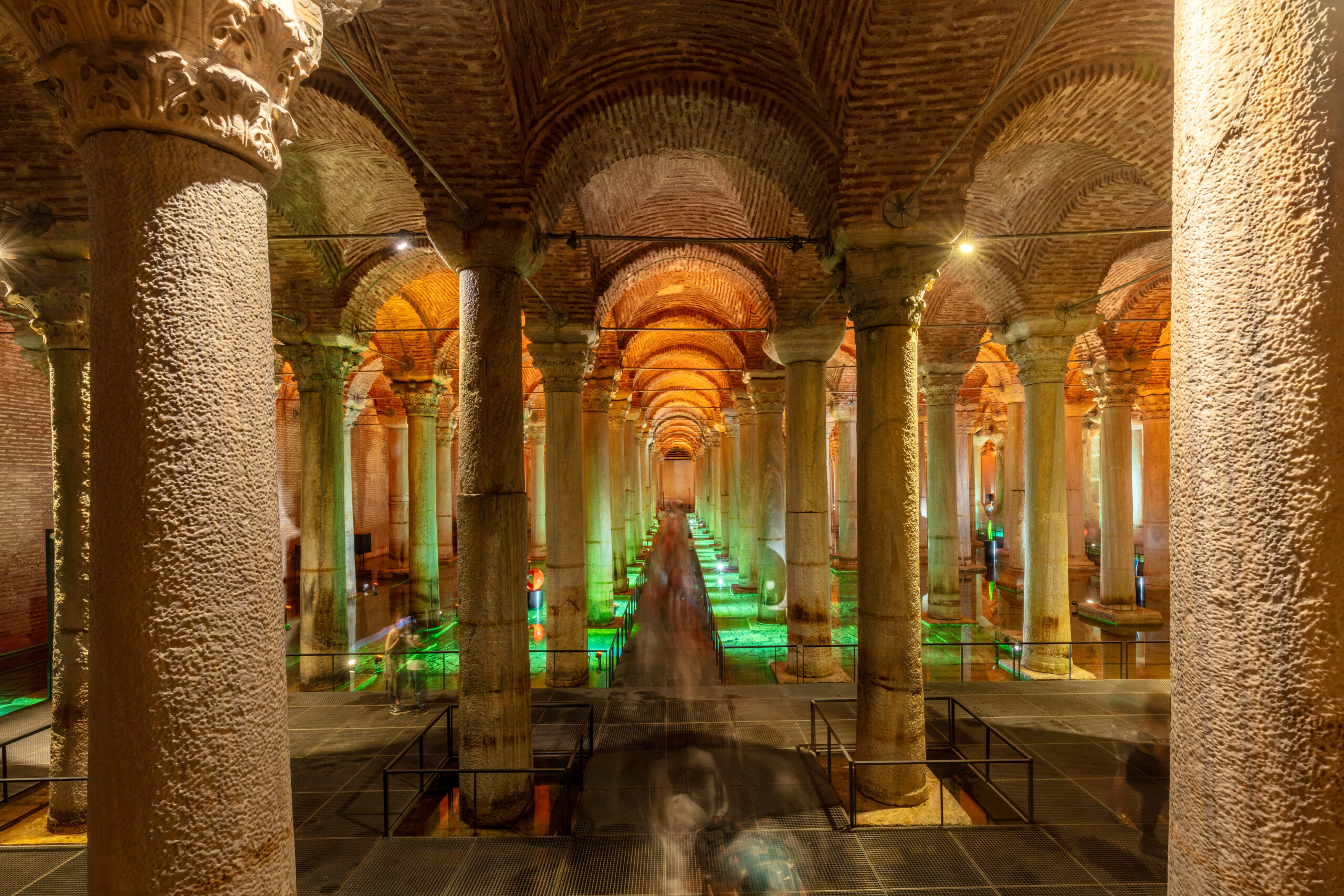
Located deep within the modern layers of the Historic Peninsula, the Cistern of Theodosius rises as a monumental testament to sixteen centuries of architectural and urban survival. One of the most significant remnants of ancient water infrastructure, the Cistern of Theodosius takes visitors on a rare journey into the heart of Late Roman and Byzantine engineering. Today, the Cistern of Theodosius has been transformed into a world-class cultural center seamlessly blending 5th-century stonework with 21st-century digital art installations.
Learn more about The Cistern Of Theodosius
Historical Context: Water Management and Imperial Vision
The construction of the Cistern of Theodosius dates back to the reign of Emperor Theodosius II, between 428 and 443 AD. During this period, the city was rapidly expanding, and securing a reliable water supply became a top priority for the imperial administration. The Cistern of Theodosius was built to store the vital water that had to travel vast distances to reach the capital.
A Vital Node in the Aqueduct Network
The Cistern of Theodosius was not an isolated reservoir; it was a critical part of the Valens Aqueduct (Bozdoğan Aqueduct) network. Water traveled over 250 kilometers, traversing mountainous terrain, to reach the point of the Cistern of Theodosius.
Strategic Purpose:
The Cistern of Theodosius served the administrative heart of the capital, supplying pressurized water to the Great Palace and the nearby imperial baths.
Modern Rediscovery:
For nearly a century, the Cistern of Theodosius remained hidden beneath a modern town hall. However, during a demolition process in 2010, the Cistern of Theodosius was unearthed, triggering the initiation of a state-of-the-art restoration project.
Architectural Splendor: Columns, Vaults and Structural Genius
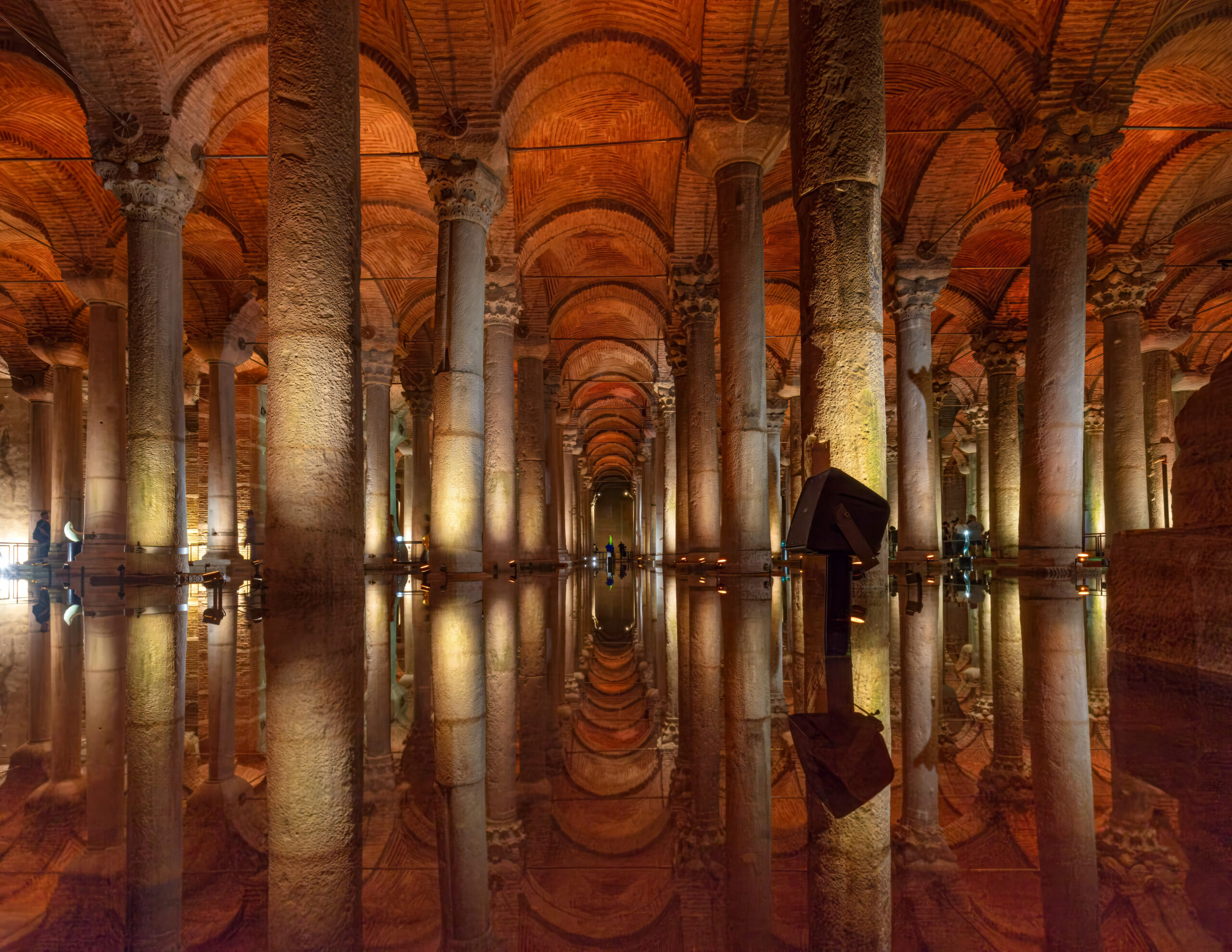
The architectural integrity of the Cistern of Theodosius is a masterpiece of symmetry and long-term durability. Covering an area of approximately 1,125 square meters, the roof of the Cistern of Theodosius is supported by 32 monolithic marble columns arranged in a perfect grid pattern.
Corinthian Capitals and Seismic Engineering
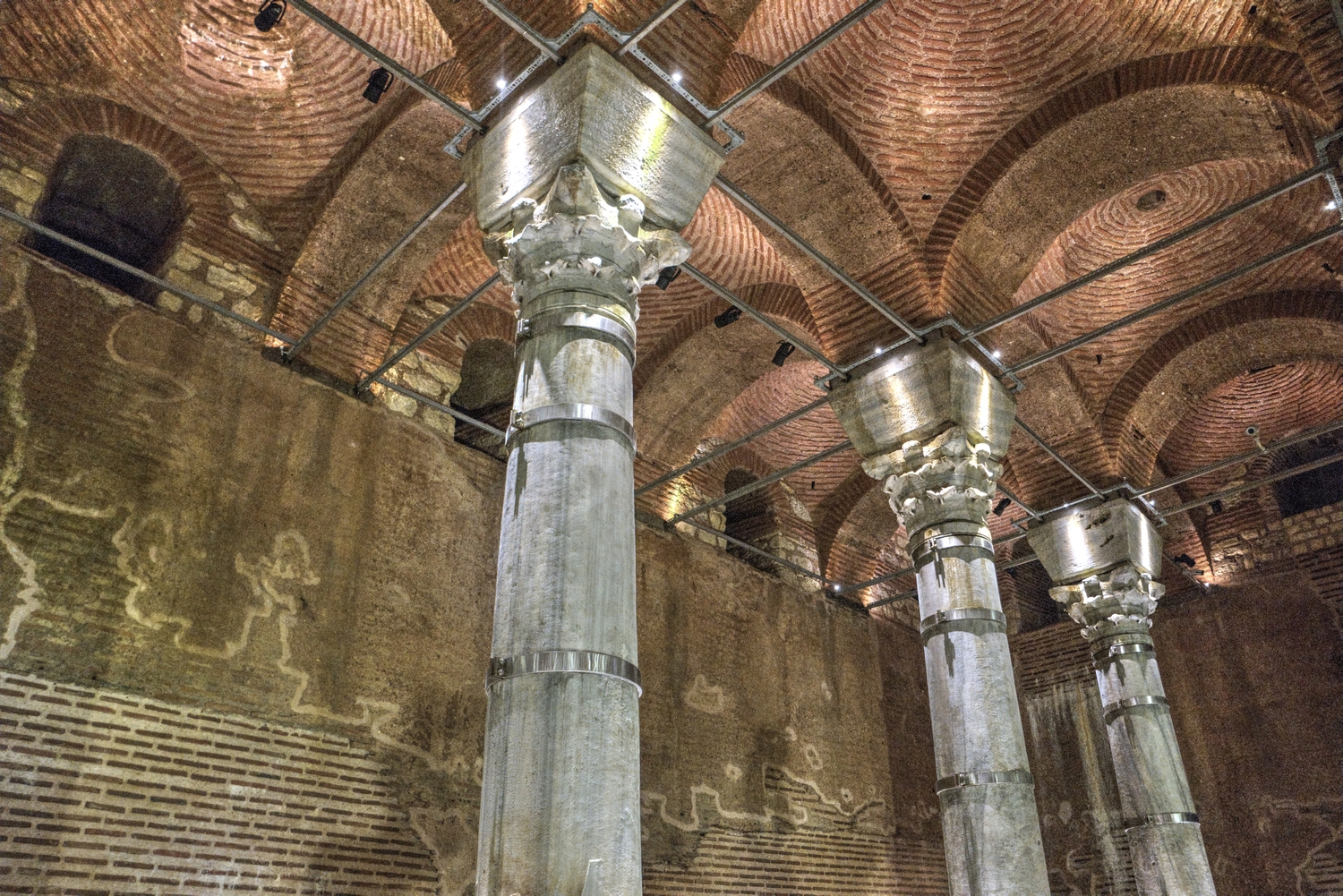
Each of the columns within the Cistern of Theodosius, reaching a height of 9 meters, is crowned with elegantly carved Corinthian capitals. These elements are functional components that distribute the immense weight of the brick vaulted ceiling throughout the Cistern of Theodosius.
Material Excellence:
Much of the marble within the Cistern of Theodosius was sourced from imperial quarries on Marmara Island, reflecting the economic power of the era.
Protective Iron Rings:
A unique technical detail of the Cistern of Theodosius is the presence of original iron tension rings. These rings provide structural reinforcement, allowing the Cistern of Theodosius to withstand the region’s frequent seismic activity for over 1,600 years.
Immersive Digital Transformation: 360-Degree Projection Mapping
While other reservoirs are known only for their size, the Cistern of Theodosius leads the world in technological integration. The Cistern of Theodosius is the world’s first ancient monument to feature a permanent, high-resolution 360-degree projection mapping system.
A Multisensory Narrative of Civilizations
The mapping show inside the Cistern of Theodosius is a digital symphony telling the city’s complex history.
Visual Experience:
Inside the Cistern of Theodosius, ultra-high-resolution lasers transform ancient stone surfaces into scenes of flowing water, intricate mosaics, and historical maps.
Historical Eras:
The narrative presented by the Cistern of Theodosius encompasses the transition from Roman foundations to Ottoman splendor and the modern era.
Acoustics:
The natural echo in the Cistern of Theodosius hall enriches specially composed music, creating an immersive soundscape that reverberates off the history-laden walls.
Why Does the Cistern of Theodosius Define the Ultimate Underground Experience?
For travelers seeking a deeper connection with history, the Cistern of Theodosius offers several advantages over larger, more crowded tourist destinations.
Exclusivity and Ambiance:
The Cistern of Theodosius provides an exclusive and peaceful setting that allows for a deep appreciation of the architecture.
Photographic Depth:
Thanks to its modern glass entrance hall, the interior of the Cistern of Theodosius benefits from a unique interplay between natural light and artificial shadows, making it a hub for architectural photography.
Cultural Versatility:
Beyond being a museum, the Cistern of Theodosius serves as a prestigious venue for classical music concerts and contemporary art exhibitions.
Essential Visitor Guide: Plan Your Exploration
Visit to fully experience the atmospheric beauty of the Cistern of Theodosius.
Conclusion: Global Heritage Summit Not to Be Missed
The Cistern of Theodosius is not just an ancient water reservoir; it is a bridge between the engineering genius of late antiquity and the future of digital storytelling. The Cistern of Theodosius represents the resilience of a city that, with its 1,600-year-old bricks, has been home to some of the world’s most advanced art forms. For any traveler seeking the true depth of the city’s history, a visit to the Cistern of Theodosius is an absolute must-have on their itinerary.

Comment (0)