
Theodosius Cistern: Istanbul’s Hidden Jewel
Deep beneath the modern metropolis of Istanbul, a vast network of ancient waterways and reservoirs whispers tales of a bygone empire. While the sprawling Basilica Cistern and the towering Cistern of Philoxenos often capture the spotlight, a third, equally magnificent marvel lies waiting: the Theodosius Cistern. This 1,600-year-old subterranean palace, lost to time for centuries, has been reborn as a stunning fusion of ancient architecture and modern art.
Often described as the most elegant of Istanbul’s cisterns, the Theodosius Cistern offers a unique, intimate, and artistically vibrant journey into the heart of Byzantine Constantinople. This in-depth guide will unveil the secrets of this architectural gem, from its imperial commission to its dramatic rediscovery and its current role as a premier cultural sanctuary.
A Legacy of Life: The Imperial Commission
The story of the Theodosius Cistern begins in the 5th century, a time when Constantinople was the thriving, populous capital of the Eastern Roman (Byzantine) Empire. A city of this scale had an insatiable thirst, and a sophisticated water management system was paramount to its survival, power, and prestige.
This cistern was commissioned by the Emperor Theodosius II, who reigned from 408 to 450 AD. Its construction, completed around 443 AD, was part of a massive infrastructure project to expand the city’s water supply. The water that filled this vast chamber was transported from the Belgrade Forest, far to the north, via the monumental Valens Aqueduct system.
The cistern’s primary function was to store this precious resource, ensuring a steady supply for several key public and imperial locations, including:
- The Nymphaeum (a monumental public fountain)
- The famed Baths of Zeuxippus
- The Great Palace of Constantinople
For centuries, this cistern, along with its sister structures, served as the lifeblood of the imperial city. It was a testament to the remarkable engineering prowess of the Roman and Byzantine world, a functional masterpiece hidden from view.
Architectural Splendor: A Forest of Marble
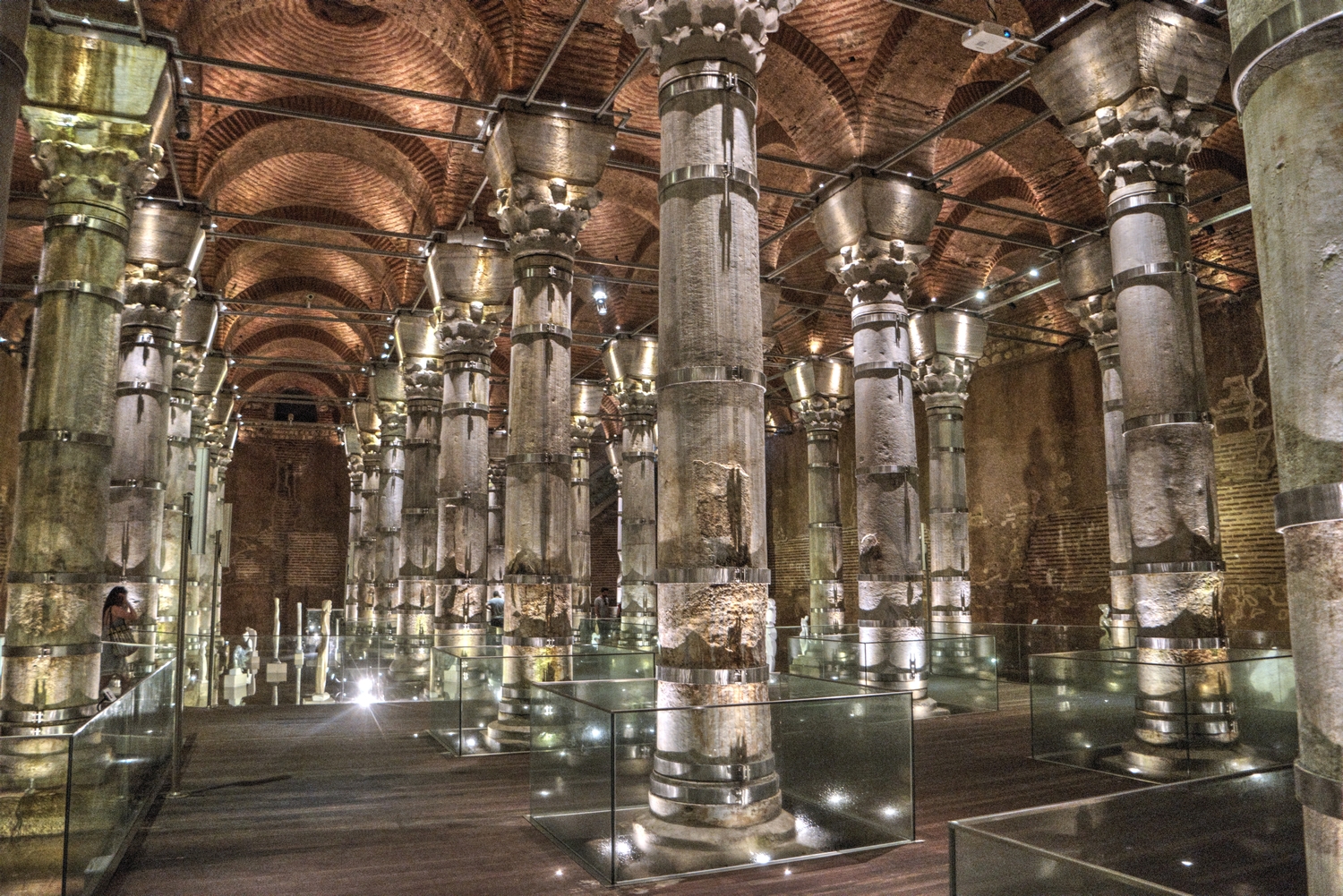
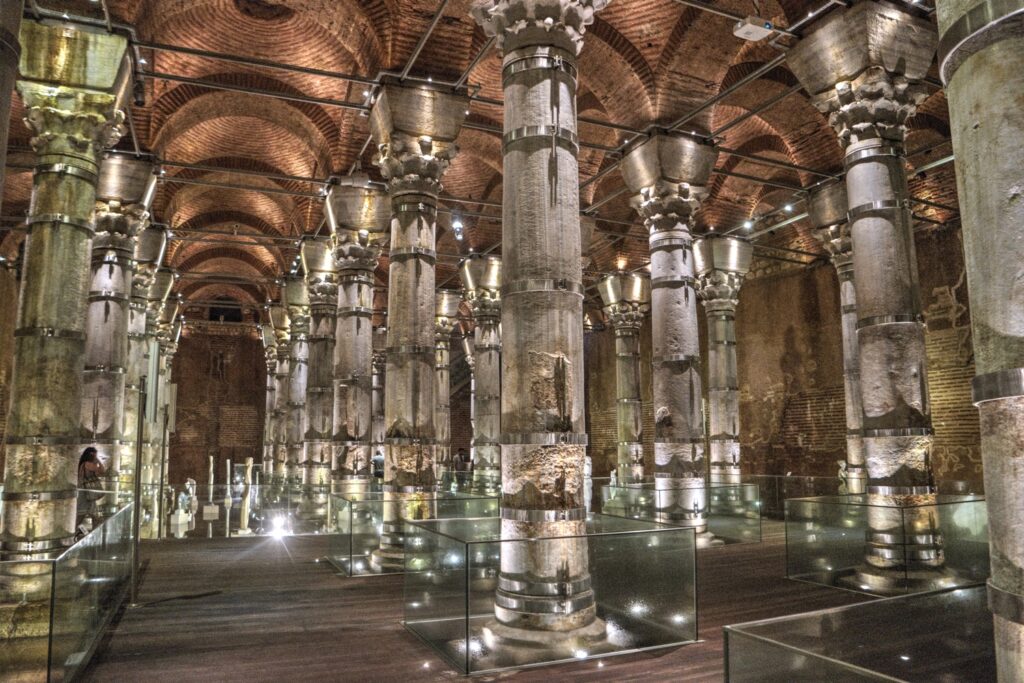
To step inside the Theodosius Cistern is to be transported. The space is a breathtaking hypostyle hall, a silent “forest” of 32 exquisite marble columns rising from the floor to support a ceiling of intricate brick vaults.
- Dimensions and Scale: The cistern is a vast rectangular space, measuring approximately 45 by 25 meters (148 by 82 feet). The ceiling soars to a height of 9 meters (30 feet), creating an atmosphere that is both grand and surprisingly intimate.
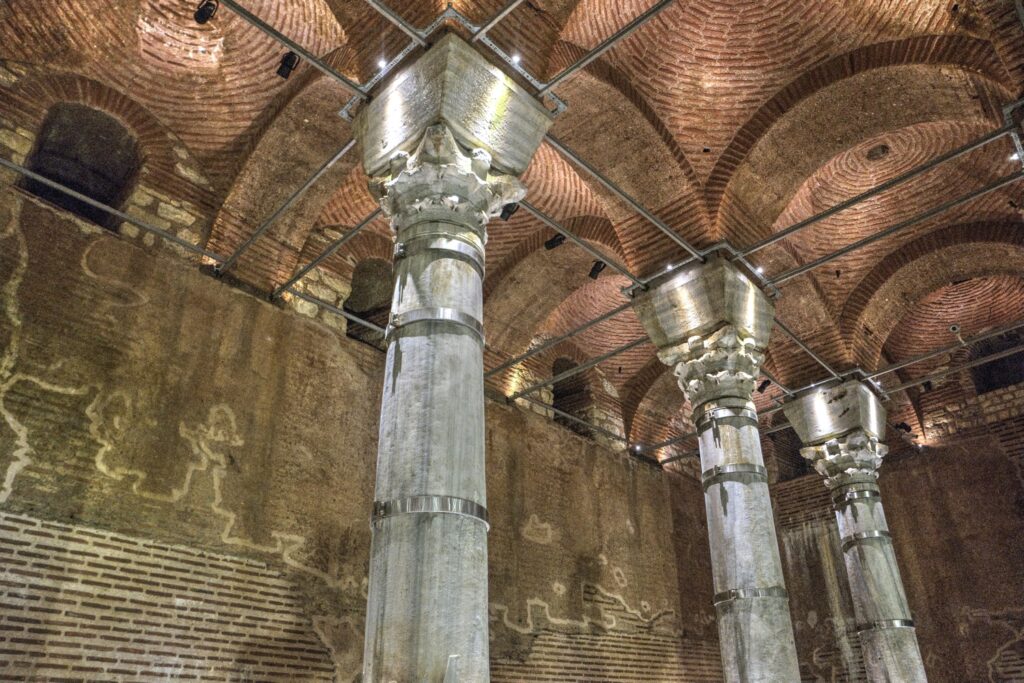
- The Corinthian Columns: The true artistic highlight is the collection of 32 columns. Carved from Proconnesian marble (from the nearby Marmara Island), they are almost perfectly preserved. Each column is topped with a meticulously detailed Corinthian capital, featuring delicate acanthus leaves that seem to unfurl in the soft light. The uniformity and fine craftsmanship of these capitals suggest they were custom-made for the cistern, unlike the salvaged, eclectic columns found in the Basilica Cistern.
- The Impost Blocks: Resting atop each capital is a large impost block, each one uniquely carved with symbols. Look closely, and you will see pagan symbols, such as the acanthus leaf (a symbol of eternity) and the bull’s eye, seamlessly integrated into the structure.
- The Vaulted Ceiling: The columns support a stunning ceiling of cross-vaults, constructed from the durable and characteristic Byzantine brick. This robust design flawlessly distributed the immense weight of the earth and the city that would one day be built on top of it. The walls themselves were coated with a special hydraulic mortar (opus signinum) to make them waterproof, a formula so effective it has endured for millennia.
The Long Sleep: Centuries of Oblivion
With the Ottoman conquest of Constantinople in 1453, the city’s priorities shifted. The Ottomans, preferring fresh, running water, developed their own system of aqueducts and fountains. The great Byzantine cisterns, no longer maintained, gradually fell into disuse.
Like many of its counterparts, the Theodosius Cistern was eventually sealed, drained, and forgotten. The city above grew, and the memory of the subterranean palace faded. For hundreds of years, it lay in complete darkness, buried beneath layers of Ottoman development. In the 19th century, an Ottoman mansion, the Arif Pasha Konak, was built over the site, and in the 20th century, it was replaced by a large municipal building.
The cistern had vanished from the maps and the memory of Istanbul.
Learn more details about Theodosius Cistern
A Modern Resurrection: The Rediscovery of a Lost Marvel
The Theodosius Cistern’s re-emergence into the world is a story of chance and remarkable urban archaeology. In 2010, the old Eminonu municipal building that stood on the site was demolished to make way for a new development. As excavation crews dug into the foundation, their machinery broke through into a vast, column-filled void.
They had stumbled upon the lost cistern of Theodosius II.
What followed was a meticulous, eight-year restoration project led by the Istanbul Metropolitan Municipality. This was no simple excavation. Archaeologists and engineers worked painstakingly to:
- Remove tons of earth and debris that had filled the cistern over centuries.
- Carefully clean and restore each of the 32 marble columns and their capitals.
- Reinforce the ancient brick vaults and walls to ensure structural integrity.
- Install a modern infrastructure (walkways, lighting, and climate control) without compromising the structure’s historical authenticity.
The goal was not just to open a museum but to create a living, breathing space where history and culture could meet. The result is arguably the most pristine and beautifully presented cistern in all of Istanbul.
Today: Where Ancient History Meets Modern Art
The Theodosius Cistern reopened to the public as a magnificent cultural venue. It stands in stark contrast to the dark, watery expanse of the Basilica Cistern. Here, the atmosphere is bright, airy, and ethereal. The columns, illuminated by soft, warm light, are reflected on a shallow, mirror-like pool of water on the floor, creating a mesmerizing effect of infinite space.
Its most defining modern feature is the state-of-the-art 360-degree projection mapping system. The ancient cistern is used as a canvas for breathtaking light shows and immersive art installations.
- The 360-Degree Experience: Visitors are treated to looped visual narratives projected directly onto the 1,600-year-old walls, vaults, and columns. These shows often depict themes related to the cistern’s history, the element of water, or geometric patterns inspired by Byzantine and Ottoman art.
- A Premier Cultural Hub: The space’s exceptional acoustics and unparalleled atmosphere have made it one of Istanbul’s most sought-after venues for art and culture. It regularly hosts:
- Classical and traditional music concerts
- Contemporary art exhibitions
- Gala dinners and private events
- Lectures and cultural talks
This adaptive reuse ensures that the Theodosius Cistern is not merely a static relic of the past but an active and vital part of Istanbul’s contemporary cultural landscape.
Istanbul’s Cisterns: A Comparison
For travelers, understanding the differences between Istanbul’s three major cisterns is key to appreciating what makes the Theodosius Cistern so special.
- Basilica Cistern: The largest and most famous. It is dark, atmospheric, and still holds a significant amount of water, which visitors walk over on platforms. Its main draws are its immense scale and the mysterious Medusa head bases.
- Cistern of Philoxenos (Binbirdirek): The second largest. It is known for its towering, double-stacked columns and its vast, cavernous, and mostly dry interior. It feels rawer and more structurally imposing.
- Theodosius Cistern: The “jewel box” of the trio. It is smaller, more intimate, and defined by its elegance and pristine restoration. Its bright lighting, perfect Corinthian capitals, and the integration of modern projection art make it a unique, museum-like experience.
While the Basilica Cistern offers drama and mystery, the Theodosius Cistern offers elegance, art, and a crystal-clear view of Byzantine architectural perfection.
Explore Other Cisterns in Istanbul
Planning Your Visit to the Theodosius Cistern
A visit to this remarkable site is easy to incorporate into any trip to Istanbul’s historic peninsula.
- Location: The cistern is conveniently located in the Sultanahmet district, a very short walk from the Cemberlitas tram (T1 line) stop and the Cemberlitas (Column of Constantine). It is situated between the Grand Bazaar and the Hippodrome.
- Admission and Hours: One of its most attractive features is that admission is often free, as it is operated as a public cultural space by the municipality. It is typically open daily, but it is always wise to check the official municipality website for current hours and any potential closures for private events.
- What to Expect:
- Time: A typical visit lasts between 30 and 45 minutes, perfect for absorbing the atmosphere and watching the projection show.
- Atmosphere: The interior is cool, providing a wonderful escape from the city’s summer heat.
- Accessibility: The site is modern and fully accessible, with ramps and even pathways that allow for an easy visit.
- Photography: The space is a photographer’s dream. The symmetrical columns, beautiful lighting, and reflections on the water offer endless stunning compositions.
A Timeless Legacy
The Theodosius Cistern is more than just an ancient reservoir. It is a story of imperial power, ingenious engineering, profound loss, and spectacular rebirth. It serves as a powerful bridge connecting the Constantinople of Theodosius II with the vibrant, artistic Istanbul of today.
In this silent, columned hall, you are not just observing history; you are standing within it, enveloped by 1,600 years of resilience. A visit to the Theodosius Cistern is an essential experience for anyone seeking to understand the deep, hidden layers of one of the world’s greatest cities.

Comment (0)