
Basilica Cistern: A Subterranean Palace of Secrets
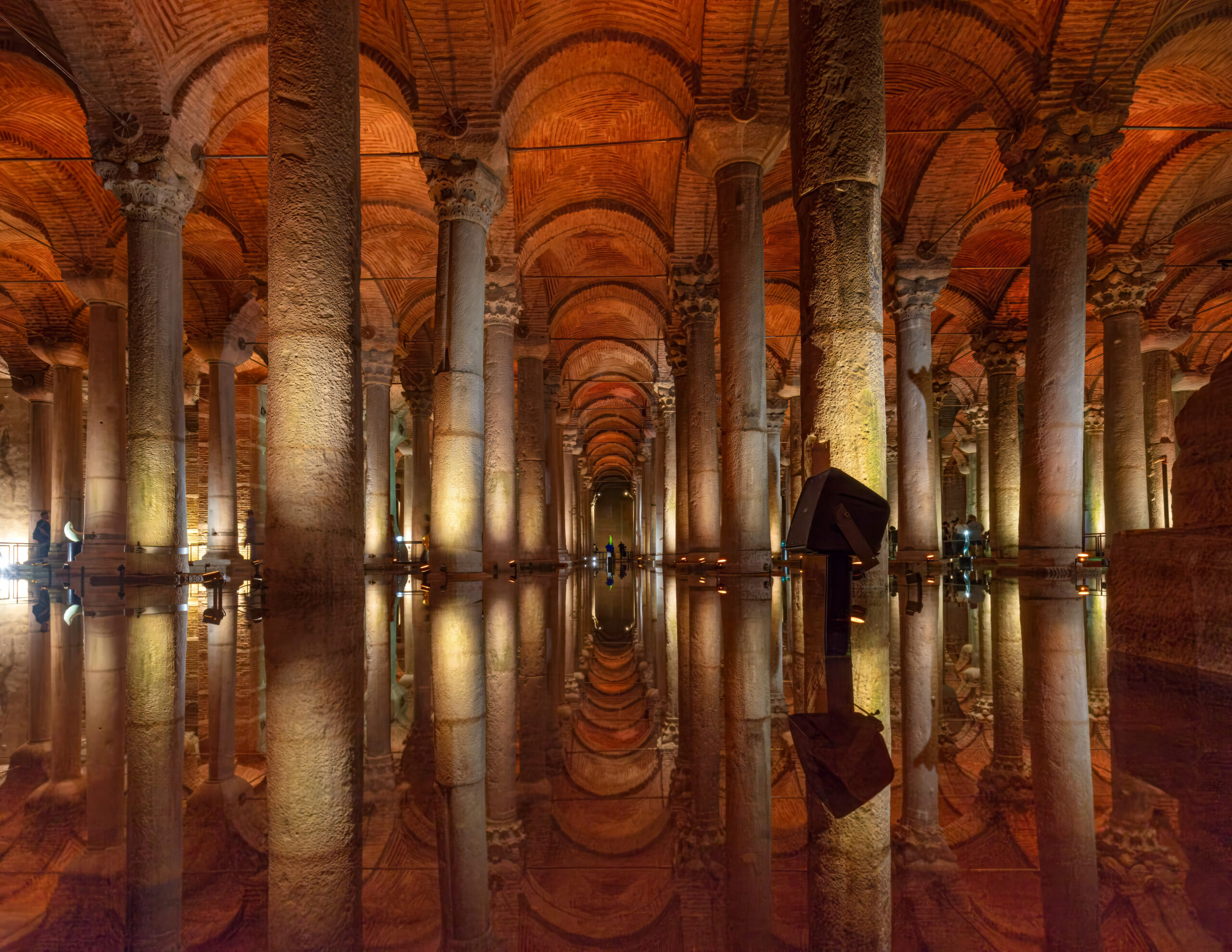
Beneath the vibrant heart of Istanbul, away from the sunlit domes and minarets, lies a silent, subterranean world of astonishing beauty and ancient mystery. The Basilica Cistern, known in Turkish as Yerebatan Sarnıcı or the “Sunken Palace,” is not merely a water reservoir; it is a breathtaking testament to Byzantine ingenuity and a repository of legends that have captivated travelers for centuries. This vast underground chamber, with its forest of marble columns and enigmatic stone guardians, offers a journey into the depths of Constantinople’s layered past.
This article will guide you through the echoing chambers of the Basilica Cistern, exploring its grand history, unique architectural marvels, and the enduring mysteries that continue to intrigue historians and visitors alike. From its construction by thousands of slaves to its starring role on the silver screen, we will uncover the story of this unforgettable landmark.
A Grand Design: The Birth of the Sunken Palace
The story of the Basilica Cistern begins in the 6th century, during the illustrious reign of the Byzantine Emperor Justinian I. Following the devastating Nika riots of 532 AD, which razed much of Constantinople, Justinian embarked on an ambitious reconstruction program. The cistern was a crucial part of this vision, designed to ensure a reliable water supply for the Great Palace of Constantinople and the surrounding buildings on the city’s First Hill.
Its name originates from the Stoa Basilica, a large public square with a grand basilica that stood above it before being destroyed by fire in 476 AD. The construction of the cistern was a monumental feat of engineering. Historical texts suggest that as many as 7,000 slaves toiled to create this underground marvel.
- Vast Dimensions: The cistern measures approximately 140 meters (453 feet) in length and 70 meters (230 feet) in width.
- Immense Capacity: It covers a surface area of nearly 10,000 square meters (108,000 square feet) and could hold an astounding 80,000 cubic meters (2,800,000 cubic feet) of water.
- Water Source: The water was transported from the Belgrade Forest, about 19 kilometers north of the city, through a complex system of aqueducts, including the 4th-century Valens Aqueduct.
For centuries, this magnificent structure served its purpose, providing life-sustaining water to the heart of the Byzantine Empire. After the Ottoman conquest of 1453, it continued to supply water to the Topkapi Palace. However, as the Ottomans preferred running water, the cistern gradually fell into disuse and was eventually all but forgotten by the city’s authorities. It was not until 1545 that it was rediscovered by the French scholar Petrus Gyllius, who noticed locals drawing water and even catching fish through holes in their basement floors.
Learn more details about Basilica Cistern
An Underground Forest: The Architecture of the Cistern
Entering the Basilica Cistern is like stepping into another world. A 52-step staircase leads you down into a cool, dimly lit cavern, where the air is thick with the scent of damp stone and the sound of dripping water echoes through the vast space. The most striking feature is the immense forest of columns that appear to stretch into infinity.
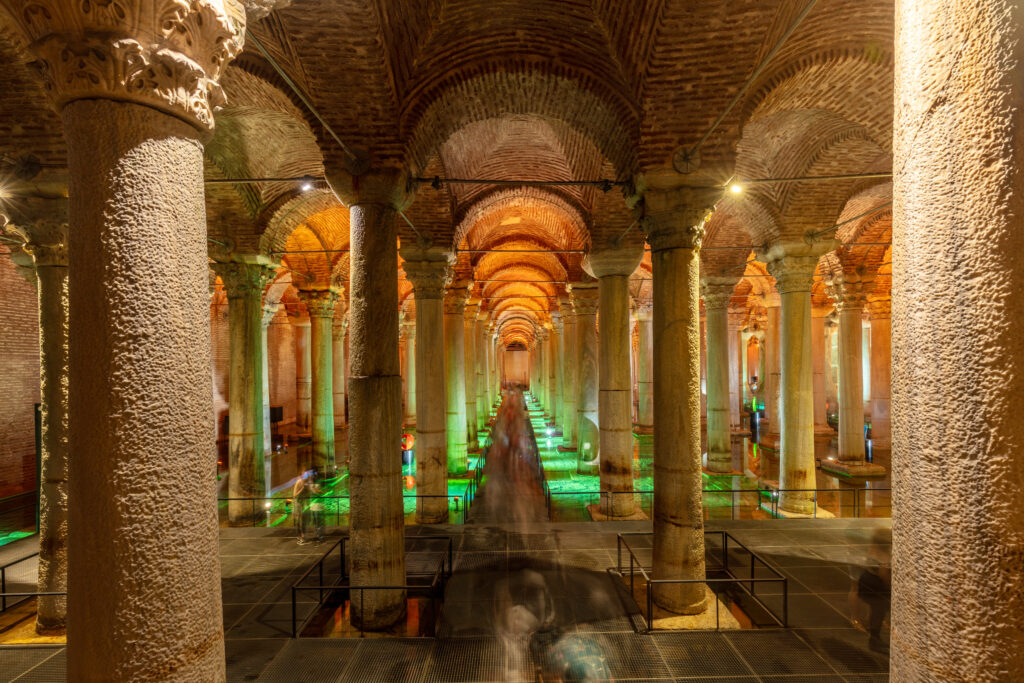
The ceiling of the cistern is supported by a total of 336 marble columns, each standing 9 meters (30 feet) tall. These columns are arranged in 12 rows of 28, spaced approximately 5 meters apart, creating a mesmerizing effect of symmetry and grandeur.
The columns themselves are a fascinating study in Byzantine pragmatism and artistry. They were not custom-made for the cistern but were salvaged from various older structures and temples across the empire—a common practice at the time. This recycling of materials has resulted in a captivating variety of column styles:
- Ionic and Corinthian Styles: Most of the columns feature ornate capitals in the elegant Ionic and intricate Corinthian styles.
- Doric Style: A small number of columns are simpler, showcasing the unadorned Doric style.
- Unique Columns: Some columns are distinguished by unique carvings and forms, hinting at their diverse origins and the stories they carry from forgotten pagan temples and Roman monuments.
This eclectic collection of columns not only supports the physical structure but also adds to the cistern’s profound sense of historical depth, making a walk along its elevated platforms a journey through disparate parts of the ancient world.
The Enigma of Medusa: Guardians of the Deep
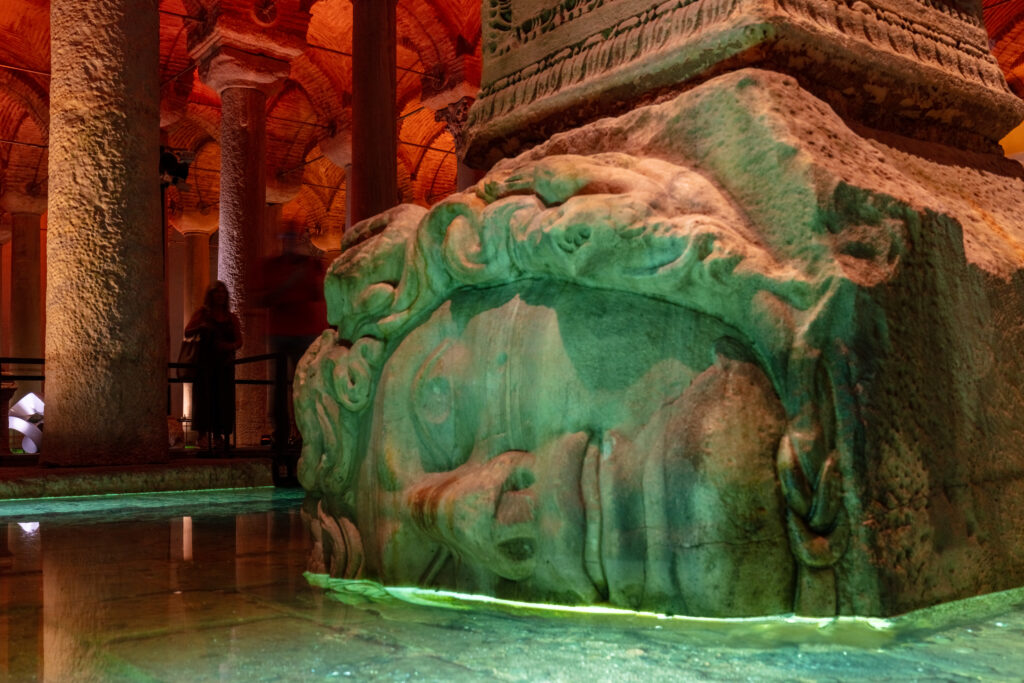
In the far northwest corner of the cistern, two columns stand apart from the rest, their bases formed from enormous, masterfully carved blocks depicting the head of Medusa. These Medusa heads are undoubtedly the most famous and mysterious feature of the Basilica Cistern, drawing visitors into a world of Greek mythology.
In mythology, Medusa was one of the three Gorgon sisters, a terrifying creature with snakes for hair whose gaze could turn a man to stone. The origin of these two heads and the reason for their specific placement remain a subject of debate among historians.
- Unusual Placement: One head is placed sideways, while the other is positioned completely upside down.
- Practical vs. Symbolic: One theory suggests a purely practical reason: the blocks were simply the right size to serve as column bases. Another, more popular theory, posits that the placement was deliberate. By averting the direct gaze of Medusa, the builders may have sought to negate her petrifying power, symbolically protecting the cistern and the city.
- Pagan Spolia: It is widely believed that the heads were repurposed from a late Roman-era building. Their presence serves as a powerful symbol of the triumph of Christianity over paganism, with mythological figures literally being placed underfoot to support the new Christian empire’s infrastructure.
Regardless of their true purpose, the Medusa heads add an unforgettable layer of intrigue and myth to the subterranean palace.
The Crying Column and Other Notable Features
While the Medusa heads command the most attention, other columns within the cistern hold their own secrets and stories. One of the most distinctive is the “Hen’s Eye Column,” also known as the Crying Column or the Teardrop Column.
This pillar is engraved with patterns resembling a hen’s eye, teardrops, or slanted branches. It remains perpetually wet, and legend holds that the tears commemorate the thousands of slaves who died during the cistern’s construction. Visitors often toss coins into the pool at its base, making a wish in this poignant and atmospheric spot.
From Neglect to Modern Marvel: Restoration and Revival
After its rediscovery in the 16th century, the Basilica Cistern underwent several repairs during the Ottoman era. However, its modern transformation began in the 20th century. Between 1985 and 1987, the Istanbul Metropolitan Municipality undertook a major restoration. Tons of mud and debris were removed, and raised wooden platforms were installed to allow public access.
More recently, the cistern underwent another extensive restoration, closing in 2017 and reopening to the public in July 2022. This latest project focused on:
- Structural Reinforcement: Strengthening the structure against potential earthquakes.
- Enhanced Walkways: Replacing old concrete platforms with a new, lower walkway made of a lighter, more transparent material, bringing visitors closer to the water’s surface.
- Atmospheric Lighting: Installing a state-of-the-art dynamic lighting system that enhances the mystical atmosphere and highlights the architectural details of the columns and the vaulted ceiling.
Today, the restored Basilica Cistern is more than just a historical site; it is a cultural venue that hosts art exhibitions and music concerts, its incredible acoustics providing a unique backdrop for performances.
Explore Other Cisterns in Istanbul
A Star of the Silver Screen: The Cistern in Popular Culture
The dramatic and mysterious atmosphere of the Basilica Cistern has not gone unnoticed by filmmakers and authors. Its otherworldly beauty has made it a memorable setting in several international productions.
- James Bond’s “From Russia with Love” (1963): The cistern gained significant international fame after being featured in this classic James Bond film. In a memorable scene, Sean Connery as 007 rows a small boat through the columned expanse, supposedly underneath the Soviet consulate.
- Dan Brown’s “Inferno” (2013 Novel and 2016 Film): The cistern serves as the climactic setting in Dan Brown’s thriller. Protagonist Robert Langdon, played by Tom Hanks in the film adaptation, races through the water-filled chamber to prevent a deadly plague from being released.
- Other Appearances: It has also been featured in films like “The International” (2009) and has inspired writers and artists, cementing its status as an iconic and evocative location.
Planning Your Visit to the Sunken Palace
A visit to the Basilica Cistern is an essential part of any Istanbul itinerary. Its central location in the historic Sultanahmet district makes it easily accessible.
- Location: Situated just 150 meters southwest of the Hagia Sophia.
- Getting There: The most convenient way to reach the cistern is by taking the T1 tram line to the Sultanahmet stop.
- Hours and Tickets: The cistern is open to visitors every day of the week, often with extended evening hours. It is highly recommended to check the official website (yerebatan.com) for the latest opening times and to purchase tickets online in advance to avoid long queues.
- Visitor Experience: The modern walkways, artistic installations, and sophisticated lighting create an immersive and unforgettable experience. The cool temperature inside provides a welcome respite from the Istanbul heat, especially during the summer months.
The Basilica Cistern is more than an ancient reservoir; it is a journey into the soul of a city that has stood at the crossroads of civilizations for millennia. As you walk among its silent, weeping columns and stand before the enigmatic gaze of Medusa, you connect with a history that is both monumental and deeply personal. It remains a timeless marvel, a sunken palace that continues to guard the secrets of old Constantinople.

Comment (0)