
Unveiling the Cistern of Philoxenos: An Ancient Marvel
Deep beneath the bustling streets of Istanbul lies a silent testament to the ingenuity of the Byzantine Empire: the Cistern of Philoxenos. More commonly known as the Binbirdirek Cistern, this subterranean marvel offers a captivating journey into the city’s rich and layered history. While often overshadowed by its more famous counterpart, the Basilica Cistern, the Cistern of Philoxenos possesses a unique charm and historical significance that beckons the discerning traveler. This in-depth exploration will unveil the secrets of this architectural gem, from its ancient origins to its modern-day revival.
A Legacy Etched in Stone: The Genesis of the Cistern
Commissioned in the 4th century by the Roman senator Philoxenos during the reign of Constantine the Great, the cistern stands as one of Istanbul’s oldest and most vital Byzantine water reservoirs. Its primary purpose was to supply water to the nearby Palace of Philoxenos,
a grand structure that has long since vanished from the city’s landscape. The cistern’s strategic location, nestled between the Forum of Constantine and the Hippodrome of Constantinople, underscores its importance in the heart of the ancient city.
The construction of the Cistern of Philoxenos was a monumental undertaking, a testament to the advanced engineering prowess of the era. Its vast expanse, covering an area of approximately 3,640 square meters, was designed to hold an impressive 40,000 cubic meters of water, ensuring a steady supply for the palace and its inhabitants, particularly during times of siege or drought.
Architectural Grandeur: A Forest of Columns
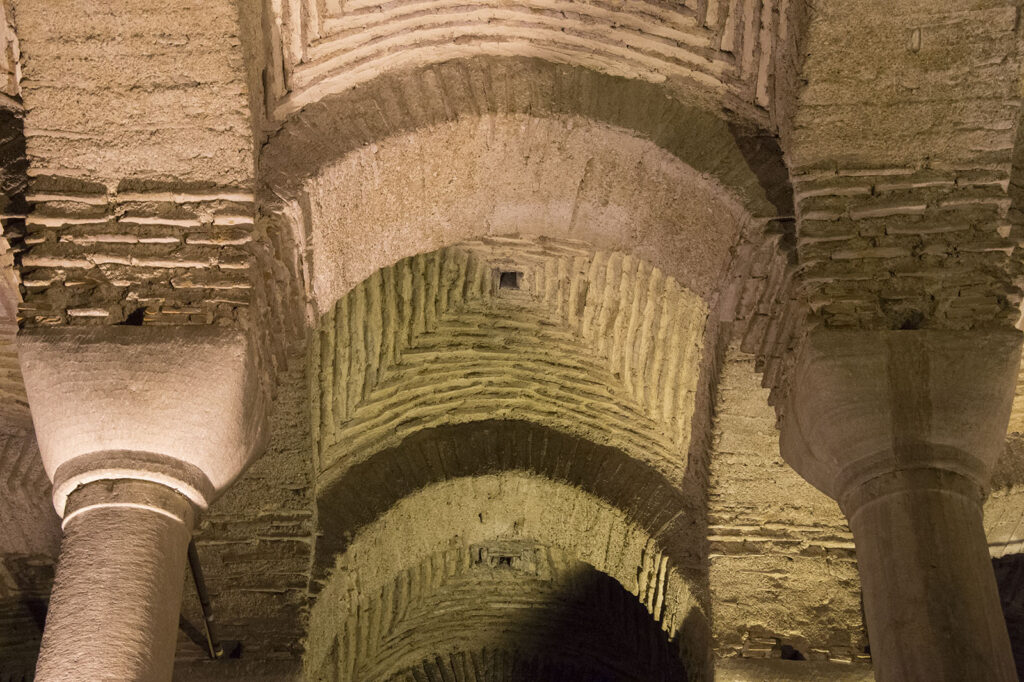
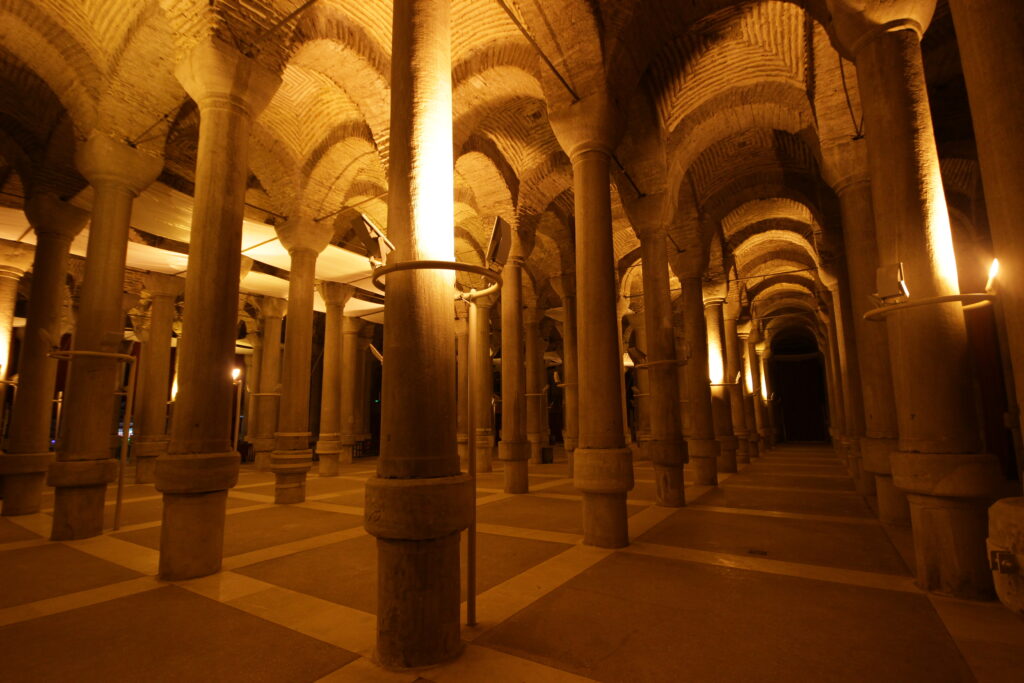
The true marvel of the Cistern of Philoxenos lies in its breathtaking interior. A vast hypostyle chamber supported by a forest of marble columns, the cistern’s design is both functional and aesthetically striking. The Turkish name, Binbirdirek, translates to “1,001 columns,” an evocative exaggeration that captures the overwhelming impression of countless pillars stretching into the dimly lit distance.
In reality, the cistern houses 224 marble columns, each a masterpiece of Byzantine craftsmanship. These columns, sourced from the nearby Marmara Island, are a sight to behold. A unique architectural feature of the Cistern of Philoxenos is the composition of its columns.
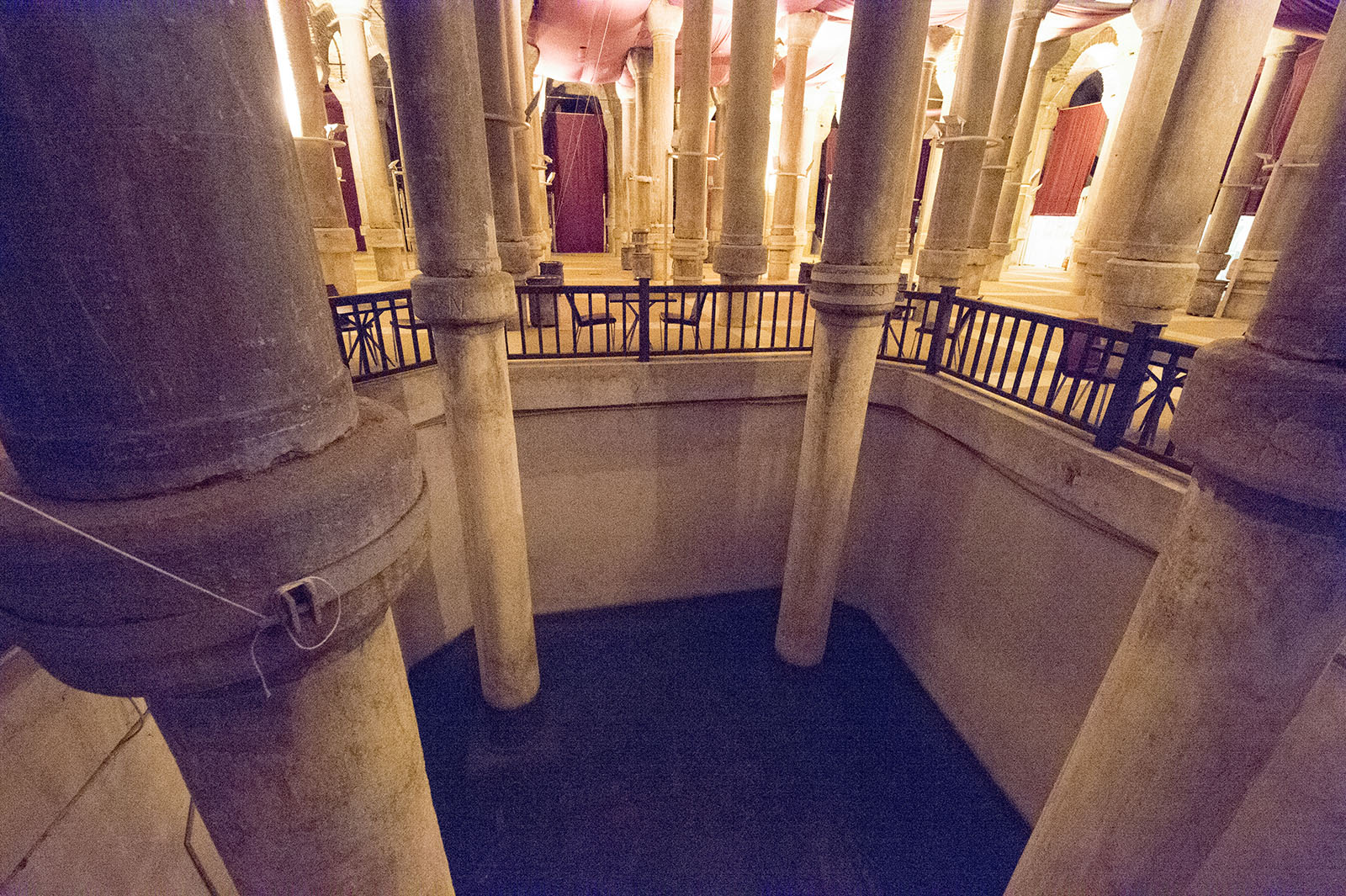
Each is a superposition of two smaller columns, joined by a marble ring. This clever design allowed for a greater overall height, maximizing the cistern’s water storage capacity.
Today, due to a later reinforcement of the cistern floor, only the upper column and a small portion of the lower one are visible. However, an excavated pond in the center of the cistern showcases four columns in their original, full height, offering a glimpse into the chamber’s initial grandeur.Adding to their mystique, many of the columns and their capitals are engraved with Greek mason’s marks, silent signatures of the artisans who toiled in the subterranean darkness.
A Journey Through Time: From Neglect to Rediscovery
With the fall of Constantinople in 1453, the Cistern of Philoxenos, like many of the city’s Byzantine treasures, fell into disuse and was eventually forgotten. For centuries, it lay hidden beneath the evolving city, its magnificent columns shrouded in darkness and silence. It was not until the 17th century, during the construction of Fazli Pasha’s palace on the same site, that the cistern was rediscovered.
However, its rediscovery did not immediately lead to its restoration. For a period, the cavernous space was repurposed by local silk spinners, who found the cool, damp environment ideal for their craft. It is believed that the name “Binbirdirek” originated during this time, as the workers, enveloped in the near-total darkness, perceived the columns as being far more numerous than they actually were.
The cistern’s history took a dark turn during the Auspicious Incident of 1826. In the turmoil of the disbandment of the Janissary Corps, a number of the elite soldiers sought refuge in the cistern, only to meet a tragic end. The 19th century saw mansions built atop the ancient reservoir, further obscuring its historical significance.
Learn more details about Cistern of Philoxenos
The Cistern of Philoxenos vs. The Basilica Cistern
No discussion of the Cistern of Philoxenos is complete without a comparison to its more illustrious neighbor, the Basilica Cistern. While both are remarkable examples of Byzantine engineering, they offer distinctly different visitor experiences.
- Size and Scale: The Basilica Cistern is the largest of Istanbul’s ancient cisterns, with 336 columns. The Cistern of Philoxenos, while still impressively large, is the second largest with its 224 columns.
- Atmosphere: The Basilica Cistern, with its atmospheric lighting, walkways over the water, and iconic Medusa heads, is a highly curated tourist attraction. The Cistern of Philoxenos, on the other hand, offers a more raw and authentic experience. Its vast, empty spaces and towering columns evoke a profound sense of history and solitude.
- Architectural Nuances: The double-stacked columns of the Cistern of Philoxenos are a unique feature not found in the Basilica Cistern. The Greek mason’s marks on the columns of Philoxenos also offer a more direct connection to the individuals who built it.
While the Basilica Cistern may be the more popular choice for first-time visitors to Istanbul, the Cistern of Philoxenos provides a deeper, more contemplative journey into the city’s Byzantine past.
A Modern Renaissance: The Cistern Today
In recent years, the Cistern of Philoxenos has undergone significant restoration, transforming it from a neglected historical site into a vibrant cultural venue. The painstaking process of clearing centuries of debris and reinforcing the ancient structure has breathed new life into its hallowed halls.
Today, the cistern serves as a unique setting for a variety of events, including:
- Art Exhibitions: The vast, atmospheric space provides a dramatic backdrop for contemporary art installations.
- Concerts and Performances: The exceptional acoustics of the cistern make it an ideal venue for classical and traditional music concerts.
- Private Events: The cistern’s unique ambiance has made it a sought-after location for gala dinners, weddings, and other exclusive gatherings.
This adaptive reuse of the Cistern of Philoxenos ensures its preservation for future generations while allowing it to play an active role in the cultural life of modern Istanbul.
Visiting the Cistern of Philoxenos: A Practical Guide
For those wishing to discover this hidden gem, a visit to the Cistern of Philoxenos is a rewarding experience.
- Location: The cistern is conveniently located in the Sultanahmet district, a short walk from other major attractions such as the Blue Mosque and Hagia Sophia.
- What to Expect: Be prepared for a descent into a cool, subterranean world. The sheer scale of the cistern and the endless rows of columns are awe-inspiring. The lighting is often more subdued than in the Basilica Cistern, creating a more mystical atmosphere.
- Photography: The cistern’s dramatic interior offers excellent opportunities for photography. The play of light and shadow on the ancient columns creates a visually stunning environment.
A visit to the Cistern of Philoxenos is more than just a tour of a historical site; it is an immersive experience that transports you to the heart of the Byzantine Empire.
Explore Other Cisterns in Istanbul
The Enduring Legacy of Byzantine Engineering
The Cistern of Philoxenos stands as a powerful symbol of the advanced engineering and architectural skills of the Byzantine civilization. Its enduring presence, having survived centuries of neglect and the ravages of time, is a testament to the quality of its construction. In an era before modern technology, the builders of the cistern created a structure of immense scale and lasting beauty.,
The cistern’s sophisticated water management system highlights the importance of civic infrastructure in the ancient world. It is a reminder that the great cities of the past, like our own, depended on complex networks to sustain their populations.
In conclusion, the Cistern of Philoxenos is an unmissable destination for anyone with an interest in history, architecture, or the hidden stories of Istanbul. Its towering columns, ancient inscriptions, and palpable sense of history offer a unique and unforgettable journey into the depths of a bygone era.
As you wander through this subterranean forest of stone, you cannot help but feel a profound connection to the countless lives that have been touched by this remarkable structure over the course of its long and storied existence.

Comment (0)