
Sunken Palaces: A Guide to Istanbul’s Ancient Cisterns
Istanbul, a city that straddles two continents, is a treasure trove of history, where every corner whispers tales of empires past. While the majestic mosques, opulent palaces, and bustling bazaars on the surface are world-renowned, a hidden world lies beneath the city’s streets. This subterranean realm, a network of ancient cisterns, reveals the engineering prowess and strategic foresight of the Byzantine emperors.
These magnificent underground water reservoirs, often referred to as “sunken palaces,” are not mere storage tanks; they are architectural marvels that have silently served the city for centuries. This guide will take you on an immersive journey into the depths of Istanbul’s most famous and mysterious cisterns, exploring their history, architecture, and the legends that echo within their damp, colossal chambers.
The Lifeblood of Constantinople: Why So Many Cisterns?
Before delving into the individual wonders, it is crucial to understand why Constantinople, the illustrious capital of the Byzantine Empire, needed such an extensive and sophisticated water storage system. The city, strategically located on a peninsula, lacked significant freshwater rivers. Its primary water sources were from the springs and rivers in the Thracian hinterland, channeled into the city via a complex system of aqueducts, most notably the Aqueduct of Valens.
However, this reliance on external sources made the city vulnerable. During the frequent sieges that marked its long history, enemy forces often targeted the aqueducts to cut off the water supply. To ensure the survival of its hundreds of thousands of inhabitants, the Byzantines constructed hundreds of cisterns throughout the city.
These underground reservoirs would store the water brought by the aqueducts, creating a vast and resilient supply that could sustain the populace through long periods of drought or warfare. From grand public cisterns that supplied palaces and baths to smaller, private ones hidden beneath monasteries and homes, this network was the city’s lifeline.

The Basilica Cistern: The Sunken Palace of Medusa
The most famous of all the cisterns in Istanbul is undoubtedly the Basilica Cistern, or Yerebatan Sarnıcı in Turkish, meaning “Sunken Cistern” or “Sunken Palace.” Located just a stone’s throw from the Hagia Sophia, this breathtaking subterranean wonder is a must-see for any visitor to the city.
A Grand Project of Emperor Justinian I
The Basilica Cistern was built in the 6th century, during the reign of the great Byzantine Emperor Justinian I, around 532 AD. Its construction took place on the site of a former great basilica, which gives the cistern its name. Historical texts suggest that an astonishing 7,000 enslaved people were involved in its construction. This colossal reservoir was designed to supply water to the Great Palace of Constantinople and the surrounding imperial buildings.
Architectural Splendor Beneath the Streets
Descending the stone steps into the Basilica Cistern is like entering another world. The sheer scale and mystical atmosphere are awe-inspiring.
- Vast Dimensions: The cistern covers an area of approximately 9,800 square meters (105,000 square feet) and has the capacity to hold up to 80,000 cubic meters (2,800,000 cubic feet) of water.
- A Forest of Columns: The roof is supported by a forest of 336 marble columns, each standing 9 meters (30 feet) high. These columns are arranged in 12 rows of 28, creating a mesmerizing effect of endless repetition reflected in the shallow water below.
- Recycled Grandeur: The columns are a fascinating example of Byzantine resourcefulness. They were salvaged from various older structures and temples from across the empire, resulting in a variety of styles, primarily Ionic and Corinthian.
The Enigmatic Medusa Heads
At the northwest end of the cistern are its most famous and mysterious features: two colossal marble heads of Medusa. One is placed sideways and the other upside down at the base of two columns. The exact origin of these magnificent Roman-era carvings is unknown, and their location remains a subject of speculation.
One theory suggests that they were placed there to counteract the power of Medusa’s petrifying gaze. Another more practical explanation is that they were simply the right size to serve as column bases. Whatever the reason, they add a touch of mythological intrigue to the already magical atmosphere.
After the Ottoman conquest in 1453, the cistern continued to supply water to Topkapi Palace for a time, but eventually fell into disuse until it was rediscovered in the mid-16th century by the French scholar Petrus Gyllius. Today, after extensive restoration, the Basilica Cistern is one of Istanbul’s most popular tourist attractions, with elevated wooden walkways, atmospheric lighting, and the soft sound of dripping water creating an unforgettable experience.
Learn more details about Basilica Cistern
The Theodosius Cistern: A Symphony of Light and History
Known in Turkish as Şerefiye Sarnıcı, the Theodosius Cistern is another gem of Byzantine engineering. Though smaller than the Basilica Cistern, its architectural elegance and modern presentation make it a unique and captivating site.
A Legacy of Theodosius II
Built between 428 and 443 AD by Emperor Theodosius II, this cistern is over 1,600 years old, predating the Basilica Cistern by nearly a century. It was an essential part of the city’s water distribution network, receiving water from the Valens Aqueduct. For centuries, it lay hidden beneath the streets and was only rediscovered and opened to the public in the 21st century after a meticulous restoration.
Learn more details about Theodosius Cistern
Elegant Design and Modern Artistry
The Theodosius Cistern measures approximately 45 by 25 meters (148 by 82 feet) and has 32 marble columns supporting its ceiling. The columns, with their intricate Corinthian capitals, are in an exceptional state of preservation, showcasing the fine craftsmanship of the 5th century.
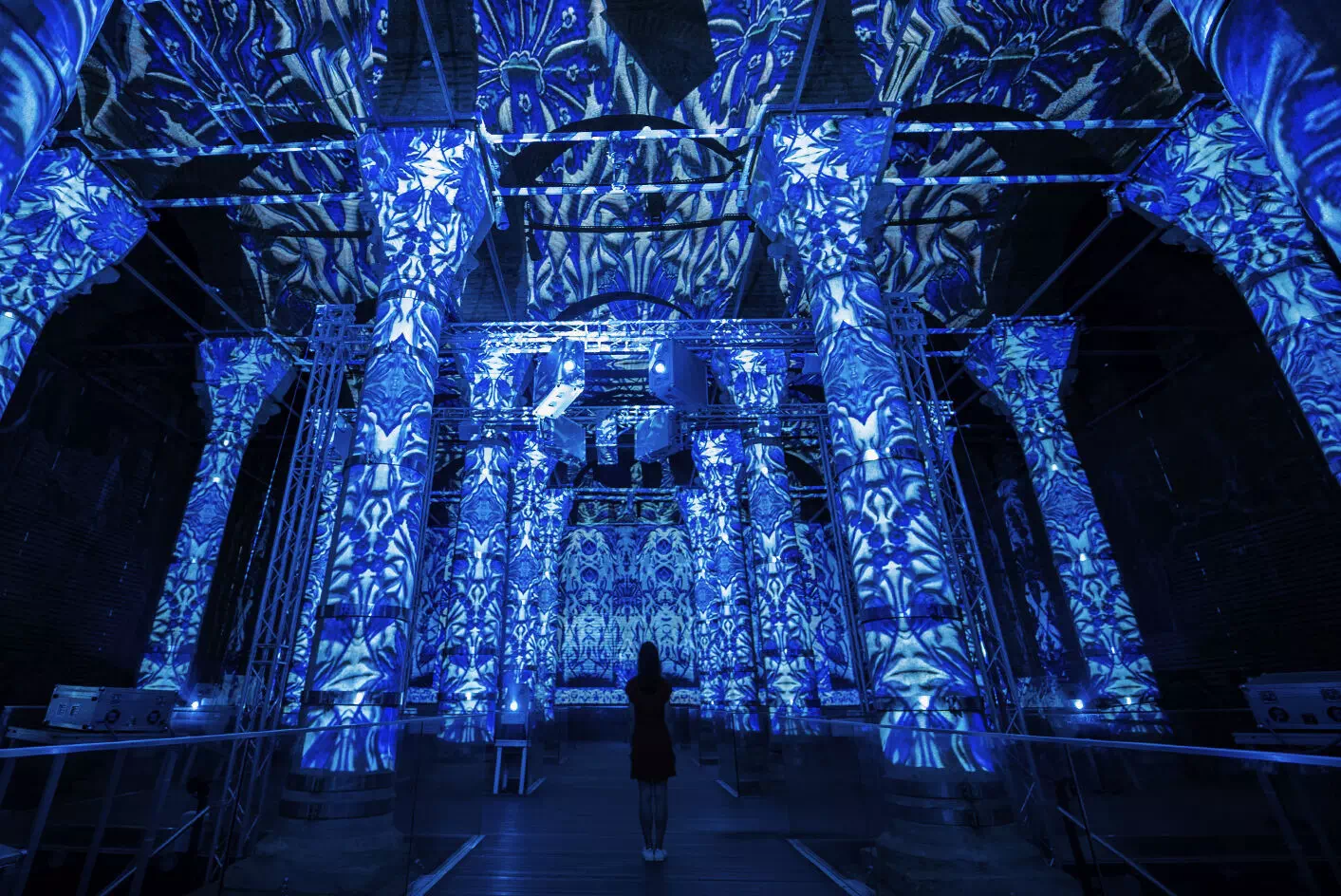
What sets the Theodosius Cistern apart is its modern fusion of history and technology. It currently functions as a cultural space, hosting art exhibitions and concerts. Its main attraction is an impressive 360-degree projection show that illuminates the ancient columns and vaults with captivating images, narrating the history of water and the history of Istanbul. This innovative approach allows visitors to experience the ancient structure in a dynamic and immersive way.
The Theodosius Cistern Visit Guide
The Cistern of Philoxenos: The Labyrinth of 1001 Columns
The second-largest cistern in Istanbul, the Cistern of Philoxenos, is more commonly known by its evocative Turkish name, Binbirdirek Sarnıcı, which translates to “the cistern of 1001 columns.”
A Fourth-Century Marvel
Constructed in the 4th century under the reign of Constantine the Great, it is even older than the Theodosius Cistern. It was commissioned by the Roman senator Philoxenos to supply his nearby palace. While its name is a poetic exaggeration—the actual number of columns is 224—the effect is no less impressive.
Unique Double-Stacked Columns
The most distinctive feature of the Binbirdirek Cistern is its columns. Each of the 224 columns is a superposition of two smaller columns joined by a marble ring. This design gives the cistern a unique, towering appearance. The chamber has a surface area of 3,640 square meters and could hold 40,000 cubic meters of water. Most of the columns and capitals are engraved with Greek mason’s marks, offering a direct connection to the artisans who built this structure.
Over the centuries, the cistern fell into disuse and its floor filled with earth. During the Ottoman period, it was used as a workshop for silk spinners. Following extensive excavation and restoration, the cistern has been opened to the public and is now a popular venue for weddings, concerts, and cultural events, with its spacious and evocative space providing a stunning backdrop.
Learn more details abut Cistern of Philoxenos
Nuruosmaniye Cistern: A Surprise Beneath a Mosque
One of the more recent discoveries in Istanbul’s subterranean landscape is the cistern found beneath the 18th-century Nuruosmaniye Mosque, located near the entrance to the Grand Bazaar. This find highlights the fact that many more of these ancient structures may still be hidden beneath the modern city.
The cistern was rediscovered during restoration work on the mosque in 2013. Workers clearing the basement removed tons of mud and silt to reveal a magnificent water collection system that still works. The structure, which covers a large area under the mosque’s courtyard, features galleries, small rooms, and a well. It is a testament to the advanced engineering skills of the Ottomans, who incorporated this ancient water system into the foundations of their Baroque-style mosque, likely to mitigate seismic risk and manage groundwater. Although not as old as its Byzantine counterparts, the Nuruosmaniye Cistern is a fascinating example of how the city’s relationship with its underground water systems has been maintained over the centuries.

Exploring the Lesser-Known Cisterns of Istanbul
Beyond the famous “big three,” Istanbul is dotted with dozens of other cisterns, many of which remain hidden or are not easily accessible to the public. These include:
- Zeyrek Cistern: Located near the Pantokrator Monastery (now the Zeyrek Mosque), this cistern is believed to be one of the city’s oldest. It offers a more raw, un-restored glimpse into the past.
- Cistern of Mocius: An enormous open-air cistern, one of the largest in the city, located in the Fatih district. Today it has been converted into a park and educational area.
- Cistern of Aetius: Another massive open-air reservoir that is now used as a sports stadium, the Karagümrük Stadium.
These sites, though less visited, are crucial pieces of the puzzle that is Istanbul’s historical water management system. They demonstrate the sheer scale of the Byzantine effort to keep their capital city thriving and secure.
The Enduring Legacy of Istanbul’s Cisterns
The cisterns of Istanbul are more than just ancient reservoirs; they are silent witnesses to the city’s tumultuous and glorious history. They represent a remarkable fusion of pragmatic engineering and breathtaking artistry. These subterranean cathedrals, with their forests of columns and echoing chambers, provided the lifeblood for a great empire and now offer a profound connection to the city’s deep and layered past. A visit to these sunken palaces is an essential part of the Istanbul experience, a journey into the cool, dark depths that reveals the true foundations of this eternal city.

Comment (0)